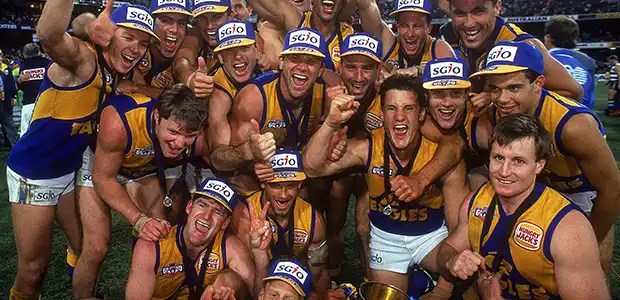
1994 Rewind: Malthouse Warnings Fail to Fire

The Eagles failed to heed the pre-match warnings of their coach when they crashed to an embarrassing 71 point loss at home to the bottom-of-the-ladder Hawks.

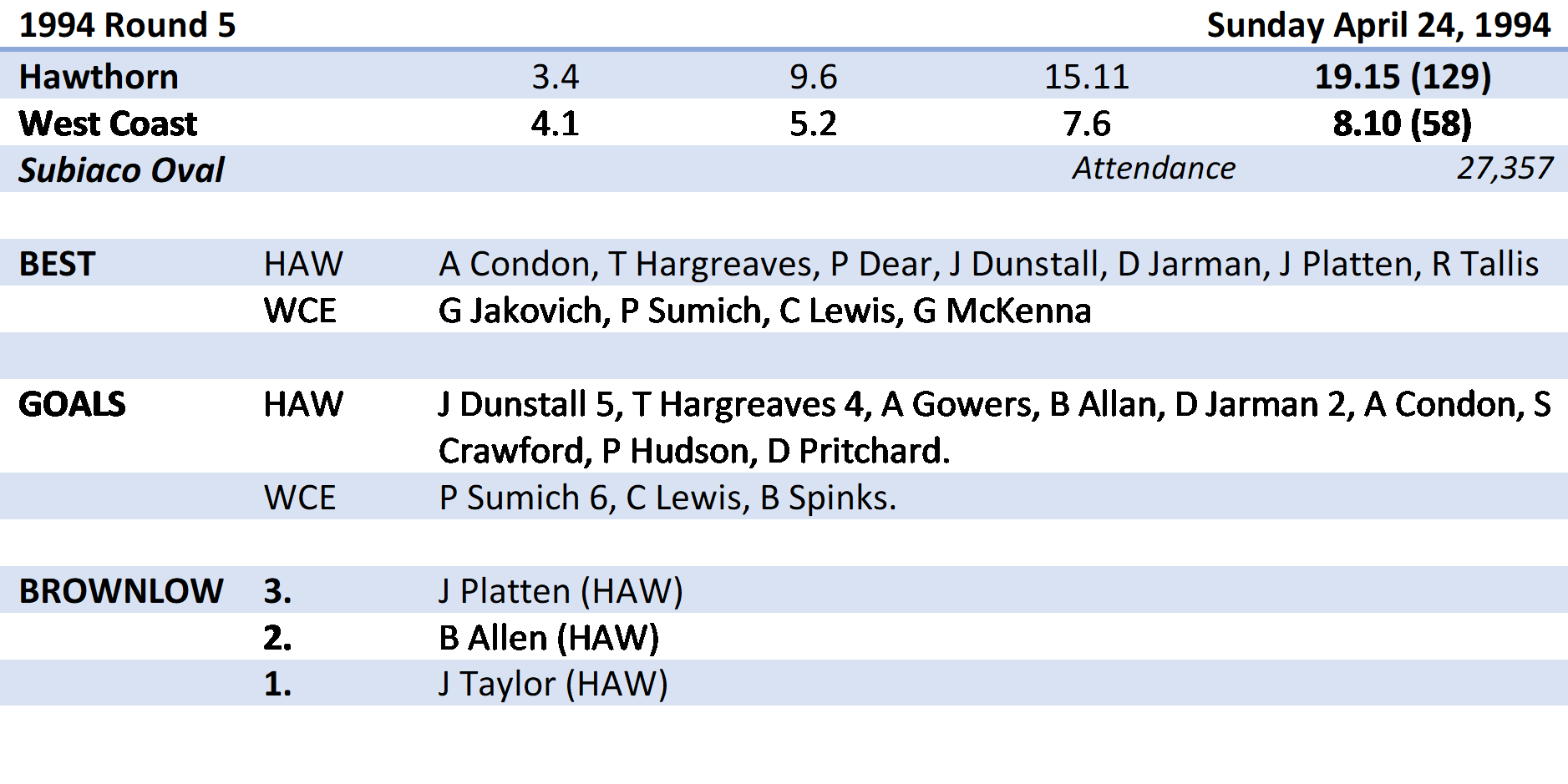
West Coast recorded their lowest ever score at Subiaco Oval, while also suffering the worst ever loss at home as Hawthorn ran riot after quarter time. The Hawks booted 16 goals to four as West Coast failed to put up a fight against a physical Hawthorn outfit.

The Hawks were noticeably physical towards the Eagles players and the disputed contest, with Peter Matera an early casualty. Matera was collected by Hawks ruckman Paul Dear following the opening bounce and played no further part in the game as he dealt with concussion.

The Eagles appeared unwilling to match the Hawk’s desire leaving Malthouse to question his side’s attitude leading into the game. Hawthorn had been given virtually no chance of upsetting West Coast at home, following a string of horror losses.

A round two defeat to Melbourne by 54 points had been followed by thumpings from North Melbourne (127 points) and Carlton (87 points), had left the 1980’s powerhouse mired to the bottom of the table and coach Peter Knights under extreme scrutiny.

However, the depleted Hawks were buoyed by the return from injury of spearhead Jason Dunstall and full-back Chris Langford to make their ‘spine’ far stronger. Dunstall and Langford were two of four changes with Jason Taylor brought into the team to shore up the Hawks defence, while Tim Hargreaves came in for his AFL debut. Nick Holland, Mark Bunn, Glenn Nugent and Darren Baxter all made way.

The Eagles made just one change to the team that was on a three-game winning streak, with Michael Brennan returning after being a late withdrawal the week before against Fitzroy. His replacement against the Lions, Jarrad Schofield, held his spot, with Matt Clape the player to go out of the side.

Despite being overwhelming favourites going into the clash, Eagles coach Mick Malthouse cautioned his players over complacency in taking on the Hawks. Malthouse even went as far as making his players sit down and watch the replay of the Perth Wildcats game from a few days earlier, when they were humbled at home by the last-placed North Melbourne Giants.

And early on it seemed as though Malthouse’s warnings had gotten through to his players when the Eagles opened with the first three goals against Hawthorn. Despite losing Peter Matera at the opening bounce when Hawthorn ruckman Paul Dear crashed into him, the Eagles were completely dominant as Peter Sumich gave Langford a torrid return start.

Sumich had all of the Eagles’ first three goals but the game soon shifted as Hawthorn’s midfield got on top. Tim Hargreaves kicked the Hawk’s first with his first kick in AFL football with the Hawks booting the next three to take the lead heading into quarter time. Sumich restored the Eagles’ advantage with his fourth for the term, as West Coast headed into the first break with a three point advantage.

But Hawthorn’s midfield continued on their dominance, as they repeatedly won the ball from stoppages. Ben Allen and John Platten had the ball on the string in the centre, while Andrew Gowers provided plenty of run on the wing opposed to Chris Mainwaring, who was sporting a large padding on his thigh from the outset.

The Hawks booted the first six goals for the term, with Dunstall and Gowers each kicking two, before Brett Spinks responded late in the term for West Coast, reducing the deficit to 28 points at half-time. Any thoughts of a second half comeback though were quickly snuffed out at the start of the third term.

Jason Dunstall marked a scrambled kick forward from John Platten out of the first centre bounce to kick his third goal for the game, and then Ben Allen goaled moments later to stretch the Hawks lead out to 40 points after just a minute and a half of play.

Hawthorn would boot another six goals for the term to push the difference beyond 10 goals, before Chris Lewis broke the run with his first major and then Peter Sumich kicked his fifth after the three quarter time siren. A four goal to one term in favour of the visitors completed the rout.

Remarkably, Sumich would also goal after the final siren, bringing his tally for the game to six, with three of his goals kicked after the close of quarters. Sumich kicked goals after the siren for the first, third and fourth quarters in one of the more bizarre outings for a forward.

Following the defeat, Malthouse was in no doubt about what triggered the shock result. “I reckon our attitude before the game was that it was going to be a stroll in the park. We paid dearly for thinking that it would just happen because we are playing at Subiaco Oval.”

“I’ve said for the last five or six years that you can’t play around with form. You can’t drop your workload. You can’t drop your attitude.”

Sumich was one of the few winners for West Coast, kicking six of the team’s eight goals. The rest of the forward line was non-existent as many of the Eagles lowered their colours against their Hawthorn opponents.

Ray Jencke shut out Brett Heady, 2nd gamer Mark Graham had the better of Spinks, while young defender Paul Cooper contained Chris Lewis. Shane Bond was virtually non-existent as he was outpointed by Andrew Collins. The Eagles midfield were obliterated by their hungrier Hawks opponents, with Dear getting on top of both Turnbull and Harding in the ruck, before Harding was stretchered off in the final term with a knee injury.

Glen Jakovich and Guy McKenna stood strong in the face of a Hawthorn avalanche, but the visitors had too many winners on the ground. Jason Dunstall finished with five majors, while Hargreaves kicked four in his first game.

Anthony Condon had 30 disposals and a goal to lead the Hawks ball-winners, while Darren Jarman was next best with 25 touches and two goals. Jakovich was the leading possession getter for West Coast (with 25) in a clear indication of where the ball spent most of the afternoon. Guy McKenna had 20 and Chris Mainwaring 19, although he was soundly beaten by Gowers.

For Peter Knights, the win was huge weight off the shoulders after three weeks under the microscope. “We had to stand up and be counted and I think the guys deserve the credit because they did just that.”

Despite the loss, the Eagles remained in fourth place as a number of contenders around them also suffered defeats in a round of upsets. The Kangaroos (first), the Magpies (third) and the Crows (fifth) all lost with Melbourne moving to the top of the ladder as the last undefeated side.
1994 Rewind: Eagles Bury Lions, Hoodoos

West Coast recorded their third win on the trot when they easily accounted for Fitzroy at the WACA.

Peter Matera was at this devastating best, finishing with 31 disposals and two goals, while Brett Heady and Peter Sumich combined for seven goals up forward. After an enterprising first quarter from both sides, the Lions could manage just four more goals with the Eagles romping to a 76 point win.

The victory ended a recent poor run for the Eagles against the Lions over the previous three seasons, despite the two sides spending much of that time at opposite ends of the ladder.

The wooden-spoon Lions toppled the ladder-leading Eagles in the final round of 1991, before repeating the dose with an upset 20 point win in Hobart in 1992. The Lions then made it three wins from four games when they shocked the reigning premiers by 18 points at the WACA in their only meeting of 1993.

Early on, it seemed as though the Lions were set to cause more troubles when they booted the first two goals in the opening three minutes. The Lions started with an unorthodox four-man forward line as they looked to run-and-gun from defence on the pacy WACA ground.

Paul Roos was used through the middle and had eight first quarter possessions, as did Fitzroy centreman Brad Boyd. However, the Eagles worked their way into the game and a three-goal burst right before quarter time had the home team in front by 12 points at the first change.

After an enterprising six goal to four opening term, the Eagles defence clicked into gear with the Lions restricted to just four more goals for the game. Paul Roos was soon deployed back into defence, but could do little to stop the West Coast forward line, who mustered 39 scoring shots on goal.

Brett Heady was giving David Johnston the run around, kicking three consecutive goals in the second term as West Coast piled on 5.7 to just three points. The Eagles held a commanding 50 point lead at the main break, before coasting through the second half.

The centre line of Matera, Dean Kemp and Chris Mainwaring all had plenty of the ball, while the Eagles defence clicked into gear after quarter time. The Lions could manage just 4.5 in the last three quarters, with two of those coming virtually on the final siren.

The Eagles win also ended a three game losing streak at the WACA. West Coast had won 14 straight games at the venue before dropping all three matches in 1993, to Fitzroy, Melbourne and Geelong.

It was a disappointing night for the Lions who had come to Perth with a point to prove. There had been much discussion about the future of the Lions, in particular coach Robert Shaw, who was reported to be high on the Fremantle Dockers wish list as their inaugural coach. Shaw had refused to comment on potentially becoming the Dockers coach for their first season in 1995, saying that he was firmly committed to the Lions.

However, the contrast between the two clubs was stark, with some at Fitzroy expecting the club to fold as part of the Dockers’ entry to the competition. Prior to the announcement of the Dockers a few months earlier, there had been suggestions that the club would be forced to relocate to WA and become the state’s second club, however Fitzroy president Dyson Hore-Lacy had been adamant that the club would never entertain such an idea and would continue to fight for their own survival.

Fitzroy had also expressed anger, over what they believed was a deliberate shun by the AFL over Paul Roos’ 250th game the week before. The milestone hadn’t been acknowledged by either the league or the official AFL record with Roos himself playing down the incident, despite the club being privately incensed about the matter.

But Fitzroy were ultimately outclassed, leading Shaw to declare that the Eagles had re-discovered their irrepressible 1991 form.

“They applied pressure to us that probably no other club has been able to do for many years. They are back to the team of 1991. I think they’ve reached that level again. Maybe they’re stronger and their tackling is better.”

Malthouse was delighted with the win, with West Coast again showing great form up forward. While Peter Sumich was held to three goals by young full-back Simon Hawking, Brett Heady had re-discovered his best touch to boot four, and Brett Spinks and Shane Bond again showed great form despite their inexperience.

Spinks played his best game in his short career, with 14 kicks and 10 marks from centre half forward. His effort earned him a rising star nomination and his early season had form had kept Karl Langdon out of the Eagles line up, despite the premiership player finishing his three game suspension from the pre-season competition.

Shane Bond booted two goals from 18 possessions and Peter Wilson had 24 disposals operating between half forward and the midfield. Despite losing Michael Brennan before the game with a hamstring strain and Chris Lewis to a wrist injury after half-time, little had gone wrong for West Coast, with Malthouse emphasising a need to bank wins early in the season.

“It’s very difficult to come home sometimes and try to catch up”, he said. “Geelong tried it last year and were very effective till in the end their percentage was below ours.”

“We don’t want that happening to us this year.”

“I’m not sure how many games it’ll take to get into the eight. It might take 10 or 11 wins (from 22 games) but I don’t want to find out in round 21 or 22 that we need two wins to get there,” Malthouse warned.

With three wins from four games, the Eagles remained in fourth spot, courtesy of the AFL’s controversial match-ratio system. With positioning of teams based on the numbers of wins based as a percentage against the number of games they had played, instead of points and percentage, West Coast sat behind Melbourne and Collingwood, despite having the same number of wins and a better percentage.

Because those two teams had already sat a bye in the opening four rounds, they occupied 2nd and 3rd spots with three wins from three games. The Kangaroos sat in top spot, also with three wins from three games.

While the Eagles had a comfortable win on the field, off the field they had to deal with another battle with another Lions group. Subiaco had expressed their dismay over the problems they faced with fringe Eagles players in their squad.

Subiaco had 13 Eagles-listed players in their squad, with coach Tony Solin blaming their poor start to the WAFL season on the disruptive issue of only having Eagles players train at the club once a week. The likes of Karl Langdon, Daniel Metropolis, Jarrad Schofield (who ended up being a late inclusion for the Fitzroy game, replacing Brennan), Tony Godden and Matt Connell had all played with Subiaco, with the Eagles strong start, but the club believed being forced to play Eagles’ players had compromised their team selection.

West Coast players had also admitted confusion over the differing styles of play between Malthouse’s defensive set-up, versus the game plan that Solin had hoped to implement with Subiaco.

Subiaco said that moving some of the players to rival WAFL clubs wasn’t an option, and under the agreements between the WAFL and West Coast Eagles, they were unable to drop players to the Subiaco reserves side. Daniel Metropolis and Jason Heatley were two players that had had little impact in their opening games with Subiaco.

The Eagles and Subiaco met ahead of the Friday night clash with Fitzroy to reach a compromise, with Solin hoping that West Coast players would be more accommodating in attending Subiaco training and team bonding sessions.

1994 Rewind: Eagles Tame Tigers

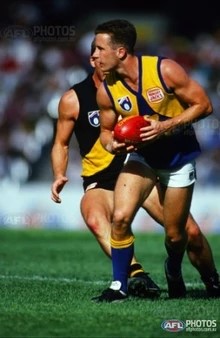
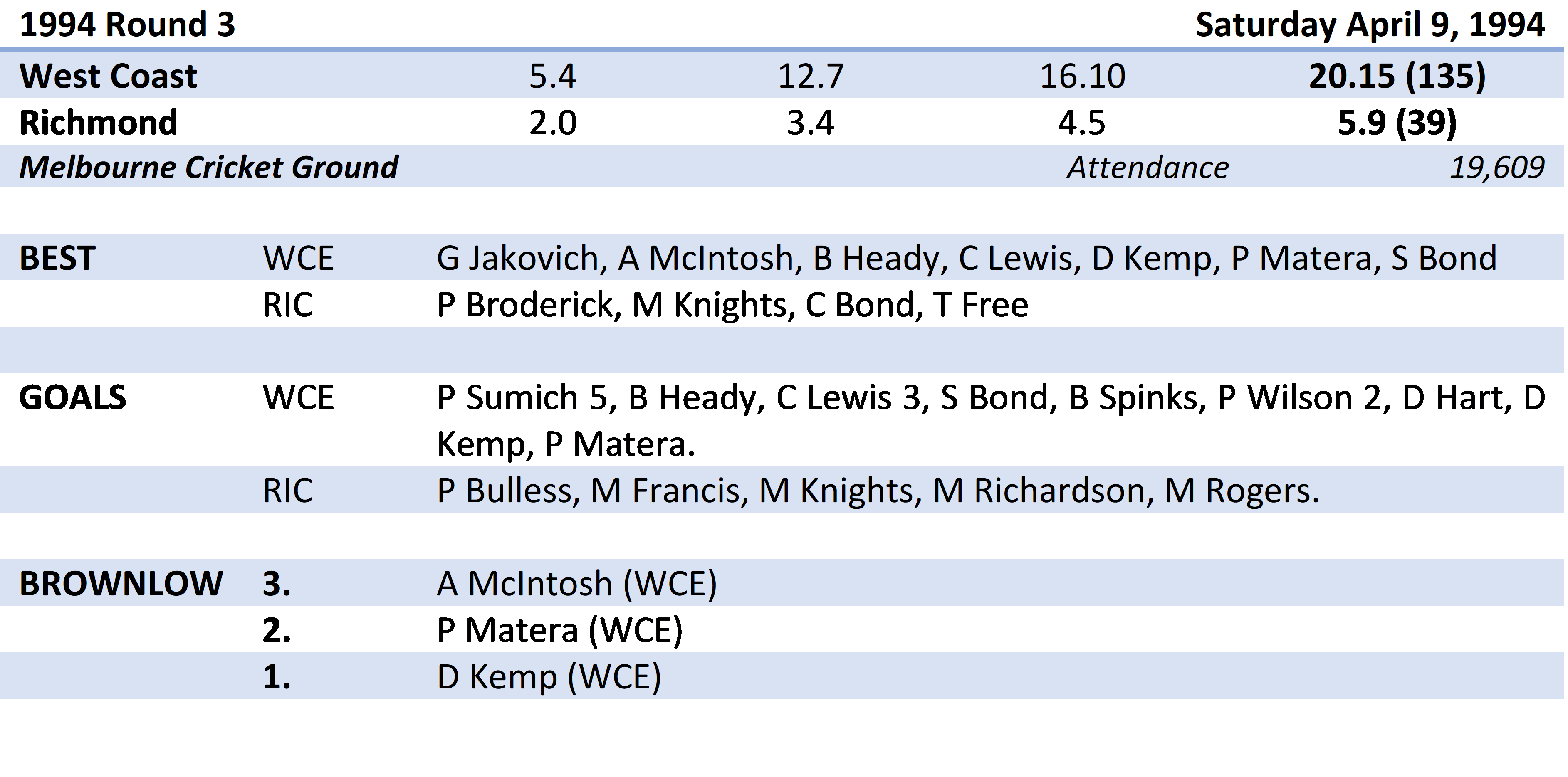
West Coast delivered their most complete performance of 1994 when they dismissed a hapless Richmond by 96 points at the MCG. The legitimacy of the Eagles as premiership contenders had been questioned after inconsistent showings in the first two rounds, but the comprehensive win stamped the Eagles as one of the teams to beat.

After a lean few years, the Tigers had started the season positively, breaking an 11 game losing streak with a thumping 62 point win over Brisbane in Round 2, after losing narrowly against the Bulldogs in Round 1. Young forward Matthew Richardson had been the star for the Tigers in the opening fortnight, booting 15 goals across the two games to lead the Coleman Medal.

However, the Eagles defence reigned supreme with Ashley McIntosh too strong for Richardson and Glen Jakovich dominating his duel with Brendan Gale. McIntosh stymied his third opponent in as many weeks, holding Richardson to just one goal – the same that Paul Salmon and Tony Modra had managed in previous weeks.

Guy McKenna and David Hart were just as stingy, with the West Coast backline holding the Tigers to their lowest ever score against the Eagles. At the other end, the Eagles cashed in on the midfield work of Dean Kemp and Peter Matera, with Peter Sumich (five goals), Chris Lewis (three) and Brett Heady (three) all hitting the scoreboard.

Even youngsters Shane Bond and Brett Spinks chimed in with two apiece, with Matlhouse saying the addition of the two rookies made the Eagles forward line ‘better equipped’. “One is 18 and the other one is 20. When we get them both firing, they will be terrific.”

“Seventeen of our twenty goals came from our forwards. I guess there was pressure on them today to perform and it was one of our better games, but we have to be careful not to get too carried away with the win.”

But while Malthouse heaped praise over his revitalised forward structure, he was less complimentary to the football media who had criticised the Eagles start to the season. “I think it’s a mistake to judge any side on its practice match form.”

Pre-match the Tigers had talked up their chances against West Coast, but they were never in the hunt against a more seasoned Eagles outfit. West Coast pounced on regular Richmond turnovers in the first half, with a seven goal burst in 13 minutes during the second quarter ending the contest.

“It was very disappointing, we expected a lot more. But we just came up against a solid, experienced team and we didn’t handle them at all well. They just gave us a lesson in football”, a subdued John Northey said.

The Tigers cause wasn’t helped with the loss of Paul Bulless and Matthew Francis during the game, while a host of other player came into the game under a cloud. Chris Bond passed a late fitness test to be one of the Tigers better players, but ruckman Greg Dear – who copped a heavy knock in the win over Brisbane the week before – was no match for the duo of Ryan Turnbull and Paul Harding.

Their ruck dominance translated into a possession spree for many of the Eagles midfielder, with Don Pyke (32 disposals), Dean Kemp (25) and Chris Mainwaring (22) all prominent. Peter Matera won his battle on the wing opposed to Wayne Campbell and Drew Banfield had the measure of Matthew Francis before he went off injured.

Don Pyke led the Eagles with 32 disposals

The win lifted the Eagles up to fourth on the ladder with Malthouse declaring that the current Eagles line-up were far better than the 1993 version.    

“We’re slowly coming along… we haven’t rushed anything this year. The disappointment this year is we were in a position to win our first round and we didn’t win it. We could be three-zip.”

1994 Round 2: Heady Heroics Save Eagles

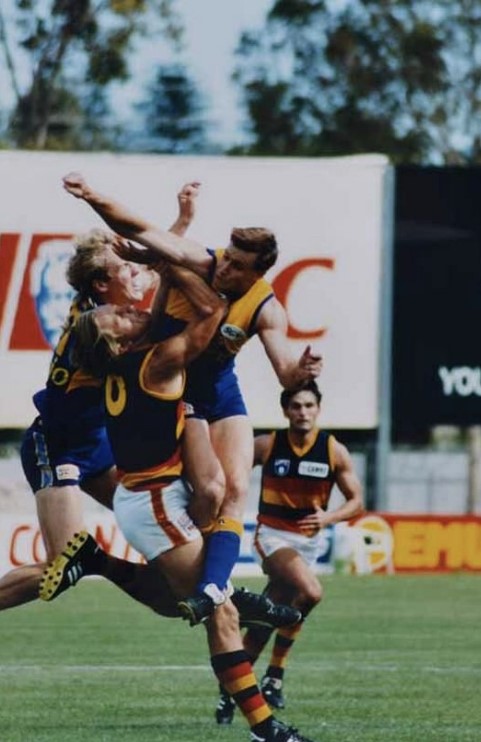
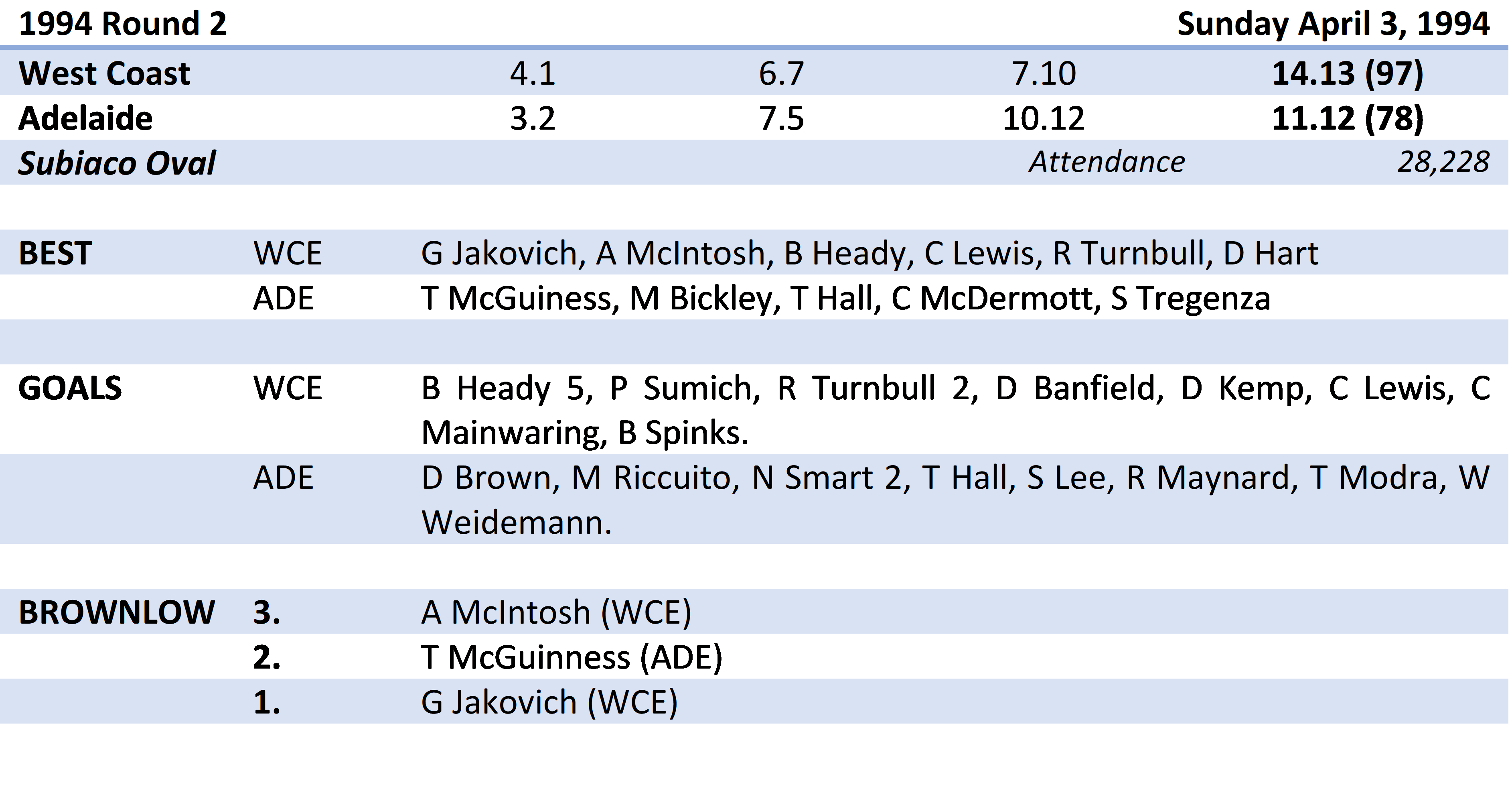
With a quarter to play against Adelaide, the Eagles were staring at a 0-2 start to season 1994 as they sat 20 points behind the 1993 preliminary finalists. 30 minutes later the Eagles had restored parity to their season with a seven goal to one final term, on the back of an inspired Brett Heady.

Heady booted four last quarter goals – to finish with a match haul of five – after a week spent bed-ridden. Heady had kept his illness secret from the club, much to the chagrin of coach Mick Malthouse, but proved to be the saviour in the final quarter surge.

“He (Heady) didn’t tell me before the game,” Malthouse confirmed. “In the end it was just a matter of getting him across the line.”

Heady was barely sighted in the opening three quarters, tallying just three possessions in between large stints on the bench. However, he exploded in the final term, gathering 10 kicks and three marks as West Coast rode home on a favourable breeze.

After a dire first three quarters, where the defensive nature of the home team had seen the game stagnate for large portions, the Eagles burst the game open with Heady capitalising on a centre square dominance.

Chris Lewis was moved into the middle after lacking any influence across half-forward, while Ryan Turnbull got on top of Shaun Rehn in the ruck, after he replaced Paul Harding who limped off during the third term with a hip injury.  

But it was another moment in the third quarter that proved the turning point in the game.

At the 15 minute mark, Adelaide full-forward Tony Modra charged out on a lead, only to be met by West Coast captain John Worsfold running back the other way. The star full-forward – who had booted a Round 1 AFL record 13 goals the week before in the Crows demolition of Carlton – staggered off the ground, enraging Crows coach Graham Cornes.

Worsfold cannons into Modra, sending the star Adelaide forward off

Cornes pointedly abused Worsfold at the three quarter time break, with Malthouse suggesting the tirade may have sparked his players to the final quarter comeback. “I don’t know exactly what took place – you’ll have to find out from Graham Cornes.”

“The inference was that John thought what was said to him was uncalled for. Under those circumstances obviously he was going to be cranked up. I suppose he would have sparked a few of the other players up.”

The Eagles final quarter was a stark improvement on the rest of the game, which had been a tactical battle for much of the afternoon. The Eagles held a slender lead at the first change, before the Crows worked their way in front at the main break.

West Coast were able to restrict the Crows running game for much of the first half, leading to long periods of stagnated play from both sides, but the visitors took hold in the third quarter. Tony McGuinness marshalled the centre square and Simon Tregenza got the better of Peter Matera on the wing, as Adelaide controlled the ball inside their forward half.

However, they could only manage an inaccurate 3.7 for the term, and their system fell away once Modra left the field.

A deflated Cornes wouldn’t be drawn on the controversy surrounding his interaction with Worsfold, instead choosing to lament his sides’ inability to hold onto their lead.

“It’s a four-quarter game and 20 points is never a match-winning lead, particularly against a team playing at home and coming home with a slight breeze.”

Tony McGuiness was one of the few Adelaide players who performed all day, finishing with 27 disposals, while Mark Bickley shaded fellow centreman Dean Kemp in racking up 30. Paul Rouvray restricted Sumich to just two goals while Rodney Maynard – who was a late inclusion for Greg Anderson – was serviceable with 17 disposals and a goal.

However, the Crows forwards were well beaten by another strong defensive performance from West Coast. Ashley McIntosh held Modra to just one goal before he went off injured, while Glen Jakovich completely shut out Nigel Smart at centre half forward. David Hart made it two scalps in as many weeks when he kept Matthew Liptak goalless, while Guy McKenna shaded Tony Hall in an intriguing contest.

Jakovich would finish as the Eagles’ highest possession winner (20, along with 14 marks) indicating how much the Eagles built their play from half-back, while Dean Kemp (19) and Peter Matera (17) the next best for West Coast.

The Eagles sat with nine other teams who had split their opening two games, but with fixtures to come against Richmond, Fitzroy and Hawthorn, they sat perfectly to stake an early claim for a top four spot.