1990 Rewind: Eagles’ ‘Character’ Win

Malthouse Lauds His Players Fighting Finish

Mick Malthouse declared in the lead up that it would be the Eagles’ greatest test of character.

The Eagles, coming off two disappointing losses to North Melbourne and Essendon and with their hold of a top five place under threat from the swarm of sides clambering to break their way into finals contention, needing to win against the twice-defending premiers.

West Coast’s poor record in Victoria had once again become the conversation as many questioned the Eagles legitimacy in the premiership race. Poor form had also seen a number of changes in recent weeks, unsettling the Eagles line-up.

To further frustrate Malthouse, incessant rain during the week prevented the Eagles from running their main training session on the WACA, which was sitting under a deluge of water. Players and staff arrived at the ground only to find a square tarp across the middle of the cricket wicket, forcing a mad dash back to Subiaco Oval.

However, by the time players had battled peak hour traffic to reach the other side of the city, the session was lost.

“We feel like lepers,” Malthouse said.

“That’s the sort of treatment we expect when we go to Melbourne and what Melbourne teams should cop when they come here.”

“It’s the same argument we had with them last time… Our whole preparation has been messed up.”

Like West Coast, Hawthorn had hit a mid-season stumble. After winning four of their first five games, including an emphatic 115 point demolition of Geelong in the opening round grand final rematch, injuries and suspensions had the Hawks similarly fighting for their top five spot.

Spearhead Jason Dunstall was sidelined with a fractured skull and Dermott Brereton was serving a four game suspension for striking Garry Lyon. The Hawks would also lose captain Michael Tuck ahead of the opening bounce after he failed a fitness test. Veteran Peter Schwab would take his place in the midfield, joining ruckman Stephen Lawrence who was named as an inclusion when teams were first announced.

The Eagles made just one change to the team that lost to Essendon, with Stevan Jackson dumped in favour of rookie midfielder Dean Kemp. Craig McGrath was shifted to centre half-forward, joining Sumich and Langdon in a three-pronged attack.

Hawthorn opted to change with routine, flying into Perth on the morning of the game.

At half-time, they may as well have still been on the plane.

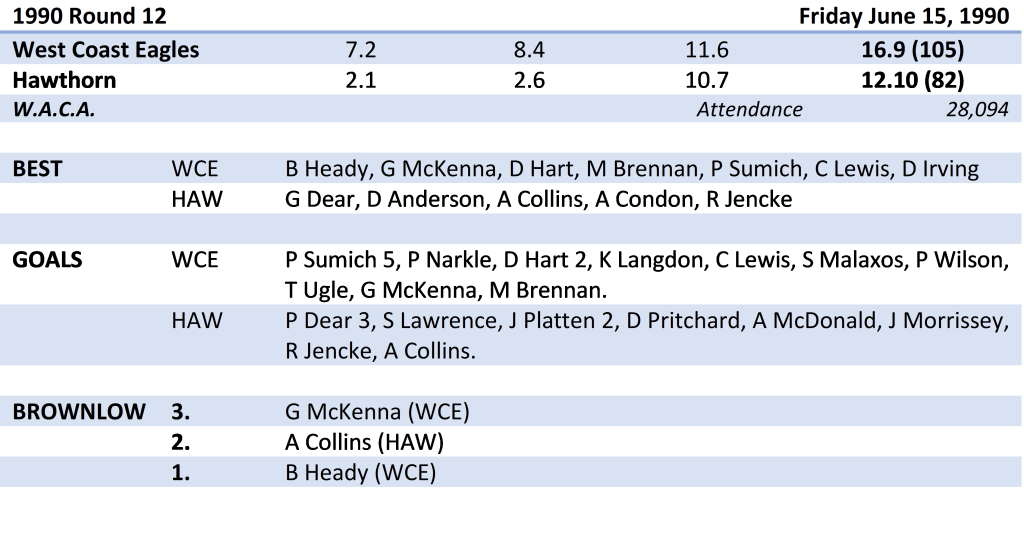
The Eagles got the fast start on the visitors, kicking seven first quarter goals – four of which were booted by full forward Peter Sumich – to open up a 31 point lead at the first change.

The runners of West Coast were running rings around a sluggish Hawthorn, with rookie Brett Heady leading the way through the middle. Heady, along with Chris Lewis and Steve Malaxos were winning plenty of ball around the contest, with Chris Mainwaring giving the drive along the wing.

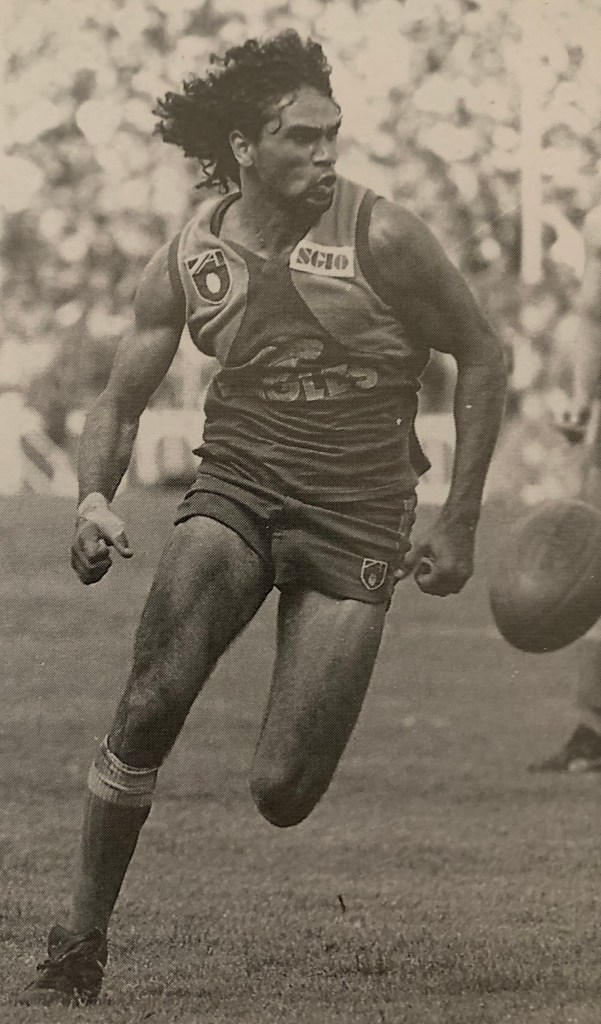
Steve Malaxos led from the front with 23 disposals in the middle

The Hawks closed the game up in the second quarter, managing to hold the Eagles to just one goal, kicked via Chris Lewis, but were unable to hit the scoreboard themselves going goalless. Making matters worse for the Hawks, Gary Buckenara and Peter Curran had both left the ground with knee injuries, meaning they were without a bench for the remainder of the game.

When Malaxos goaled early in the third quarter, the Eagles lead was out to 40 and the game looked done.

But Hawthorn then raised a gear, storming back into the contest with eight of the next nine goals. When John Platten – who was well held by David Hart all night – kicked truly just before three-quarter time, the Hawks had taken the lead, unthinkable just half an hour earlier.

Greg Dear was the architect of the Hawks’ comeback as he gained the upper hand in his intriguing battle with Eagles ruckman Dean Irving. Dear finished the match with 41 hit-outs, to go with 22 disposals and eight marks. In particular during the third term, Dear provided first use to the Hawk’s midfield brigade, with Dean Anderson, Anthony Condon and Peter Schwab all enjoying plenty of the ball.

The Eagles grabbed back the lead before the final change, before Platten booted his second goal early in the final term to put the Hawks back in front.

That would be the last salvo from the Hawks, as West Coast met the visitors’ challenge to boot five of the last six goals in the game. The Eagles rediscovered their run against a tiring Hawthorn outfit, with defenders Guy McKenna and Michael Brennan both running down the ground to kick goals.

Sumich added a fifth in the final term to take his season tally to the half-century mark and third on the goal kickers list behind Tony Lockett (52) and Darren Bennett (51).

Heady finished with 28 disposals and seven marks, while Chris Lewis and ruckman Dean Irving were the next best with 26 disposals. Guy McKenna had 21 coming out of defence, while Michael Brennan shut out Alex McDonald who came onto the ground as Buckenara’s replacement.

Malthouse was understandably pleased with the result.

“You’ve got to be happy when you beat Hawthorn.”

“Some might say that you throw (Dermott) Brereton and (Jason) Dunstall into the Hawthorn team and we lose that game, but who knows.”

Malthouse admitted that the Hawks got the better of his players through the middle stages, as they clamped the Eagles run.

But Allan Jeans said his side didn’t do enough to contain West Coast’s midfield, with their influence at the start and end of the match decisive in the defeat.

“Their running players got on top and created opportunities for their forwards and then we played catch-up footy for most of the night.”

Anthony Condon was the leading ball winner on the night with 30 disposals, and was well supported by Dean Anderson (29) and Peter Schwab (28), but not enough players were able to contribute across the night.

Without the key pillars of Brereton and Dunstall, the Hawks couldn’t gain an ascendancy forward of centre, bar the third quarter. Paul Dear kicked three goals and Stephen Lawrence and John Platten each chimed in with two.

Malthouse lauded his players for their continued fight in the last quarter.

“We sent 20 players down the race and they sent 20 and it was a terrifically courageous last quarter. We had some of our guys running up and down on the spot and they still came from behind to win.”

The result saw the two sides switch positions on the ladder, with West Coast moving up to fourth and the Hawks dropping to fifth. The Eagles remained one game behind Essendon, Melbourne and Collingwood, who all recorded victories.

The Bombers defeated the Kangaroos, while Melbourne and Collingwood beat finals aspirants Footscray and Geelong. They remained a game behind the Hawks outside the top five, along with St Kilda and Carlton.

The Blues easily defeated Brisbane at Princes Park to lift themselves into seventh, but it was the Saints who were kicking themselves the most after the suffered a shock defeat to the Tigers. St Kilda booted eight goals in the opening term, but were slowly reeled in the Tigers over the next three quarters, with a five goal final term giving Richmond a 20 point win. The defeat cost the Saints a chance to move back into the top five.

The string of results across the round meant the Eagles sat two games inside the top five and maintained their hopes of securing a double chance. But while there were plenty of positives to take from the win, the sour point of the evening was a two game suspension handed out to Craig McGrath, who was cited for striking Ray Jencke in the final minutes of the match.

With the upcoming state-of-origin clash between WA and Victoria at the WACA the following Tuesday week, those Eagles not selected had a fortnight to recover before the Eagles’ next game against Fitzroy in the second weekend of the split Round 13.
1990 Rewind: Big Fish Sinks Eagles

Eagles Drop To The Edge of Finals as Forwards Misfire

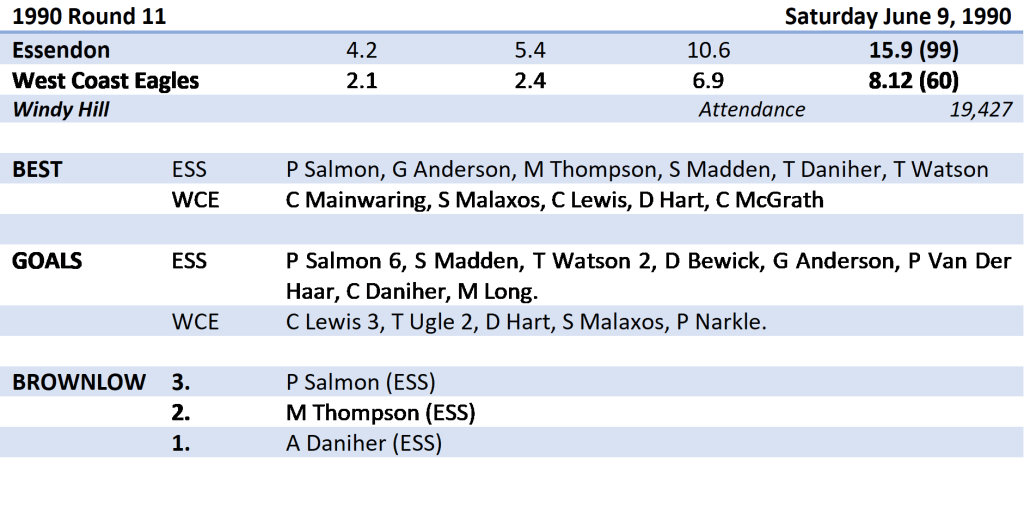
It was a tale of the full forwards as West Coast dropped a second consecutive game to leave their finals aspirations sitting on the brink at the halfway mark of the season.

Windy Hill lived up to its name as the Eagles struggled to handle the swirling breeze that encased the ground with a forward line function that was virtually non-existent.

The Eagles were unable to contain Essendon full-forward Paul Salmon, who booted six goals from 20 disposals and 14 marks alternating between the forward line and in the ruck, while Peter Sumich was held goalless by Anthony Daniher.

In fact, not only did Sumich fail to register a goal, the Eagles spearhead failed to register a possession, despite spending all bar three minutes on the ground.

Stevan Jackson was another who struggled up forward, managing just a kick and a handpass in the opening half, before spending the entire second half on the bench.

The 39 point defeat left the Eagles precariously placed in fifth position, as a host of teams pressed their claims for a spot in the top five.

The disappointment of the previous weeks effort against North Melbourne lingered through the week, as coach Michael Malthouse took his team to task.

A brutal two and a half hour training session on the Monday was followed by a tackling session led by rugby league coach Russ Devonshire with Malthouse keen on igniting aggression towards the opposition.

The Eagles were then savage at match committee, dropping seven players for the clash with the Bombers. Peter Matera, Dean Turner, Geoff Miles, John Annear, Scott Watters, Dean Kemp and Don Pyke all lost their spots, with the Eagles inclusion centred around height to battle the plethora of talls at Essendon.

Craig McGrath was selected for his club debut after being picked up in the pre-season draft, following six seasons with Fitzroy. Dean Irving was also recalled for his first game since round 3, to partner Phil Scott in the ruck against Essendon pair Simon Madden and Paul Salmon. Geelong and North Melbourne had both exposed the Eagles in the ruck in recent weeks, with Phil Scott going it alone.

Peter Wilson, Dwayne Lamb and John Worsfold all returned after missing the loss to the Kangaroos through injury, while Craig Turley and David Hart were also welcomed back to the side. Troy Ugle held his place up forward after being a late replacement for Worsfold the week before.

Essendon were forced to make four changes, due to a raft of players left unavailable after their 90 point win over Sydney. Derek Kickett, Billy Duckworth and Ian McMillan were all out injured, while Andrew Manning copped a two week suspension.

Into the Bombers line up came defender Chris Daniher and midfielders Adrian Burns, Tony Antrobus and Ed Consadine. Kevin Walsh pressed his claims to return from a knee injury, but failed to recover in time.

In tricky conditions, the first half was a tightly fought affair.

Paul Salmon made his first imprint on the game with three goals in the opening quarter as Essendon opened up a 13 point quarter time lead. The two teams then managed just one goal between them as the game developed into a fierce lockdown.

Trailing by 18 points at the main break, the Eagles started the third quarter brightly, but ill-discipline undid much of the early good work in the term as Essendon were handed a string of easy goals.

The Eagles gave away three 50m penalties in the quarter, all of which directly resulted in goals for the home side. Greg Anderson kicked a goal from the first penalty, with Salmon then the recipient of the next two as he booted another three goals in the term to take his match haul to six.

Two goals late in the term to Troy Ugle kept the Eagles within 21 points at the final change, but a five goal to two last quarter sealed the win for the Bombers and consolidated their position at the top of the ladder.

Chris Lewis was the exception up forward for the misfiring Eagles, booting three goals

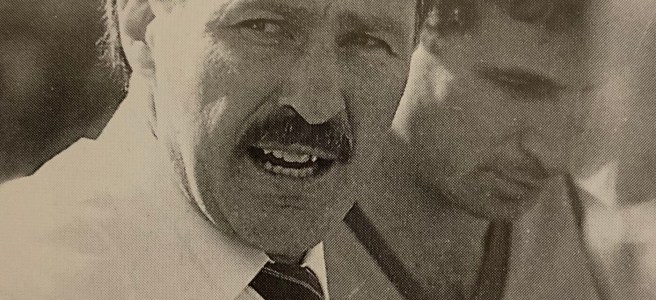
After the match, Mick Malthouse was blunt about his non-firing forward line.

“When we get the ball as often as we did and don’t score as often as our opposition – that is our breakdown.”

The Eagles matched the Bombers in total disposals and managed nine more forward 50 entries (64-55), yet registered four less scoring shots.

“At no stage did our forward line click”, Malthouse continued.

Malthouse was also forthright in his assessment of the umpires, questioning the legitimacy of the 50 metre penalties awarded against his side in the crucial third quarter.

“One was soft,” an exasperated Malthouse declared, “and I could almost argue about (the other) two of them.”

“I get sick and tired of trying to justify how good or bad the umpires are. It’s time (national director) Bill Deller… have a good look at the situation.”

Chris Lewis was the best forward for the Eagles on the day, finishing with three goals from 20 disposals across half forward. Lewis also proved he had paid attention during the week, laying eight tackles in the match.

Chris Mainwaring had 26 disposals on the wing and Stephen Malaxos was again industrious in the centre with 24 disposals and a goal. Dwayne Lamb and David Hart both had successful returns with 21 and 20 possessions, respectively.

Craig McGrath also impressed in his first game as an Eagle, collecting 21 disposals and six marks, showcasing his wares at both ends of the ground.

However, the Eagles had no answer for Salmon, who was arguably the difference between the two sides. Dean Irving was tasked with the role of tagging Salmon around the ground, but appeared out of his depth and the Eagles backline were again exposed for height against the taller forwards in the competition.

Simon Madden booted two goals while resting forward, with Salmon’s haul of six coming a week after John Longmire booted eight goals for the Kangaroos.

Greg Anderson finished as the leading possession winner for the Bombers with 26, while Terry Daniher was the next best with 24 touches and 11 marks. Tim Watson also booted a brace of goals from 22 disposals and Mark Thompson finished with 23 and eight marks through the middle.

The result moved Essendon a game clear of the Eagles, and they were joined by the Magpies and Demons. Collingwood recorded a routine win over the bottom-placed Bears at Carrara, while Melbourne survived an incredible Carlton comeback to fall over the line.

The Demons streaked away to a 56 point lead midway through the third term, off the back of a five goal performance from debutant Brent Heaver. However, the Blues stepped into gear to kick the final five goals of the term and reduce the Demons advantage to 21 at the final change. Carlton continued to surge with Stephen Kernahan leading the charge in the final term, but a poor return of 3.6 left them six points short.

Hawthorn also moved ahead of the Eagles when they had little trouble defeating the Swans, despite being without Jason Dunstall. John Platten booted five to be the surprise leading goal scorer for the Hawks, who returned to the top five in place of St Kilda.

The Saints lost their place in the five with a narrow eight point defeat to the Cats. In a high-tempo clash, Geelong worked their way to a 25 point advantage at the final change, before second-year Saint Robert Harvey dragged his side back into the contest. Harvey booted four goals in the final quarter to bring St Kilda within touching distance of the lead, but Stewart Loewe and Tim Pekin missed simple chances late in the game, which ultimately proved costly.

The result meant that St Kilda and Geelong both sat one game behind West Coast, as did Footscray who did what they had to in a 14 point win over Richmond. The Eagles’ hopes of finals now rested on a crunch home game against the 4th-placed Hawks the following week.

While the 39 point defeat wasn’t the desired outcome, the Eagles could find some solace in this performance compared to the previous season. In the corresponding fixture of 1989, West Coast conjured up just one goal for the afternoon in a 160 point shellacking – a 20 goal improvement on their last visit to Windy Hill!

1990 Rewind: Eagles Caught On The Hop

MCG Woes Return

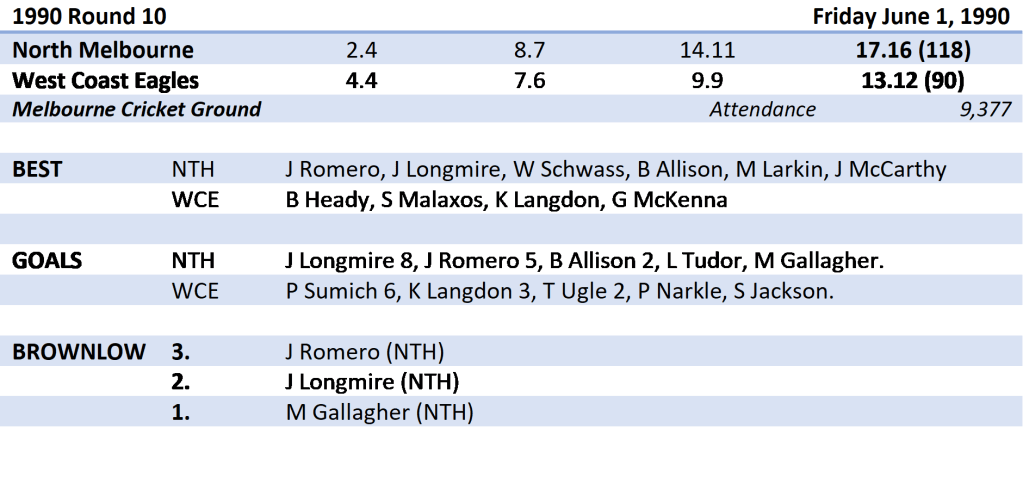
West Coast Eagles coach Mick Malthouse blasted his players ‘very soft’ performance, when they succumbed to a 28 point loss to North Melbourne at the MCG.

Sitting equal top, the Eagles had entered the match as hot favourites against a Kangaroos side who were on a six game losing streak, without a win since round 3.  

Malthouse had warned his players not to take the stumbling Kangaroos lightly, and it seemed the Eagles players had heeded their coach’s instructions when they booted the opening four goals of the game. But from there North Melbourne owned the contest and the ball, edging their way to the lead by half-time and then pulling away through the second half.

“We were second to the ball, did not run and allowed North Melbourne to dictate terms totally”, a furious Malthouse said after the game. “We are very soft.”

“Unfortunately, this seems to be the norm when we are beaten.”

North Melbourne full forward John Longmire booted eight goals in the win, matching his effort from nine days earlier when he led New South Wales to one of the great upsets in Australian football, over the powerhouse Victorian side in the state-of-origin.

Longmire had four goals by midway through the second term, forcing Malthouse to shift Murray Rance to full back, in place of Michael Brennan, but Longmire remained a strong focal point for the Kangaroos up forward. Jose Romero provided the supporting act, kicking five goals from 26 disposals in a clear best on ground display.

Tagger Dwayne Lamb would have been assigned with the job of minding Romero, but was one of three players unavailable for the Eagles, following their win in the heavy slog conditions over Geelong just five days earlier.

Lamb was ruled out with a calf complaint, while Peter Wilson was unavailable after straining a hamstring the week before. John Worsfold would then be a late withdrawal ahead of the bounce, with Don Pyke, Dean Turner and Troy Ugle the three inclusions.

North Melbourne made a staggering seven changes to the side that was comprehensively thrashed by Collingwood to the tune of 80 points. Alastair Clarkson was ruled out with concussion, while Ross Smith, Peter German, Ian Fairley, Donald McDonald, Anthony Stevens and Warwick Angus were all dropped.

Kangaroos coach Wayne Schimmelbusch turned to youth, bringing in Liam Pickering, Leigh Tudor, Craig Sholl, Shaun Smith and Mark Brayshaw. Ruckman Michael Gallagher was selected for his first game with the club after switching from Carlton in the off-season, while ‘veteran’ Matthew Larkin was also brought into the side.

Such was the youth of the Kangaroos, Larkin was the only player in the side with more than 60 games experience, while nine players had played less than 20.

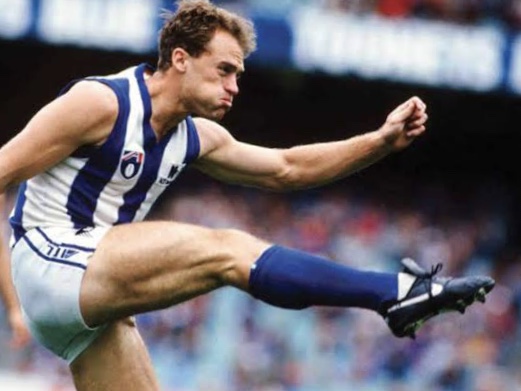
John Longmire proved too good for both Michael Brennan and Murray Rance, on his way to a match haul of eight goals.

The Eagles started strongly with John Annear and Scott Watters providing plenty of drive through the middle. Karl Langdon provided the target up forward, booting two goals for the term as West Coast raced to a 22 point lead.

However North Melbourne kicked the final two goals of the quarter to reduce the Eagles advantage to 12 points, before taking control after quarter time.

Wayne Schwass and Matthew Larkin imprinted themselves into the game, John McCarthy closed down the dangerous Langdon and the ruck pairing of Mark Hepburn and Gallagher got on top of Phil Scott.

With the game delicately poised at half-time, Jose Romero stepped up. Romero gathered the ball at will around the ground and also hit the scoreboard, with the Eagles unable to find a match-up to quell his influence.

Conversely, the Eagles lacked any substantial contributors through the middle.

Peter Matera struggled to find the ball, Annear faded out of the game and Dean Turner could neither find the ball, nor limit Larkin in a defensive role.

In fact, only a handful of Eagles gave a solid showing.

In just his seventh AFL game, Brett Heady showed he had all the makings of an impressive career, picking up 28 disposals and taking 13 marks playing predominantly through the middle. Malaxos finished with 23 touches through the centre and Chris Mainwaring tried to bring run to the Eagles game on the wing.

Peter Sumich finished with six goals, but many came towards the end of the match when the result was already safely in the Kangaroos keeping.

The defeat, along with several other key results over the weekend meant that four teams shared equal spot at the close of Round 10. With Collingwood easily defeating league-leaders Melbourne by 52 points and Essendon thrashing Sydney by 15 goals, the Demons, Eagles, Magpies and Bombers were all equal on points.

Essendon moved to top spot, and premiership favouritism, with their thumping win over the Swans putting them 10 percent clear. Melbourne sat second, ahead of West Coast and Collingwood, with just 3.3% separating the three sides.

St Kilda completed the top five after they beat a terrible Brisbane outfit by 77 points, with Stewart Loewe kicking six goals. The Saints had opened up a 73 point lead by half-time, before coasting through the second half to record their largest win since an 89 point triumph over Richmond in 1972.  

The Saints took their position at the expense of Hawthorn, after they suffered a shock 14 point loss to Fitzroy at Princes Park. Carlton also missed a chance to climb the ladder when they lost to lowly Richmond by 23 points at the MCG, in David Cloke’s 300th AFL game.

Geelong arrested their slide when they came out on top by two points over Footscray. With Gary Ablett back in the side, the Cats bounced to a five goal lead at the first change, courtesy of four first-quarter goals to Ablett. Slowly, the Bulldogs worked their way back into the game and by midway through the third term, had opened up a 17 point lead. However, the Cats found something extra to will themselves back into the lead and end a three-game losing streak.  

As the battle for the finals, and specifically the double chance, tightened up, Malthouse forecast that the result could prove costly.

“At the end of round 22, they (the players), may rue the night they gave up the opportunity against North Melbourne.”