John Worsfold and Guy McKenna pitted themselves against each other in the coaches box for the first time, but it was Woosha who came out on top after the Eagles ground out a gritty 18 point win over newcomers Gold Coast.
The former champion Eagles, who were both captains of the club, walked out to the half back line together on 175 occasions but from opposing seats in the Subiaco grandstand, Worsfold’s side were able to do enough to record their sixth win of the season and keep touch with the top four.
West Coast were priced at the extraordinarily short quote of $1.02 to defeat the Suns at home, but while they got the four points, a spirited second half by Gold Coast prevented the Eagle from cashing on the percentage booster that other teams had enjoyed against the Suns in their debut season.
The Eagles made just one change to the side that were well beaten by Collingwood the week before, dropping Brad Ebert for Andrew Strijk. Ebert had struggled to adapt to a more prominent role across half-forward with the likes of Luke Shuey and Scott Selwood preferred through the middle, along with Matt Priddis and returning veteran Daniel Kerr.
Sam Butler failed to recover from an adductor issue, meaning that Brad Sheppard and Ashley Smith held their spots in defence. Andrew Embley was a wait-and-see proposition for much of the week, with the impending birth of his first child but suited up on match-day. However, Daniel Kerr was a late withdrawal for the second time in a month with a glute concern. Tom Swift was called up for his first senior appearance of the season.
The Suns made four changes to the side that were thumped by Geelong the week before. Zac Smith returned to partner Josh Fraser in the ruck against Naitanui and Cox, while Harley Bennell, Seb Tape and debutant Taylor Hine were also named.
Rugby league convert Karmichael Hunt was ruled out with suspension, while Brandon Matera missed out on a homecoming match against his father’s former side with a groin injury. Charlie Dixon and Matt Shaw were both omitted.
West Coast again started tall to stretch the Gold Coast defence, with Josh Kennedy, Jack Darling, Quinten Lynch and Dean Cox lining up in the Eagles forward 50. The Suns were short in defence, with Campbell Brown matching against Lynch, despite giving away 20cm in height.
Cox had an early influence up forward, setting up the Eagles first goal to Lynch, while kicking two himself in the opening quarter. When Mark LeCras slotted his second major at the 14 minute mark of the quarter, the Eagles led 6.1 to zero and a crushing win was on the cards.
But to the credit of the Suns, led by captain Gary Ablett in his 200th AFL match, they levelled the contest and stuck with the Eagles to the end. With West Coast leading 10 goals to four during the second term, the Suns stacked their defence to frustrate the home side and eventually wore their way into the contest.
A four goal to one third quarter brought the visitors back within 12 points nearing three-quarter time, but the Eagles were able to keep the Suns at bay to the final siren.
John Worsfold was happy enough with the win, admiring the persistence of the Suns. “A great start and then a bit of a slog from there on in, but a slog where the players really continued to fight it out, work hard and come away with the win.”
“I think they’ve (Gold Coast) impressed most people in their season so far and they showed enough today to say they warrant the plaudits they’ve been getting for how they go about their football. They’re a young squad but the senior players are holding up well.”
It was through the efforts of Gary Ablett, who dragged his side into the game. The Suns captain finished with 32 disposals, 19 of which were contested, eight clearances, nine tackles and booted two goals. Scott Selwood was given the task of minding the Brownlow medallist but could do little but follow the little master around Subiaco Oval and watch a midfielder masterclass.
Michael Rischitelli collected 25 disposals and seven clearances for the match and Harley Bennell tallied 24 touches. Nathan Bock was solid in defence and had the better of Jack Darling with 21 disposals and nine marks, while Zac Smith was equally impressive with 21 touches, six clearances, 15 hit-outs and a goal playing in the ruck.
For all of the efforts of Ablett, the Eagles had their own midfield warrior in Matt Priddis. Priddis feasted of the tap advantage of Naitanui and Cox to gather 31 disposals, which included six clearances and eight tackles. Priddis regularly fed the ball out to the likes of Matt Rosa and Mark LeCras on the outside.
Matt Rosa is caught in pursuit of Jared Brennan
Cox again put in another shining performance, which elevated the Eagles ruckman into Brownlow conversation. Cox had 28 hit-outs, to go with 26 disposals, nine marks, seven clearances and two goals, as many started to speculate whether he could be the first ruckman to claim the prestigious award since Scott Wynd in 1992. After doing his damage on the scoreboard early, Cox stationed himself in the back half through the last quarter as Gold Coast kept pushing for an unlikely victory.
Behind Priddis, LeCras picked up 28 disposals and two goals as he roamed between midfield and the forward line. Matt Rosa (21) and Chris Masten (19) were proficient through the middle, while Shannon Hurn was the second-highest ball winner for the Eagles with 30 possessions, to go with 14 marks.
Hurn formed part of a second-string backline that was still missing Eric Mackenzie, Mitch Brown and Sam Butler, and while they had their shaky moments through the match, they mostly held their own. Will Schofield restricted Tom Lynch to just two goals and Ashley Smith rotated through the third tall in the Suns forward line, often giving away height but keeping a close check, which allowed Hurn to operate as the intercept defender and defensive distributor.
Worsfold praised his makeshift defence, acknowledging they had their moments. “I thought our backs… in the first half they let through a few easy goals. They could have defended a bit better, a couple of mistakes we made.”
“But then when we were really under the pump in the second half, I thought there were some outstanding efforts.”
Rising star nominees David Swallow and Jack Darling both found themselves in the book with Swallow charged for rough conduct on Scott Selwood and Darling reported for striking Campbell Brown. Scott Selwood was also expected to come under scrutiny for an off the ball incident involving Ablett, with Selwood later accepting a reprimand from the match review panel. Darling and Swallow were both freed for their incidents.
The win meant West Coast rose back up to sixth place after Essendon lost to the Demons by 33 points. The top four remained the same with all four teams claiming wins in Round 11. Geelong remained undefeated after they thrashed the Bulldogs, with Collingwood hot in pursuit following an equally comfortable win over St Kilda.
Hawthorn overturned an 18 point deficit at three-quarter time to defeat the Dockers by 22 points, courtesy of an eight goal final quarter. Carlton continued Port Adelaide’s miserable season with a ten goal win at Football Park. The Swans thrashed Brisbane to climb to fifth on the ladder, with the Eagles, Bombers and Dockers rounding out the top eight. Fremantle though were now just half a game in front of Melbourne and Richmond after losing four of their last five matches.
While the Eagles would have been happy to see order restored to be the leading WA side in the AFL competition, West Coast and Fremantle joined forces during the week as they presented to the WAFC and nine WAFL presidents the concept of having their own reserves sides.
Many AFL clubs had taken on having their own reserves side in their state’s second tier competitions, with the Eagles and Dockers believing they were giving up a competitive advantage by not following suit. The two AFL clubs suggested they could stimulate $1 million per season for the nine WAFL clubs through an annual payment of $600,000, plus extra home fixtures for each club, additional sponsorship opportunities and increasing the finals series to a top five.
West Coast and Fremantle were keen to have their own sides in the WAFL as soon as 2012, but were met ‘without enthusiasm’ by the nine WAFL clubs to the proposal, with Peel Thunder president John Ditchburn going a step further, calling their offer “dismal”.
Richmond confirmed
their status as the premier team in the competition when they demolished GWS to
claim their second flag in three years.
After their
breakthrough triumph in 2017, the Tigers missed out last season when they
suffered a shock loss to Collingwood in the preliminary final. But there was no
doubt that Richmond were the standout side of 2019, particularly after the
mid-season bye when they won 12 straight games en route to the premiership.
As Richmond sit on the verge of establishing their next dynasty, what were the key off-season moves in years gone by that transformed the Tigers from a club sitting in the doldrums to one of the powerhouses of the competition.
Dion Prestia
The former Gold
Coast midfielder expressed a desire to return home at the end of the 2016
season, nominating the Tigers as his club of choice. In hindsight, the Tigers
got Prestia in a steal.
Richmond gave up
their first round pick (which became number seven overall) to the Suns, as well
as their future second round in the 2017 draft. The Tigers secured Prestia with
the swap of those two draft selections, while also receiving back a second
round pick from the Suns, which would result in a second key player making his
way to Punt Road.
Prestia was one of
the lynchpins in the Tigers revival through the second half of the season and
dominated the Grand Final early. Prestia had 11 first-quarter possessions
before having to deal with Giants tagger Matt deBoer for the remainder of the
game. Prestia finished with 22 disposals and three tackles and capped off a
stellar season claiming the Tigers’ club champion award.
The Suns for their part used pick seven on Jack Scrimshaw who managed just four games in two seasons at the club, before joining the Hawks at the end of 2018.
Josh Caddy
The flow-on trade
from the Prestia deal saw the Tigers give up pick 24, which they had acquired
from Gold Coast, to Geelong in a trade that saw Caddy join the club. The
half-forward/midfielder joined the Tigers for the second round selection, as
well as Richmond’s fourth-round pick, which ultimately became pick 60.
Geelong parted ways
with Caddy, while also giving the Tigers their third round draft selection,
which Richmond would ultimately use on South Australian Jack Graham. Graham was
famously a member of the 2017 breakthrough in just his fifth game of AFL, but
missed out on the 2019 premiership after dislocating his shoulder in the
preliminary final against the Cats.
However, his ability
to go back onto the ground through the second half of that match (with reports
that his shoulder continually popped out), and contribute to the Tigers’ second
half comeback received special praise from coach Damien Hardwick.
Having made his way
to the Tigers, Caddy (at his third club) would now be a two-time premiership
winner, although his output in 2019 wasn’t as consistent as two seasons
earlier.
The Cats for their part would use the picks they received from Richmond on two exciting prospects in Brandan Parfitt (pick 24) and Quinton Narkle (pick 60).
Toby Nankervis
The 2016 off-season
proved to be one of the key periods in Richmond history, with ruckman Toby
Nankervis switching across from the Swans for the Tigers third round selection
(number 45 overall). Nankervis had struggled to cement the number one ruck spot
with Sydney, while the Tigers were in desperate need to fill the role.
Ivan Maric had held
the role the previous few seasons, but could manage just three games during
2016 as he fell out of favour to Shaun Hampson. Hampson, however, remained an
injury risk with Richmond keen to boost their ruck stocks. The trade would
prove to be a masterstroke, with Hampson missing the entire 2017 season with a
back injury, while back-up ruckman Ben Griffiths would appear in only the first
two games of 2017 before concussion ended his season.
Having just arrived at the club, Nankervis was thrown into the lead ruck position, often performing the role solely as Richmond experimented with a number of different options as his support. Like Prestia and Caddy, Nankervis is now a dual premiership player although the Tigers opted for two ruckmen in 2019, with Ivan Soldo teaming up with Nankervis.
Jack Riewoldt
The Tigers landed
their spearhead and Coleman medal winner with the first pick of the 2006 draft
which came about after Richmond got involved in a three-way trade involving the
Dockers and the Magpies.
The Tigers
originally held pick 8, but gave up their first round pick to drop five spots
down the order to pick 13, as well as their third round pick (number 42
overall) to secure tall forward Graham Polak. The trade of Polak enabled the
Dockers to acquire the top ten pick they needed to bring in Chris Tarrant from
the Magpies, while also sending Paul Medhurst the other way. A smaller aspect
of the trade saw the Tigers and Magpies swap positions in the fourth round of
the draft, Richmond sending pick 63 (which they received from Fremantle) to
Collingwood for pick 60.
The Magpies used
pick 8 on Ben Reid, but the Tigers were the winners from the early draft picks,
selecting Riewoldt who would go on to lead the Tigers goal kicking in nine
seasons, winning the Coleman medal on three occasions. Pick 60 wouldn’t be as
successful, selecting Carl Peterson who failed to play a game at the Tigers in
one season on the list.
The post-script to
the three-way trade saw the Tigers eventually end up with one of their finest
players. Richmond’s third round selection – number 42 overall – was sent to the
Dockers as part of the trade that acquired Graham Polak. That selection was
then packaged along with pick 47 by Fremantle in a trade with Essendon, that
saw hard man Dean Solomon join the Dockers.
Essendon would go on
to use the Tigers original pick on Bachar
Houli, who would later walk out on
the Bombers after just 26 games in four seasons. Despite the pleas of incoming
coach James Hird, Houli nominated for the pre-season draft, frustrated by a
lack of opportunity, with Punt Road his destination of choice. Richmond
selected Houli with the third pick of the draft, virtually costing the Tigers
nothing.
Daniel Rioli
The Tigers small
forward fleet has been integral to their two flags and Daniel Rioli has been a
key member, alongside the likes of Jason Castagna, Shai Bolton and Dan Butler.
However, Rioli only made it to the Tigers after two failed academy bids. The
Tigers held pick 13 in the first round of the 2015 draft and with their first
attempt, bid to select Matthew Kennedy, who was a member of the Giants academy.
GWS matched the
selection, but undeterred had another crack at an academy listed player, this
time targeting Eric Hipwood who was linked with the Lions. Predictably,
Brisbane matched the Tigers bid with Richmond then settling on Rioli with their
third use of the draft pick.
And the rest…
Nick Vlaustin
Selected with the Tigers first pick in the 2012 National Draft, which was linked to their 12th placed finish. Richmond’s first selection drops down to number nine overall, with Melbourne and the Bulldogs receiving concession picks for losing uncontracted players Tom Scully and Callan Ward to GWS.
Dylan Grimes
The Tigers held over a draft selection following the 2009
National Draft, ultimately using their first pick in the pre-season draft
(which was number two overall) on Dylan Grimes. The Demons had pick one of the
pre-season draft, selecting ex-Brisbane defender Joel Macdonald.
Dustin Martin
After a disastrous 2009 season which had seen the Tigers
plummet to second last on the ladder, Richmond had pick three in draft which
was used on Dustin Martin. Melbourne were granted a priority selection for
winning under five games for a second season running using their first two
picks on Tom Scully and Jack Trengove. The Tigers struck gold with pick three
in picking the dual Norm Smith and Brownlow medallist.
Brandon Ellis
The Tigers first pick at the 2011 National draft, after they finished 13th. With GWS monopolising the draft with 11 of the first 14 picks, Richmond’s first selection slid down to number 15 overall.
Trent Cotchin
Selected with the number two pick at the 2007 draft after
Richmond collected the wooden spoon. The Tigers were bumped by the Blues who
were granted a priority pick. Cotchin and close friend Matthew Kruezer were
always expected to go 1-2 in the draft and it was up to Carlton to determine
the final order. The Blues went with ruckman Kruezer, leaving Richmond to
select Cotchin – a two-time premiership captain and Brownlow medallist.
Shane Edwards
Edwards was picked with Richmond’s second selection at the 2006 draft, linked to their final ladder position.
Jason Castagna
A steal at the 2015 rookie draft, Castagna was selected with
the Tigers second choice, number 29 overall.
David Astbury
Selected with the Tigers third pick at the 2009 National
Draft, number 35 overall.
Jayden Short
Another rookie selection at the 2015 rookie draft, Short was
chosen with the Tigers first pick, number 11 overall.
Tom Lynch
One of the cheapest acquisitions in the modern era, Lynch
walked to the Tigers as a free agent at the end of 2018, after eight seasons at
the Gold Coast Suns. The only cost for Richmond was the loss of a second round compensation
pick they had received when Reece Conca exercised his free agency rights to
join the Dockers – small pittance for a key forward of Lynch’s calibre.
Kane Lambert
Another gem of the 2015 rookie draft for the Tigers, with
Lambert arriving with pick 46.
Shai Bolton
The Tigers received a bonus compensation pick in the 2016
National Draft, after Ty Vickery opted to continue his career at Hawthorn. The move
didn’t work for Vickery, managing just six games in one season on Hawthorn’s retiring
at 27 years of age, citing a lack of passion for the game. Richmond, however,
were able to draft small forward Shai Bolton with the second round selection.
Nathan Broad
A mature age recruit, selected with the Tigers fourth round
pick, linked to their eighth placed finish at the end of 2015, number 67
overall.
Ivan Soldo
Another member of what can only be regarded as the finest
batch of rookie selections for one club in one draft, Soldo was the final
player taken by Richmond in the 2015 rookie draft at number 68 overall.
Liam Baker
The second year player was the Tigers first pick at the 2018
rookie draft – number 18 overall, after Richmond had claimed the previous
year’s flag.
Marlion Pickett
One of the more remarkable stories of recent draft history. The Tigers secured a mid-season selection following the selfless retirement of Shaun Grigg, which would be the 13th selection overall with Richmond sitting fourth on the ladder after round 10. The Tigers chose Pickett, despite the South Fremantle player breaking a finger a week before the draft, that was set to rule him out for much of the year. Pickett did return to the field late in the season, with his best-afield performance in the Tigers VFL premiership enough for Richmond’s match committee to reward the mature age recruit with an historic debut in the Tiger’s 2019 flag.
At the completion of Round 23, the Eagles found themselves not
atop the AFL ladder, a position they had held since Round 7.
With the bye in the penultimate round of the 1994 season,
the Eagles watched Carlton obliterate the Tigers and take top spot. For much of
the year, West Coast had had the advantage of an extra game on the rest of
their finals rivals, but the top eight finally found parity with all teams now having
played the same number of games.
The Blues usurped the Eagles in top spot, courtesy of a
better percentage that had jumped in the past fortnight on the back of two thumping
victories. After defeating the Eagles the week before by 10 goals, Carlton
established themselves as the premiership favourites with a 113 point hiding of
the Tigers. Fraser Brown was the surprise packet up forward with seven goals in
a result that left Richmond desperately clinging onto their position in the top
eight.
Just three weeks after they sat in the top four and seemed
all but certain to end their 12 year finals drought, their poor percentage –
which had taken a six percent hit in the Carlton loss – had them trailing a
host of sides on 12 wins and just one game ahead of Melbourne in ninth
position.
With a round to play, only three teams were assured of
finals action in 1994. Carlton and West Coast had been the clear two teams for
much of the season, with Footscray emerging late as a contender when they
easily accounted for the Demons by 40 points. The win saw the Bulldogs jump up
to third on the ladder, ahead of an enticing trip to battle West Coast in the
final round.
Behind the Bulldogs, North Melbourne, Geelong, Hawthorn and
Collingwood all sat one game behind on 12 wins (along with Richmond) following
a varying degree of results. The Kangaroos easily defeated Fitzroy by 86 points
in the opening game in the round, while the Cats and Hawks were forced to
scrape out wins against lowly opposition.
The Cats trailed Sydney by 21 points at half-time in their
game at Kardinia Park, before an eight goal third term had Geelong in front and
seemingly in cruise control. However, the Swans wouldn’t give up the game,
pushing the home side all of the way, with the Cats eventually eking out a 12
point win. The Hawks were also made to work in an 11 point win over Brisbane at
the GABBA, three late goals enough to secure the win after Brisbane hit the
front during the final quarter.
Collingwood missed a chance to cement a top four spot when
they suffered a shock two point defeat to St Kilda. Tony Lockett booted eight
of the Saints 14 goals in the game, to inspire the win, with the Magpies late
rally to steal victory falling short.
The Magpies were due to face North Melbourne in the final
round, with Geelong and Richmond also fixtured to meet, meaning the two losers
were at the mercy of the ninth-placed Demons. Melbourne held a better
percentage than all of the teams on 12 wins, bar the Kangaroos, and with a
final round clash against wooden spooners Sydney, the Demons were heavy
favourites to work their way back into the top eight.
For West Coast, the week off was used to address a number of
questions.
Firstly, the long-running query over where West Coast would
host their first final was answered, with the AFL confirming the WACA would be
used for finals. After meeting with the WAFC and the WACA Board, and with an
expectation that the ground’s capacity would be increased to 36,000 to accommodate
fans, the AFL ticked off the venue. Despite the success of the first ever night
final the year before, where Essendon and Carlton played off a thriller in the
qualifying final, the Eagles match would not be a night game, instead scheduled
for the unusual mid-afternoon time of 3.30 on the Sunday of the opening weekend
of the finals.
On field, match committee eyes were focused on the WAFL as a
number of key Eagles used the weekend to build match fitness. Brett Heady,
Mitchell White, Tony Evans and Shane Bond had all endured interrupted second
halves to the 1994 season and used the chance to get game time into their
bodies.
Heady and White were two of 11 Eagles that took part in the WAFL
match between Subiaco and South Fremantle, with the vast majority playing for
the Lions. As a result, Subiaco went on to win by a record margin of 121 points
over the Bulldogs, with many fringe Eagles also doing what they could to garner
the attention of selectors.
Karl Langdon returned from a two week suspension to boot
three goals, while the Subiaco midfield which consisted of Dwayne Lamb, Tony
Godden, Matt Connell and Damien Hampson all found plenty of the ball. Jason
Heatley – in his second game from a long term injury – cashed in on the Lions
dominance to boot 10 goals, as the Lions racked up a total of 30.23 (203).
Godden in particular was the standout and his showing rocketed
him into senior contention for the final game of the season. At the other end,
David Hynes and Brett Spinks had little impact in the South Fremantle forward
line, but there was little they could do in the thrashing.
Peter Sumich didn’t partake in that match for the Bulldogs,
as one of a number of key Eagles who had injury concerns. Glen Jakovich, Don
Pyke, Ryan Turnbull and Dean Kemp were all injured in the loss to Carlton, with
Jakovich the major worry with a knee complaint.
John Worsfold was still to recover from a groin complaint, while
Ashley McIntosh was battling an ongoing knee injury that was the biggest issue
within the squad. The defender-turned-forward had been plagued for much of the
year, and despite repeated assurances from the club that his lack of recent
training had been purely precautionary, it was hard to dismiss the large knee
brace McIntosh had been wearing.
For another Eagle, the break brought a close to a career,
with Dwayne Lamb announcing his retirement the day before stepping out in the WAFL.
An inaugural squad member, Lamb had had the distinction of being the first
player to reach 50, 100 and 150 games with the club but had only managed five
games with West Coast this season.
Dwayne Lamb announced he would retire at the end of season 1994
Derby I 1995 R7 West Coast 23.13 (151) def Fremantle 9.12 (66)
It was the biggest moment in WA history with the Eagles and
Dockers meeting for the first time, on a day when Subiaco Oval’s new Southern
Stand was unveiled by Paul Keating.
Fremantle had made an encouraging start to their inaugural
season winning three of their first six games, while the Eagles had performed
slightly better with a 4-2 record after six rounds of their premiership
defence.
The experienced and hardened Eagles faced up to the upstart
Dockers on the second Sunday of May, in what would famously become referred to
as the Mothers Day Massacre.
From the opening minutes when John Worsfold crashed into Winston
Abraham, the tone of the rivalry had been set and the Eagles soon put their
young opposition in their place. Fremantle actually slotted the opening goal of
the game through Peter Miller, but West Coast slammed on nine of the next ten
goals to take command of the game. The Eagles physical approach saw them to a
44 point lead at half-time.
That lead continued to grow as the game wore on with some
late goals from Fremantle in the final quarter preventing the final margin from
becoming three digits. Brett Heady was retrospectively awarded the first ever
Glendinning-Allan medal with five goals from 19 disposals and 12 marks. Jason
Ball and Tony Evans each booted three, with 11 players in total hitting the
scoreboard.
Don Pyke led the Eagle ball-winners with 28 (and two goals), while Dean Kemp and Drew Banfield had 22 possessions each. Heady easily claimed the three Brownlow votes, while Craig Turley (19 disposals two goals) and Paul Symmons (17 disposals, one goal) filled out the remainder of the umpires card.
Brett Heady. The first Western Derby, 16 May 1995.
West Coast Eagles vs Fremantle Dockers.
Derby IX 1999 R1 West Coast 15.9 (99) def Fremantle 13.20 (98)
The Eagles made it nine wins from nine meetings when they
held onto a four point win over Fremantle in the closest finish between the two
sides. While West Coast were probably fortunate to claim victory, considering
the Dockers inaccurate kicking on goal, the first half hour of football was
some of the Eagles’ most scintillating football in years.
West Coast had six goals on the board before some fans had
even found their seat. Chad Morrison booted the first two, with Scott Cummings,
Ben Cousins, Fraser Gehrig and Phil Matera following suit. The Dockers were
able to briefly steady, but by the first change, the Eagles had eight goals on
the board to just two, to start their 1999 campaign in blistering fashion.
An hour later, the game had been a more even affair, but the
Eagles still turned to home with an 40 point advantage. The Dockers though, had
one final burst in them. West Coast could manage just three behinds in the last
quarter, while the Dockers booted a wayward 5.9. While it would be the closest
the Dockers got in nine attempts, the Eagles were able to maintain their impeccable
record against their cross-town rivals.
Scott Cummings booted four goals in his debut game with West Coast, while at the other end, Fremantle’s marquee trade Tony Modra was held to just one goal by Eagles defender Ashley McIntosh. Another Eagles debutant Chad Rintoul had 27 possessions to lead West Coast with Dean Kemp (25 disposals) and Michael Braun (22) also prominent. One sour note for West Coast would be the shoulder injury suffered by Brett Heady in the opening minutes of the game. It would turn out to be the final time the premiership half-forward would appear in an Eagles jumper.
Derby XI 2000 R6 West Coast 28.10 (178) def Fremantle 9.7 (61)
The Eagles greatest ever win over Fremantle came in the
first derby of 2000 in a year of change. The result would mark their biggest
ever win and biggest ever score against Fremantle, with Scott Cummings booting
a derby record 10 goals.
Leading into the game, it was hard to know what to expect
from the Eagles. Ken Judge had replaced long-standing coach Mick Malthouse over
the off-season and the first five weeks of the season had delivered a mixed
bag. An opening round win over reigning premiers North Melbourne at the MCG was
followed by a home loss to Sydney, a draw against St Kilda, a thumping win over
Adelaide where Scott Cummings booted a club record 14 goals before an 81-point defeat
to the Cats.
Not much separated the two sides in the opening quarter,
with the Eagles booting five goals to three, but the Dockers had lost
full-forward Tony Modra to a collarbone injury. Six goals to one in the second
quarter saw West Coast lead by 43 points at the main break before a rout take
place in the second half.
Eight goals in the third term was followed by nine in the
last to secure a 117 point win, marking one of the great victories in Eagles
history. Apart from Cummings, Chad Morrison was the standout for West Coast,
finishing with 23 disposals and four goals – three of which came in the first
half. Glen Jakovich and David Wirrpanda provided plenty of drive from defence,
with Jakovich too good for former teammate Brendon Fewster.
After the Dockers had broken through for their first ever win over West Coast in the previous derby at the end of 1999, this performance was the perfect response for Eagles fans still smarting over the end of their unblemished record.
Derby XIII 2001 R4 West Coast 16.16 (112) def Fremantle 13.10 (88)
The Eagles and Dockers met early in 2001 for the first time
since the Demolition Derby of 2000. Relationships between the two clubs
were strained after the fallout of the second clash between the two sides late
the previous year, when Dale Kickett went on a rampage.
Kickett received nine weeks for his indiscretions, while
Phillip Read received a three week ban for his part and multiple players copped
fines for brawling. Neither side had started the year well, with West Coast
breaking through for their first win of the year the week before and the
Dockers still winless after three rounds.
Umpires were on edge for any strong act of physicality with
concern the game could break out into similar violence that had occurred in the
previous clash. Late in the second quarter, David Wirrpanda and Shaun McManus
came together in one of the big hits in derby history, with McManus receiving a
free kick and kicking truly to put Fremantle 7 points ahead.
In a game of momentum, the Dockers booted four goals to
start the second quarter to lead by 13 points. West Coast then responded with
the next four to hold a 15 point lead at the main break.
The Eagles then booted the first two goals of the third term
to take their lead out to 31 points, before the Dockers came back once again.
Fremantle booted five goals in ten minutes and when the three-quarter time
siren blew, the two teams were tied.
With the game on the line, up stepped Michael Gardiner. The
Eagles ruckman booted four final quarter goals as West Coast kicked seven goals
to three to run out 24 point winners. Gardiner finished with five goals for the
match, but it was Drew Banfield who was awarded the Glendinning-Allan medal for
his career best three goal effort from 30 possessions. It was Banfield who
kicked two crucial goals during the second term when Fremantle threatened to run
away with the game during the second quarter.
Ben Cousins provided solid support through the middle with 28 possessions and also booted two final term goals as West Coast stormed home. Forward duo Troy Wilson and Scott Cummings each booted two, while at the other end, Ashley McIntosh maintained his strong record over Tony Modra, restricting the Docker full-forward to one goal.
Derby XX 2004 R21 West Coast 13.15 (93) def Fremantle 6.9 (45)
After 13 rounds of the 2004 season, the Eagles had a 5-8
record and a third straight finals appearance under coach John Worsfold was
slipping away. West Coast had entered the season with high hopes of building on
consecutive 8th placed finishes but inconsistency had plagued their
year despite the outstanding form of third-year player Chris Judd.
A narrow two point win over Geelong in Round 14 kickstarted
a run of six wins from seven games, with the only defeat coming against Port
Adelaide when the Eagles lost despite having nine more scoring shots.
Entering the penultimate round of the regular season, the
Eagles sat ninth on the ladder with 11 wins, equal with Fremantle, Essendon and
Sydney who occupied the three spots above West Coast with superior percentages.
The Eagles and Dockers both had tough assignments in the final round (against
fifth-placed Melbourne and third-placed St Kilda, respectively) making a win in
the 20th Western Derby vital for both teams’ finals hopes.
On a warm Sunday afternoon, the two teams battled it out.
The first quarter was tightly fought, but two late goals Brent Staker and Josh
Wooden helped West Coast to a three goal lead. After Shaun McManus reduced the margin
to 10 points, the Eagles took complete control of the contest. The Eagles had
11 of the final 12 scoring shots to half-time, but inaccuracy prevented the
game from being in their keeping. West Coast booted 2.9 for the term to lead by
30 points at the major break.
Fremantle stuck with the Eagles through the second half, but
the Eagles class showed and four goals in the final term made it an impressive
eight goal win. Chad Fletcher had the ball on a string with 38 disposals, while
Chris Judd finished with 23 touches and two goals. David Wirrpanda was awarded
the three Brownlow votes for his game out of defence with West Coast moving
past the Dockers into seventh on the ladder.
The Eagles would go on to defeat Melbourne comfortably in the final round to secure finals action, while the Dockers five-goal defeat to the Saints meant they would miss finals, replaced in the top eight by Essendon who scraped past the Western Bulldogs.
Derby XXI 2005 R3 West Coast 12.16 (88) def Fremantle 12.8 (80)
One of the Eagles’ best comeback efforts in derbies was the
first meeting of 2005 when West Coast overturned a 21 point half-time deficit
to claim an eight point win and keep their unbeaten start to 2005 alive.
After scores were tied at quarter time, the Dockers got on
top around the ground booting five goals to one. The Dockers splendid second
term was topped off on the half-time siren with Luke McPharlin soaring over a
pack of Eagles and Dockers to take the 2005 Mark of the Year.
After half-time, the West Coast midfield took control led by
Brownlow medallist Chris Judd. Judd, Chad Fletcher, Ben Cousins, Daniel Kerr
and Michael Braun had the better of their opponents, with Ashley Hansen
providing the focal point to kick three goals in the second half.
Judd would be awarded the Glendinning-Allan medallist for
his 31 disposal game while Dean Cox won his duel with Aaron Sandilands, with 20
disposals, 18 hit-outs and two goals.
Three goals in the opening ten minutes of the third term had
West Coast back within two points, but Fremantle settled with the next two
majors to head back out to a 13 point lead. Ashley Hansen got the Eagles back within
five points at three-quarter time, with West Coast holding all the momentum.
West Coast then slammed home their ascendency at the start of the final term with the opening five goals to take a 27 point advantage. In little over a quarter and a half, the Eagles had orchestrated an eight-goal turnaround. Josh Carr booted consecutive goals and Jeff Farmer added a late consolation, but the Eagles were never in danger late in the quarter, despite the single-digit margin.
West Coast ended a seven match losing streak against
Fremantle when they overcame the Dockers by 33 points in the first Western
Derby of 2011. The Eagles had ‘claimed’ the wooden spoon in 2010 amidst a heavy
injury crisis, but showed signs at the start of 2011 of a quick rebound.
Fremantle sat inside the top eight with four wins from their
opening six games, while the Eagles sat a few rungs back with three wins from
six. Already without Andrew Embley, the Eagles lost Daniel Kerr ahead of the
first bounce but the Eagles midfield led by Matthew Priddis, Matt Rosa and
Scott Selwood held their own as West Coast scored an impressive win that made
them a true contender for finals football.
The Dockers entered the match as favourites, but the Eagles
got the fast start with Josh Kennedy and Jack Darling kicking goals in the
opening five minutes. Fremantle responded immediately through Ryan Crowley and
Chris Mayne but the Eagles finished the term with the final two goals to hold a
12 point lead at the first break.
The second term was all West Coast and when Mark LeCras
dribbled through his first goal just before time-on, the Eagles led by 37
points. Chris Mayne and Josh Kennedy traded goals at the start of the third
term, but despite Fremantle working their way back into the contest, the
closest they could get was 21 points early in the final term.
The Eagles finished with three of the final four goals to record a drought-breaking win. Matt Priddis was strong around the contest with 27 disposals to win the Glendinning-Allan medal, while Josh Kennedy was the leading goal scorer for the Eagles with three.
One of the all-time classic derby finishes, this victory
resonates with most Eagles fans due to the events of the final siren and the
resultant mirth over Hayden Ballantyne’s premature celebration.
Both sides entered the match vying for a top spot with the
Eagles sitting one game and one spot ahead of the Dockers in fifth position.
Under overcast skies, the game would prove to be a tough slog. Fremantle got
the early break with the first two majors, but West Coast finished the term
stronger with inaccurate kicking preventing them from stealing the lead at the first
break.
Goals to Matt Priddis and Josh Kennedy early in the second
term gave the Eagles a nine point lead, but it then became Fremantle’s turn to
control play with Zac Clarke’s goal late in the quarter, reducing the margin to
one point at half-time.
Hayden Ballantyne goaled inside a minute of the restart but
Mark LeCras responded for West Coast. The lead changed four times during the
quarter but after a slew of behinds, goals to Kennedy and LeCras had West Coast
up by seven with a term to play. Kennedy booted his third goal to start the
final and Shuey kicked truly from a free kick to see West Coast up by 22 points
with eight minutes to play.
The Dockers though had one final surge. Three goals in five
minutes to Stephen Hill, Chris Mayne and Nat Fyfe had the Dockers within two points
and the Eagles desperately holding on. With the ball kicked long into the Fremantle
forward 50 and only seconds remaining, the ball bobbled amongst a number of
players before Matt Rosa thumped the ball towards the boundary line. The action
was deemed deliberate, giving Hayden Ballantyne the chance to win the game
after the siren from where the 50m line and boundary met.
With almost every Eagle standing on the goal line, Ballantyne arched around and sent his long kick towards goal. As the ball sailed in flight, the small forward started to celebrate but his effort fell short, touched into the post and registering only a behind. The Eagles had held on for a memorable one point win.
One of the most hotly anticipated derbies in history saw the
combatants face off in a top-of-the-table clash. The Dockers had been the early
pacesetters of the competition, winning their first nine games and when the two
teams met in Round 20, Fremantle were ten points clear of West Coast at the
head of the ladder.
In the previous meeting earlier in the season, the Dockers
had blown West Coast off the park kicking nine unanswered goals in the first quarter
before coasting to a 30 point win. It had also been the Docker’s sixth straight
win over West Coast stretching back to 2012, but this time around it was the
Eagles who got the fast start.
The Eagles booted six goals in the first 20 minutes to take
a stranglehold on the contest with Elliot Yeo adding a seventh after David
Mundy had finally got Fremantle on the scoreboard. Befitting the top two teams
in the competition, the game was worthy of a final over the next two quarters
as the Dockers did enough to stay within touch of West Coast.
At three-quarter time, the Eagles led by 38 points but the
margin was whittled back to 18 when Fremantle booted four of the first five
goals in the term. Enter Glendinning-Allan medallist Josh Hill who kicked brace
inside a couple of minutes to all but end the contest.
Hill finished with four goals from 20 disposals, while Matt
Rosa (24 possessions) and Andrew Gaff (23) were the best ball-winners for the
Eagles.
West Coast claimed a 24 point win in one of the more entertaining derbies, with the Eagles securing second spot at the end of the season on their way to a Grand Final appearance.
The Eagles recorded their largest win over their cross-town
rivals in 18 years with a thumping 58 point win over the Dockers. In the Eagles
first home derby at the new Perth Stadium, West Coast had complete control over
the contest in front of a then-record crowd of 57,375.
The two clubs found themselves at opposite ends of the table
with the Eagles sitting one game behind Richmond in second spot, while the
Dockers sat in 13th position with just seven wins for the year.
The Eagles took charge early in the contest, extending their
lead at each of the quarter breaks. The Eagles threatened a monster win when
they got out beyond 10 goals midway through the final term, but the Dockers
saved face late in the game when the sting was taken out of the contest.
The match had a pall cast over it following Andrew Gaff’s
strike on young midfielder Andrew Brayshaw which appeared to deflate his
teammates through the final term. Still, it was an impressive win for the
Eagles as they defeated the Dockers by the largest margin since the 117 point
thumping in Round 6, 2000.
Jamie Cripps and Jack Darling each booted four goals while
Liam Ryan chimed in with three. Gaff finished his match with 33 disposals, along
with Jack Redden. Elliot Yeo was named the Glendinning-Allan medal for his 26
possessions, two goal effort, while Brad Sheppard and Luke Shuey both also
tallied 26 touches.
The win made it seven in a row for the Eagles, their second
best streak against Fremantle, after the nine-game run across the opening nine
derbies from 1995 to 1999.
West Coast cruised through the second half of their match
against St Kilda, recording their 11th win of the season with a 79
point victory at the WACA.
The Saints surprisingly stuck with the home side for much of
the first half but twelve goals to two in favour of the Eagles after half-time
resulted in the Eagles biggest win of the year.
Both sides were missing their key focal points, with Peter
Sumich missing once again for the Eagles, while Tony Lockett and Stewart Loewe
were both sidelined with injury at St Kilda.
After missing six of the previous seven games with recurring
hamstring injuries, Sumich was available for selection but the West Coast match
committee opted to bring the full forward back via the WAFL. With an eye
towards the crunch match against reigning premiers Essendon in nine days time,
Sumich lined up with South Fremantle – his first game with the Bulldogs since
1989 – to get some match conditioning under his belt before returning to the
senior side.
The Eagles ultimately made two changes to the side that
defeated Geelong the previous week. Paul Symmons was dropped after making his
debut the week before, with Shane Bond returning to the line-up having
recovered from a hamstring strain. West Coast captain John Worsfold, who was
initially named despite limping off with a groin complaint against the Cats, was
unsurprisingly a late withdrawal. His spot is taken by Brett Spinks.
The Saints make three changes to the side that drew with the
Crows. Craig Davenport is recalled to the side after booting seven goals in the
reserves, while Dean Greig comes in after serving a one week suspension. Brett
Bowey is the third inclusion with Matthew Lappin, Kristin Bardsley and Shane
Wakelin all going out of the side.
As had been the growing trend of recent weeks, Alves’
forward set up structured around how to dilute the influence of centre half
back Glen Jakovich. Mid-sized forward David Grant was assigned the task of
dragging Jakovich out of the play with Grant roaming up the field for much of
the first half.
The Saints came with an obvious plan to run and move the
ball quickly to prevent the defensive Eagles from setting up behind the ball. Tim
Pekin and Damen Shaw gave plenty of drive of half-back and with Robert Harvey and
Nathan Burke controlling the middle, the energetic Saints provided plenty of
early concern.
At quarter time, Burke and Harvey had combined for 21
disposals, as well as kicking a goal each to lead St Kilda to a seven point
advantage. Don Pyke and Drew Banfield were sent to the Saints playmakers at the
start of the second quarter, but while Pyke was able to restrict Burke to just
nine touches for the rest of the match, Harvey continued to rack up the
possessions.
Peter Matera sprang to life in the opening minutes of the
second term, twice setting up Ashley McIntosh for goals, but the Saints continued
to show their dare.
Pekin and Shaw relentlessly attacked off half-back, with
both venturing high enough up the ground to hit the scoreboard as St Kilda responded
with three goals in a row. With three minutes remaining in the half, scores
were level, but Michael Brennan had the Eagles back in front when he followed
Craig Davenport into the Eagles forward line.
From the next centre bounce, Brennan was once again involved,
charging off the back of the square and releasing Peter Wilson out of the middle
who found Brett Spinks on the halftime siren. Spinks converted the set shot and
the Eagles had a 12 point lead at the main break.
After half-time, the game was merely a procession.
The game was played completely on the Eagles’ terms with Dean
Kemp controlling the middle of the ground, combining with David Hart who
switched into the centre from the back pocket. Peter Wilson played freely
around the ground and Pyke worked offensively off Burke.
The Saints on the other hand found many of their early
winners were shut out of the game. The run dried up off half-back as Chris Lewis
and Brett Heady got busy, while in the Saints forward line, the makeshift forward
line of Craig Davenport, Craig O’Brien and Peter Everitt failed to function.
Davenport was well beaten by Brennan, while Jason Ball was
used in defence on Everitt to allow McIntosh to stay forward. McIntosh, in
turn, was the Eagles best forward on the night, booting three goals. Brett Heady
also booted three second-half goals when he came off the bench in the third
term.
Despite the presence of rain, the Eagles produced some of
their most scintillating football of the season, kicking six goals to one in the
third quarter, before repeating the dose in the final term.
The thrashing left first-year Saints coach Stan Alves in no
doubt as to who the best team in the competition was. “I said Carlton were the best
team after they beat us by 80 points two weeks ago but this side sort of jumped
up tonight.”
While he praised the performance of the Eagles, Alves also
lamented a lack of options up forward, with key targets Tony Lockett and Stewart
Loewe injured. “The figures showed that we scored a goal every six times we
went over the 50m line. The Eagles goaled every three times they went into that
zone – that’s the difference.”
While Alves pondered the efficiency of the Eagles forward
line, his counterpart was keenly focused on the defensive side of things.
“I’m not interested in what we kick, I am interested in what
they kick,” Malthouse declared.
It may not have mattered to Malthouse, but West Coast booted
their second highest score of the season – one point shy of their total in
round 4 against Fitzroy – with the Eagles coach just happy his side got going
after a poor start.
Dean Kemp finished with the most possessions for West Coast
with 22 with Chris Mainwaring and Peter Wilson the next best with 21. Wilson
also booted two goals, as did David Hynes and Tony Evans as multiple goal
scorers along with McIntosh and Heady.
Most of the Saints dropped off in the second half, but one
man who didn’t was Robert Harvey, who was arguably the visitors’ only four quarter
performer. Harvey had the better of three opponents – Banfield, Craig Turley
and Guy McKenna – to finish with 31 disposals. Danny Frawley and Jamie Shanahan
stood strong in defence, keeping Hynes and Spinks relatively quiet, while Nicky
Winmar had 21 touches off the wing.
Malthouse admitted post-match that he used the game against
the Saints as a precursor to the following weeks game, which would see West Coast
host reigning premiers Essendon.
“I was happy in the end because we were able to get most of
our runners to play midfield at some stage so we could put them under the pump a
bit.”
“I think it is important when you play Essendon that you
have as many runners up as possible.”
Essendon set up a tantalising match-up when they defeated North
Melbourne in an entertaining clash at the MCG. The Bombers jumped to a four
goal lead at quarter time and then held off the Kangaroos for the rest of the
afternoon to join them on eight wins. A poor percentage meant that the Bombers
stayed in sixth spot, behind Collingwood who recorded a 20 point win over
Sydney and the Kangaroos who occupied fourth position.
Carlton burst the Bears’ bubble when they thrashed Brisbane
by 104 points to remain one win behind West Coast. The Bears had been
giant-killers in recent weeks, but were no match for the Blues with the loss
seemingly ending their finals hopes. Geelong were another team who seemed shot
for 1994 when they fell to a six goal loss to Hawthorn, who moved up to third
on the ladder.
The Cats dropped to 11th, replaced in the top
eight by Richmond who scored an upset win over Adelaide at Football Park. The
Tigers joined the Bulldogs – who had the bye – on seven wins, one game ahead of
Melbourne who recorded an easy win over Fitzroy.
The Eagles confirmed themselves
as premiership favourites when they thrashed a sluggish Carlton at Subiaco. West
Coast were in control from start to finish, romping to a 66 point win against
the 1993 Grand Finalists.
David Hynes, Brett Heady and
Chris Lewis each kicked three goals in a multi-faceted forward line that was
without the injured Peter Sumich, while the defence was as steady as ever,
holding the visitors to just six goals.
The writing was on the wall early
as West Coast registered 14 scoring shots in the opening quarter – to just
three to the Blues – and only inaccuracy prevented their lead from being
greater than 31 points at the first change. The Eagles steadily extended their
advantage at each of the breaks through the afternoon, leading by 44 at half
time, 56 at three-quarter time and 66 by the final siren.
For the second week in a row,
Chris Mainwaring had the better of several opponents as he provided plenty of
run for West Coast on the wing. Mainwaring had been in doubt after leaving the
training track early during the week but he was a driving force in a dominant
midfield display. Wing partner Peter Matera resumed after a week out sidelined
with concussion, although he was slightly shadowed by Matthew Hogg.
Matera was one of two inclusions
for the Eagles, with Jason Ball recalled for his first senior game in over 12
months. Ball was one of a number of players who rotated through full-forward in
the absence of Sumich with Ashley McIntosh, David Hynes and Ryan Turnbull also
spending time in the Eagles goal square.
The Blues made just one change
coming into the game, despite a handful of players potentially four games in 14
days. Carlton had played Sydney the previous Sunday before six players –
Stephen Silvagni, Stephen Kernahan, Mil Hanna, Matthew Hogg, Troy Bond and
Andrew McKay – took part in the mid-week state-of-origin clash between Victoria
and South Australia. The Blues were then scheduled to take on Richmond five
days after the Eagles clash in Perth, drawing criticism from coach David
Parkin.
Brett Oliver was brought in after
booting eight goals for Carlton’s VSFL side the week before in his return from
injury. Oliver joined Stephen Kernahan and James Cook up forward, with the
Blues looking to stretch the West Coast defence.
However, it mattered little in
the first quarter as the ball was camped in the Eagles forward half. The West
Coast midfield exposed the Blues’ lack of pace and the visitors cause wasn’t
helped when they lost Brett Ratten inside the opening ten minutes to a knee
injury.
Chris Mainwaring had seven kicks
and a handpass for the opening term, eclipsing Fraser Brown, and had good
support from Peter Wilson (seven kicks, three handpasses) and Don Pyke (five
kicks, three handpasses) who was working offensively off Greg Williams at every
opportunity.
The Blues had a brief foothold in
the game to start the second term, but a flurry of goals late in the quarter
effectively ended the contest. David Hynes – who had been the Eagles sole
representative in the state-of-origin during the week – kicked three goals in a
purple patch opposed to Carlton full back Stephen Silvagni. Chris Lewis
contributed two of his own and the Eagles held a commanding 44 point lead at
the main break.
The Eagles booted six goals to two in the second half to make it five wins from the opening seven rounds, lifting them to 2nd on the ladder behind only Melbourne.
After seeing off Brown, Mainwaring
then had the better of Tommy Alvin and Mil Hanna, finishing with 26 disposals
and a goal in a performance worthy of three Brownlow votes. Peter Wilson played
his best game of 1994 to gather 25 disposals, while Don Pyke finished with 23
in his battle with Greg Williams.
Williams was arguably the Blues
best player, collecting 28 possessions and kicking 2.3 to edge Pyke in their individual
battle, while Barry Mitchell also had 28 possessions. The Blues though had few
winners on the ground, with their key forwards well beaten.
Glen Jakovich and Guy McKenna
were dominant at half-back, with Jakovich shutting Carlton captain Stephen Kernahan
completely out of the game. Guy McKenna provided plenty of run off the back
flank, as did Chris Waterman who lined up on the opposite half back flank.
James Cook failed to get a touch in the first half against Michael Brennan,
with Oliver not doing much better when he came on after half-time.
Brett Heady and Chris Lewis were
constant threats up forward, while Ashley McIntosh had the better of Ang
Christou forcing Parkin to move Anthony Koutofides into the Carlton defence.
Eagles coach Mick Malthouse was satisfied
with the ‘good win’ but was clearly agitated both at three quarter time and
after the game. Malthouse was unimpressed with the umpiring performance,
directing captain John Worsfold to question a number of calls at three-quarter
time. The Blues won the free kick count 24-14.
“The boys played pretty well. We
became a bit wasteful at times but given the fact we played here two weeks ago
and were very poor, with only a couple of winners, I guess we had a lot of
contributors today.”
Malthouse also rejected
suggestions post-match that the Eagles forward line – who had booted 16 goals
from 35 scoring shots – functioned better without spearhead Peter Sumich.
“A lot of people would like to
think we are better off. He (Sumich) has his critics. But I’ll say right now he
is our best full forward… and he will play there as soon as he is right.”
After impressive wins against
North Melbourne and Carlton, the bye had threatened to come at the wrong time
for West Coast with Malthouse admitting that it wasn’t ideal. However, he
remained positive it wouldn’t affect his side.
“We rarely have a bad result
after the bye, although I can’t remember last year. Certainly the two years
before that we did well after the bye.”
The trade period has ended for 2018 and the focus of 18 clubs now turns to this month’s draft as 17 clubs look to emulate the achievement of West Coast in 2019. The Eagles claimed their fourth flag – against pre-season odds – building a squad through a variety of trade and draft choices. How did West Coast bring their premiership side together? Here are five crucial trade and draft decisions that shaped the 2018 premiers.
The Chris Judd Trade
One of the most famous trades in modern AFL history brought two players to the Eagles who would play a part in the Eagles’ premiership success in their 11th season with the club. After being bundled out in straights sets in the 2007 finals series, the Eagles were rocked by confirmation from their club captain that he would return home to Victoria.
Captain of the 2006 premiership side, Judd was also a Brownlow medallist, a Norm Smith medallist and multiple best and fairest winner in six seasons with West Coast. The hottest property in the game, Judd commanded a big trade in return and after canvassing several clubs, Judd and West Coast believed that Carlton had the best to offer.
The Eagles were after the West Australian born forward taken two drafts earlier at number 4 and despite Carlton’s resistance (and also initially the player), Josh Kennedy was traded to West Coast in exchange for Judd. Also part of the deal were two of Carlton’s early draft picks, numbers 3 and 20 overall. While Tony Notte delivered little success with pick 20, Chris Masten arrived with the Eagles’ first selection and was an important link-man in 2018. With Kennedy, after years of debate, the Eagles have come out on top with that trade, Kennedy now the greatest goal kicker in the clubs history, and booting three important goals in the 2018 decider.
Daniel McConnell Heads to the Kangaroos
Daniel McConnell had just a brief stint at West Coast, but his departure indirectly led to the Eagles’ selecting their 2018 premiership captain. McConnell had been an early draft pick in the 2003 National Draft, but after two games in two years, McConnell decided he wanted to head back to his native Victoria.
The Kangaroos were keen on the midfielder and stumped up two early draft picks in the 2005 National Draft to gain his services. North Melbourne gave West Coast picks 13 and 29, with the Eagles handing pick 18 back the other way along with McConnell. Having improved their initial position five spots in the draft, the Eagles settled on the strongly built Shannon Hurn from Central Districts. The Eagles would select forward Ben McKinley with pick 29, but he would find his way back to North Melbourne despite a promising 2008 season.
North for their part would trade pick 18 to the Hawks in exchange for Jonothan Hay, but the Eagles would be the big winners out of the trade in selecting their future captain. Hurn is set to play game 250 early in 2019 and will be etched in West Coast history in lifting the 2018 cup.
Dale Thomas defects to Carlton
It has already circulated on social media, but Dale Thomas’ decision to leave Collingwood and join arch rival Carlton indirectly led to Dom Sheed – who would prove to be the match-winner in the Grand Final – finding his way to the Eagles. At the end of 2013, Thomas made the call to leave the Magpies and re-unite with former coach Mick Malthouse who had joined the Blues.
Thomas’ decision to leave Collingwood as a free agent resulted in the Magpies receiving a compensation pick through the middle of the first round – number 11 overall. The Eagles entered the 2013 trade period with pick 6 after a disastrous season had seen them fall to 13th on the ladder and signal the end of John Worsfold’s 12 year tenure at the club.
West Coast were set from the outset on taking Dom Sheed who hailed from Subiaco with pick 6 but were also in discussions with the Lions about securing Elliot Yeo, who after two seasons in Brisbane, had requested a move back home. The Lions wanted nothing less than the Eagles’ 2nd round selection (number 28 overall), but West Coast weren’t as keen as being without a pick in the second round.
Enter a pick swap with the Magpies who were desperate to hold two picks inside the top ten at the draft. West Coast and Collingwood negotiated a trade that would see the Eagles give away picks 6 and 44 in exchange for picks 11, 31 and 49 from the Magpies. Despite dropping five places, the Eagles were confident they would still land Sheed.
Collingwood had picks 6 and 10 and no doubt there would have been a side-agreement that they stay away from Sheed. North Melbourne had pick 8, but were already locked into recruiting father-son option Luke McDonald, leaving just Brisbane at pick 7 and Melbourne at pick 9 to bypass Sheed. The Lions and Demons took James Aish and Christian Salem, respectively, and Sheed was snapped up with pick 11.
The other two picks that West Coast received would prove to be busts, with the Eagles picking up small forward Malcolm Karpany at 31 and midfielder Dylan Main at 49, but a separate and much more convoluted pick swap with Collingwood helped West Coast land Tom Barrass with pick 43.
When Josh Fraser was selected by the Gold Coast Suns as part of their inaugural list at the end of 2010, the Magpies received a third round compensation pick which could be used over any of the following five drafts (2011-2014). The Magpies traded this pick with West Coast for their third round selection in the 2010 Draft, with West Coast sitting on this pick until the 2013 trade period. Having traded out pick 44 as part of the draft swap above, the Eagles got back into the third round by swapping the compensation pick they received from Collingwood to the Suns, in exchange for pick 43, which West Coast used on Barrass.
Two Defenders for a Forward
Andrew McDougall arrived at the Eagles at the end of 2000, as the great white hope in the forward line for the next decade. Peter Sumich had retired in 1997 and Fraser Gehrig had departed for the Saints as part of the trade period, leaving big holes up front. Fast forward to the end of 2006 and the promise that McDougall showed ahead of being selected with the fifth pick of the 2000 draft had not materialised, with both club and player keen on changing things up.
McDougall had played just 38 games in six seasons but found a new suitor in the Western Bulldogs who were keen on taking a punt on the former first rounder. The Eagles and Bulldogs engineered a multiple-round pick swap to get McDougall to the Bulldogs, resulting in West Coast receiving picks 29 and 50 in exchange for picks 34, 66 and McDougall. The Bulldogs would get just five games out of McDougall for their investment, but for the Eagles, the picks would deliver two stalwarts of the club.
Eric Mackenzie would be taken with pick 29, playing 147 games before retiring at the end of 2018, his last few years at the club cruelled by injury. Pick 50 would be used to select Will Schofield, with the veteran defender one of the Eagles’ best in their 2018 premiership. Schofield would play a near-perfect role, stepping into the shoes of Brad Sheppard after being unlucky to be left out earlier in the finals series. Schofield would curtail De Goey’s influence up forward and be the lockdown defender needed in the back half.
Bargain Saints
Two Saints found their way to the Eagles during the 2012 trade period in contrasting manners. Jamie Cripps had spent two years with St Kilda for a modest return, but was keen on making his way back to WA. The Eagles recent draft picks for high half forwards had not come to fruition, with the likes of Ryan Neates, Gerrick Weedon and Andrew Strijk all delisted at the end of the season.
The Saints weren’t rapt on letting Cripps go and were initially hesitant with the offer from West Coast, who had already given away their first round selection (number 18) to Collingwood in a trade for Sharrod Wellingham. With new franchise GWS given bulk early draft picks, the Eagles’ next selection was number 40, which the Saints would eventually accept as part of a trade.
West Coast had received pick 43 from the Bulldogs for Koby Stevens, so both picks were packaged and sent to the Saints, with West Coast then receiving pick 45 in return, along with Cripps. Having given away their first two selections, the Eagles entered the draft in the third round, selecting midfielder Brant Colledge with pick 45 and then small defender Adam Carter with their ladder-allocated draft pick at 59.
The Eagles then had pick 60 to use, which they received as compensation for the departure of Quinten Lynch. Lynch had taken up a two year offer from the Magpies, following ten seasons with the Eagles, which resulted in an extra third round pick for West Coast. At pick 60, the Eagles chose Mark Hutchings, who had previously been on the Saints rookie list in 2011.
Hutchings only lasted one season with St Kilda, without playing a game, before returning to the WAFL, where he finished 2nd in the Sandover Medal. That was enough for West Coast to pick up the midfielder, with Hutchings evolving his game into being a solid run-with player. Hutchings would play vital role in the 2018 decider, clamping the influence of Steele Sidebottom, restring the Brownlow runner-up to just 14 disposals.
And the rest?
1 Liam Ryan. The small forward would be picked up with the Eagles’ third selection in the 2017 draft after Geelong thwarted the Eagles’ initial intention of selecting Tim Kelly with their pick.
2 Mark LeCras. Selected with pick 37 in the 2004 National Draft, a selection the Eagles received from Collingwood in exchange for Chad Morrison.
8 Jack Redden. Traded to the West Coast from Brisbane, with the Lions receiving the Eagles’ first round selection in the 2015 draft, which would be number 17 overall. Redden arrived at the club as an inside mid, but found his role changed with the presence of Matt Priddis and then Sam Mitchell. Following the pair’s retirement, Redden showed his worth, claiming the joint Player of the Finals award with Dom Sheed.
13 Luke Shuey. The Norm Smith medallist would arrive to the club courtesy of a compensation pick. Following a disastrous 2008 season which reaped just four wins, both the Eagles and Demons received an extra pick at the end of the first round. Melbourne selected Sam Blease with pick 17; the Eagles got far greater return in picking Shuey with pick 18.
14 Liam Duggan. The Eagles first selection in the 2014 draft, selected at number 11 overall, allocated to West Coast for finishing ninth in 2014.
18 Daniel Venables. Another first round selection for West Coast, coming at pick 13 in the 2016 National Draft. Venables was considered a surprise selection ahead of local product Sam Powell-Pepper, but repaid the Eagles in 2018 after an injury-riddled first season.
19 Nathan Vardy. A trade more through necessity with first choice ruckmen Nic Naitanui and Scott Lycett expected to miss the 2017 season. Vardy came cheaply from the Cats; the Eagles offloaded pick 72 in the deal, a pick they had earlier received from the Hawks as part of the Sam Mitchell trade.
20 Jeremy McGovern. One of the bargain finds in Eagles history, with the defender coming with pick 44 in the 2010 rookie draft. McGovern would take some time to push through to the senior side, with a couple of close calls in between, but is now the premier defender in the competition after three consecutive All-Australian selections.
23 Lewis Jetta. A direct trade with the Sydney Swans for ruckman Callum Sinclair following the 2015 Grand Final defeat. The Eagles identified a lack of pace, and hoped Jetta’s line breaking and ball use would take the club the extra step in 2016. A little slow to get going, Jetta was worth the price in the finals series.
27 Jack Darling. Another compensation pick, with the Eagles receiving an end of first round selection for winning less than five games in 2010. Remarkably, Darling slid all the way to pick 26 despite being touted as a potential top five selection for much of his draft year.
28 Tom Cole. Drafted by the club in the 2015 National Draft, as one of two Eagles’ picks in the second round. The Eagles had given away their first pick for Jack Redden, but received an extra pick in the second round following the surprise decision by Matt Rosa to leave the club. Rosa headed to the Gold Coast for pick 36; the Eagles selected Tom Cole.
29 Scott Lycett. Part of the triumvirate of star players that were selected in the 2010 National Draft, Lycett came to the club with the Eagles’ third pick, number 29 overall. The 2010 Draft would see the Eagles also bring in Andrew Gaff and Jack Darling.
44 Willie Rioli. Used with one of the picks that changed hands between the Eagles and Hawks in the Sam Mitchell deal, Rioli was an astute choice selected with the Eagles’ third round selection – number 52 overall – in the 2016 draft.
For the seventh consecutive season, the AFL Grand Final will feature a Victorian-based side against an ‘interstate’ side and the collective desire to keep the premiership cup in Victoria has once again been raised.
In a recent piece, with little relevant basis or historical understanding of the game, it was declared that all Victorians should set aside their ‘Collingwoodaphobe’ and barrack against West Coast for the pride of the state and of the game itself.
Here is why Victorians should actually embrace the Eagles and hope they can take away their fourth premiership.
You Actually Wouldn’t Hear From West Coast Fans
Unlike Collingwood fans who primarily reside in Victoria, being on the other side of the country means that Victorians won’t have to deal with who won the flag on a day to day basis. Instead Eagles’ fans will be far more occupied reminding the Dockers supporters who they work with, go to school with or live down the street from that West Coast have a fourth flag while the cupboard at Fremantle remains bare.
A West Coast premiership means Victorians can feel safe in that they won’t have to walk down Smith Street and be reminded by the black and white army that they are premiers once again. In fact, such is the Victorian ignorance of everything west of the border, that many football fans will quickly forget that West Coast even claimed the 2018 flag and will only hear the reigning premiers tag on the odd occasion we venture to the MCG next season, which will most likely be twice, tops!
West Coast Helped Victorian Clubs Stay Alive
It is a bit of a stretch to claim that West Coast should be despised for being an ‘expansion club’, when the real reason the club was formed was to inject much needed funds into an ailing competition. The majority of the 12 clubs during the 1980’s were on the brink of extinction. Fitzroy met their demise in 1996, but before that they, along with Footscray, Melbourne, North Melbourne, Richmond and even the beloved Hawthorn faced serious financial despair.
Unlike the introduction of Gold Coast and GWS Giants, where the AFL hopes to expand the competition into non-AFL strongholds, West Coast were established on the back of a strong history of state football in Western Australia. State of Origin matches through the 1970s and 1980s between the Vics and Sandgropers were some of the greatest games in living memory and only fuelled new rivalries at club level which first saved, then grew the game.
Bringing West Coast into the competition was the logical move to nationalise the game – not expand it – and the $4 million licence fee that the club were expected to stump up to join the league from 1987 went a fair way into padding up the coffers of the struggling Victorian sides.
A Couple Of Bad Years Is Not A ‘Questionable History’
The Eagles’ 2006 premiership has long been derided by opposition fans as tainted due to the drug culture that engulfed the club, tarnishing the reputation of many involved with West Coast at the time and creating a downward spiral for a number of premiership players including Ben Cousins, Daniel Chick and Chad Fletcher.
While no official positive tests or penalties were recorded, the internal and AFL investigations that took place led to changes in the fabric of the club and instigated many of the testing parameters that exist in the AFL environment today. A heightened focus in restoring the off-field culture brought about three years of on-field pain culminating in the clubs only wooden spoon in 2010
The West Coast Eagles of today are a far different brand from that of the mid-2000s with only Trevor Nisbett – who could survive an A-bomb, such is his ability to avoid culpability – a key figure who remains with the club. The fact is, the drug culture argument is no longer relevant.
Instead, if you were to judge a club by their off-field activities, the Collingwood rap sheet is far worse in recent years. Josh Thomas, who will take his place on Grand Final day, and Lachie Keeffe were both suspended for two years for testing positive to an illicit substance during the 2015 off-season, while Sam Murray is facing a potential four year ban for testing positive to an illicit substance on match-day earlier this season.
These incidents bookended the famous, or infamous, headline from the Herald Sun on the eve of the 2017 season reporting up to 11 Collingwood players were being investigated by ASADA for performance enhancing substances.
But as Bill Belichick once said, to live in the past is to die in the present and sport has proven across many decades to be the great forgiver. Tiger Woods is currently riding a wave of support in his building return in golf, South Africa were welcomed back into the world of cricket and the Russian soccer team and their people were celebrated at the World Cup, 18 months after the majority of their athletes were banned from the Rio Olympics. Muhammed Ali was the most hated person in America after being stripped of his boxing licence for being a draft dodger but is now celebrated as THE greatest of all time.
A few years of misconduct shouldn’t necessarily equate to a ‘questionable history’ and the Eagle players and administration of today shouldn’t be tarnished with the brush of those who did wrong in a previous generation.
West Coast Beat Richmond Too
Collingwood should be rightly applauded for their magnificent win over the Tigers in last week’s preliminary final, ending their run at back-to-back flags. However, the Magpies weren’t the only team to defeat Richmond this season. The Eagles accounted for Richmond in Round 9 to the tune of 46 points, knocking the Tigers out of top spot.
So if defeating Richmond is a reason to support a team, then the Eagles should also be considered in the argument. But not only did they defeat the Tigers, they also defeated Collingwood – twice! West Coast have long been questioned over their ability to win at the MCG, but ran out victors in the only home and away meeting between the two sides. The Eagles then followed up with a 16 point win in the opening week of the finals on the back of a final quarter surge.
If being anti-Richmond is a reason to support a team, then being anti-Collingwood should be just as compelling and the Eagles have three wins in 2018 over the two teams combined.
The Nathan Buckley Story Isn’t That Convincing
The narrative behind Collingwood claiming the 2018 flag is completion of a lengthy career with Collingwood for their coach Nathan Buckley. Twice as a player Buckley played on the grandest stage only to see his side go down in consecutive Grand Finals to Brisbane. While the former Collingwood captain claimed numerous individual awards – Rising Star, Brownlow, Norm Smith and multiple Copeland Trophies – the ultimate team prize proved elusive.
But things could have turned out so much differently for Buckley if he hadn’t reneged on a prior agreement to join North Melbourne. First drafted by the Brisbane Bears in 1993, Buckley agreed to spend one year in Queensland before joining the Kangaroos in 1994. However that all fell apart ahead of the next season with Buckley then choosing to join the Magpies. After a finals appearance in 1994, the Magpies would be irrelevant for a number of years, while North Melbourne would win two flags from three Grand Final appearances during the 1990’s and the Brisbane Lions would claim a historic three-peat in the early 2000’s. Ultimately, Buckley chose the third of two good options.
Further, Buckley was a key pillar in the poorly carried out succession plan, which saw Mick Malthouse outed after a 12 year stint that delivered one flag from four grand final appearances. The club had reached the pinnacle of the game a year earlier and had just lost the 2011 decider to Geelong when Buckley took over a squad that was seemingly set for a period of domination. Instead, the division between Malthouse and Buckley drained the squad and the Magpies slipped quickly into the bottom half of the ladder, where they have stayed for much of this decade. So is he really that great?
Conversely, Adam Simpson assumed the role of head coach at the Eagles following the departure of club legend John Worsfold, who had mentally burnt out of the role. Simpson guided the squad to a surprise Grand Final appearance in 2015 and once again has his side in the season decider despite many predicting the demise of both the coach and the club in 2018. Simpson may not have been at the club as Buckely has at Collingwood, but his commitment and connection with West Coast is second to none.
Both teams have had challenges this season and should be praised for reaching the final game of the year and Adam Simpson could rightfully claim to be as deserving to be standing on the premiership dais come the end of the game, as Nathan Buckley is.
Victorians may feel a sense of responsibility to support the Magpies and keep the premiership cup ‘home’ but unless you’re a diehard Collingwood fan, backing West Coast is surely the logical option.
In the 25th anniversary of West Coast’s first premiership, recount the round-by-round story of the Eagles historic 1992 season.
The Cats came to Perth and made away with the four points for the first time on the back of an Ablett-inspired performance.
Already revered in the competition as one of the superstars in the game, the Eagles crowd were treated to one of the finest individual displays in recent times.
Playing his 150th game, Ablett tallied 36 disposals, eight marks and booted five goals as Geelong recorded a 24 point victory. Ablett was purely unstoppable as the Eagles match committee spent the majority of the game trying to find a match-up to quell his influence.
Guy McKenna had had the wood in recent times, but came into the game under an injury cloud and struggled to contain the star Cat. Ablett rotated between the midfield and half-forward and spent time opposed to a range of players. Chris Mainwaring, Craig Turley, Dean Laidley and John Worsfold all tried in vain to halt Ablett but to no avail.
While Ablett was the clear standout in the match, he had good support from fellow midfielders Paul Couch (26 disposals) and Mark Bairstow (22). Dean Kemp was once again the best for West Coast with 24 possessions, while Craig Turley and Chris Lewis both collected 23 with Lewis also about to boot two goals.
West Coast finished the game ahead in most of the key statistics, even finishing with more scoring shots, but an 11-goal quarter from the Cats proved to be the difference. In a fast start, the Eagles led by 7 points at the first change with five goals to four, before the visitors went rampant in the second term. The Cats had nearly 100 points on the board by half time, and stormed to a 38 point lead on the back of Ablett’s brilliance.
Cats coach Malcolm Blight was full of praise for Ablett as Geelong were able to level the ledger. “Gary, along with a lot of other good players, obviously was terrific. He’s enjoying his footy – I think that’s the key to him and most players.
“That terrific second quarter obviously set the game up for us.”
With temperatures soaring beyond 30 degrees on the sunny April afternoon, the Eagles were always going to struggle to overcome the deficit, and whilst they had the better of the game in the second half, the final margin of 24 points was as close as they could get.
The Eagles stuck with the same side that defeated the Saints a week earlier, with Peter Sumich and Brett Heady still unavailable through injury. Sumich had served his two week suspension to start the season and was set to return but an ankle injury suffered during the week at training left the full-forward on the sidelines. Heady was touch-and-go for the Geelong game, but ultimately was given one more week to recover from his hamstring injury a fortnight earlier against the Swans.
The Cats had opened their season with losses to the Hawthorn and Melbourne, but registered their first win of the season the previous week with a 126 point thumping of the hapless Tigers. Geelong still made two changes with Andrew Wills coming into the side, along with first-gamer Peter Riccardi. The Cats prime mover, Garry Hocking, was initially brought into the line-up after missing the Richmond win due to a hip complaint, but was a late withdrawal following a freak accident where a bin broke his ankle. His misfortune paved the way for Riccardi to make his AFL debut.
Bill Brownless and Damian Bourke were also left out of the Cats side, despite Bourke being best on ground for the VFL side the week before. Geelong coach Malcolm Blight opted for the mobile duo of Steven Handley and Barry Stoneham in the ruck, and the move paid dividends.
The Geelong combination proved too strong for Paul Harding and when the floodgates opened in the second term, the Eagles defence were helpless. Barry Stoneham in particular proved too strong both up forward and provided the strong target that West Coast were missing at the other end.
The Eagles forward line was barely functional, although their cause wasn’t helped by an underperforming midfield who crumbled under the Cats pressure. Chris Mainwaring and Peter Matera were both below their best on the wings while Dwayne Lamb also lacked impact through the middle of the ground.
David Hynes moved to full-forward after half-time and booted four second half goals, but Daniel Metropolis and Paul Peos both struggled to have an influence after being match-winners in Round 3. For Metropolis it was a giant fall from grace – after booting four goals in the opening quarter in his debut, Cats defender Steven Hocking clamped down on the rookie restricting him to just three kicks for the game.
While disappointed with his side’s performance Malthouse opted to look forward, with the Eagles set for a crucial month in their premiership aspirations. The Eagles were due to travel for their next three games, to the Gold Coast, Melbourne and Tasmania, and while the opposition were sides they would normally expect to beat, Brisbane, Richmond and Fitzroy had all shown good form in the early weeks of the season.
The Eagles were then to host the Bulldogs, who had started the season in fine form winning three of their first four games. “That month of football will probably determine where we finish – it’s as simple as that.”
Rookie Daniel Metropolis made a stunning AFL debut to lead West Coast to their first win of the season over St.Kilda. The Eagles first selection from the 1991 National Draft kicked six goals, including four in the opening term, as the Eagles secured a 33 point win.
Shocked by a three-point loss to the lowly Swans in Round 2, the Eagles made a raft of forced and unforced changes. With Peter Sumich still suspended and Brett Heady sidelined during the week, Karl Langdon and Paul Peos were brought in along with Metropolis to improve the forward line firepower, while Paul Harding made his club debut, replacing Dean Irving who was severely outpointed against the Swans.
Harding’s omission against the Swans was a surprise and his impact was instant as the Eagles midfield took full control of the stoppages. John Worsfold was a surprise starter in the centre square but it gave the Eagles a harder edge for the contest than they had against the Swans, winning the centre clearances 7-1 in the opening term.
While Malthouse had been willing to throw his side around in response to the poor performance the week before, the biggest shock came from the opposition when they selected Dale Kickett for his Saints debut. Kickett had been drafted by the Saints in the off-season, but had opted to stay in Western Australia to continue his career with Claremont.
The Saints though included him in their side to tackle West Coast, despite the fact Kickett hadn’t even stepped inside Moorabbin, let alone met any of his new teammates. Kickett ultimately played against the Eagles, who had delisted him after just one season at the end of 1990. Kickett was one of the Saints best with 21 disposals and two goals, but his return to AFL football paled in comparison to the arrival of Metropolis.
Metropolis had put his name forward for selection after a nine-goal haul in a practice match against Sydney in the pre-season, but no-one at the ground including Saints coach Ken Shelden or defender Craig Davenport could have anticipated his blazing start.
Metropolis booted his first goal 40 seconds into the game after a strong mark on the lead at the edge of the 50m arc. Before the quarter was done, the rookie had booted three more, with his first four kicks in the AFL all resulting in majors. Paul Peos had booted the Eagles fifth for the term, and West Coast had stormed to a 28 point quarter-time lead.
Questioned after the previous week’s loss, the match committee selections were all working in the Eagles favour. Andrew Lockyer returned to the line up to mind Saints superstar forward Tony Lockett and Dwayne Lamb finished as one of the leading ball-winners for the Eagles with 25. Lockett had booted ten goals in the opening two weeks of the season, and while he finished this game with four, his influence in the forward line was minimal.
Glen Jakovich contained Stewart Loewe, and with ruck Paul Harding dropping back to fill the space, St.Kilda struggled to score with their two main avenues well held. At the other end, Metropolis booted his fifth early in the 2nd quarter, as historians started making comparisons to Essendon great John Coleman’s debut bag of 12.
Ken Sheldon finally made the change, moving Jayson Daniels onto Metropolis and switching Davenport onto Peos. Metropolis could only manage one more goal for the afternoon, but Peos stepped up during the second half, with the unlikely duo combining for 10 goals.
Sheldon’s moves stemmed the Eagles charge after quarter time, but many of the Eagles midfielders were winning the battle against their Saints opponents. Chris Lewis was displaying his best 1990 form despite the close checking tag of Stephen Newport, Craig Turley was finding plenty of the ball after a disappointing showing against Sydney and Dean Kemp was also prolific through the centre.
The Saints though managed to stay within reaching distance of West Coast, mainly on the back of the individual performances of Nicky Winmar across half-forward, and the miserly defence of Danny Frawley who was shutting down Karl Langdon.
Winmar, in his 100th game, finished with two goals from 18 disposals and provided the highlight of the day for St.Kilda with a spectactular aerial mark over Chris Waterman.
The Saints had held West Coast after quarter time, and when they booted the opening goal of the final term, the margin was just 18 points. The Eagles finally broke the Saints defensive resistance with four quick goals, two of which were kicked by Chris Lewis after Mick Malthouse moved him to full forward.
The win levelled the Eagles season to 1-1 and snuck them back inside the top six ahead of a visit from the Cats.

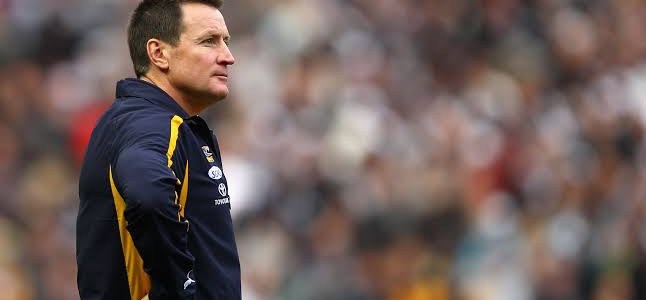
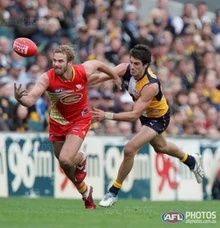
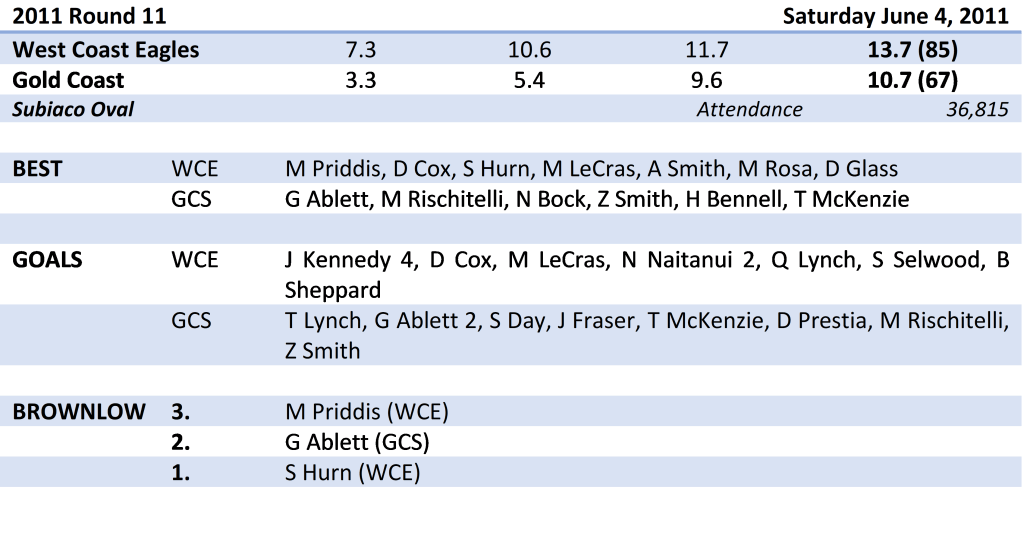
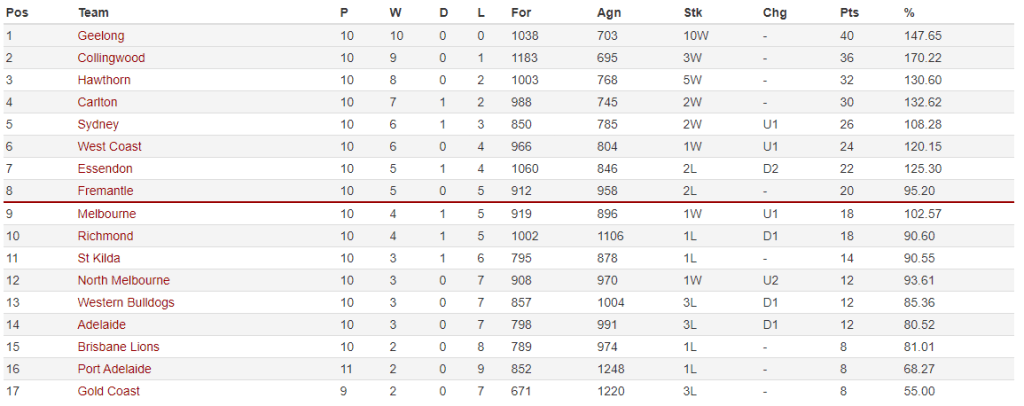
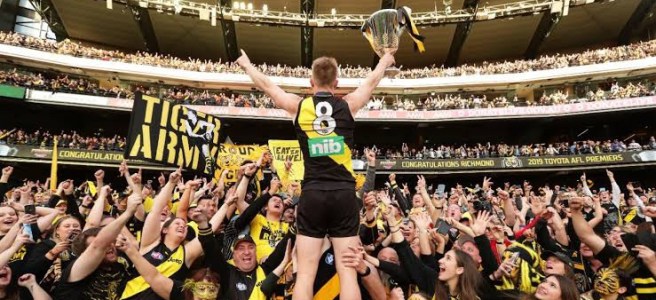
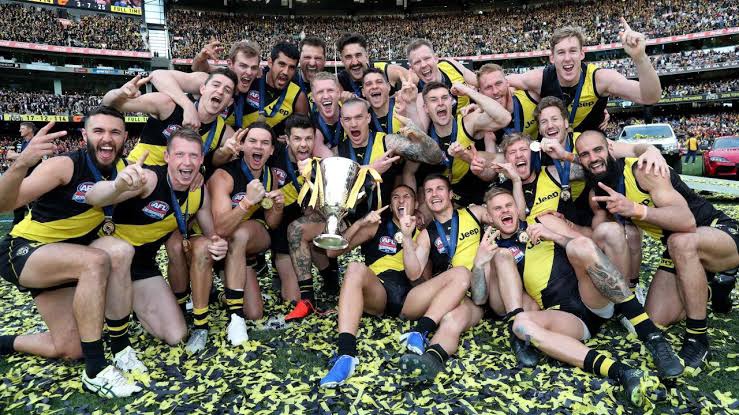

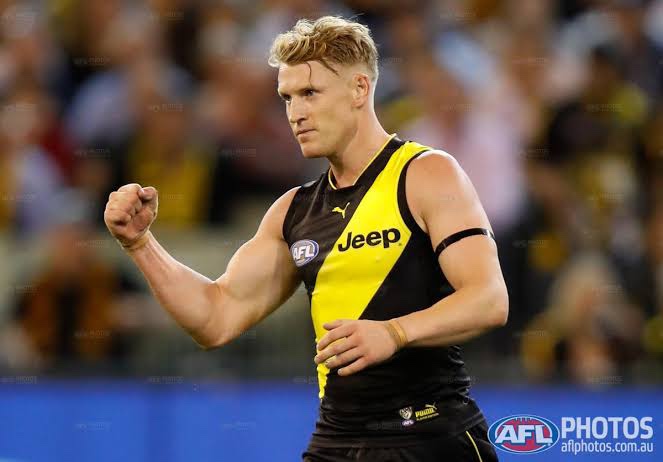
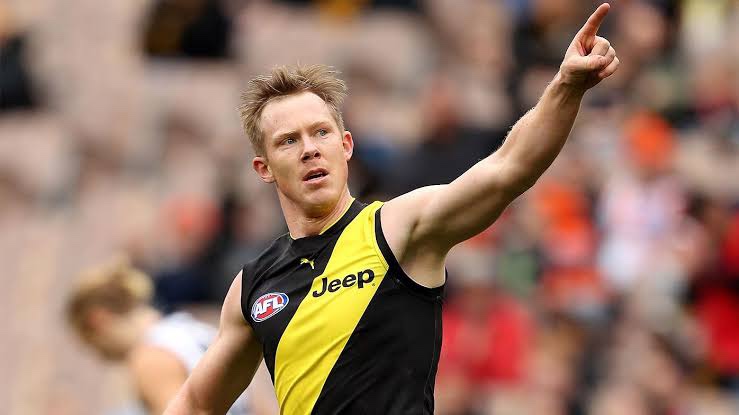
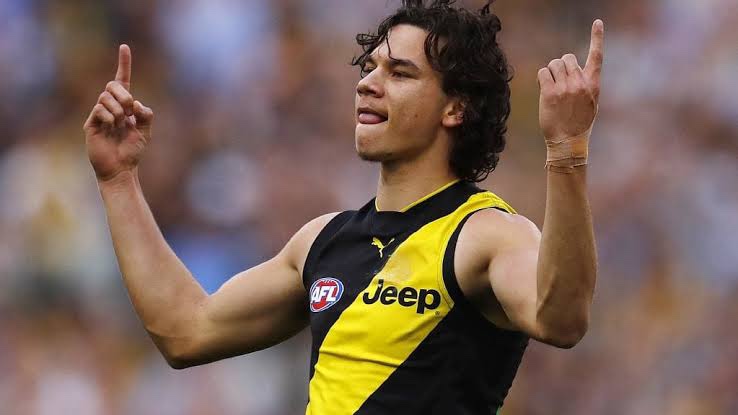
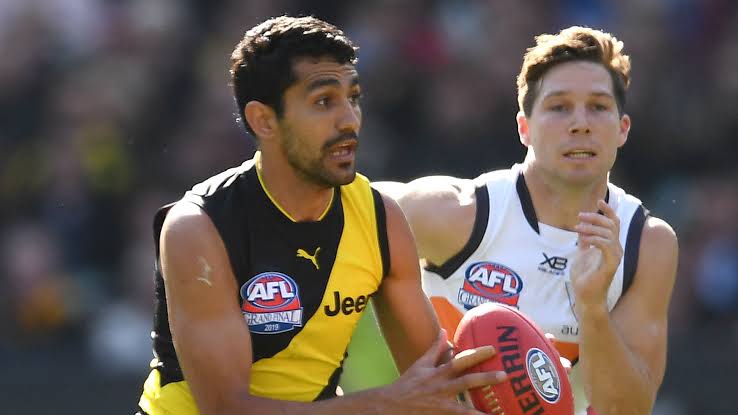
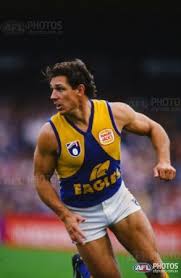
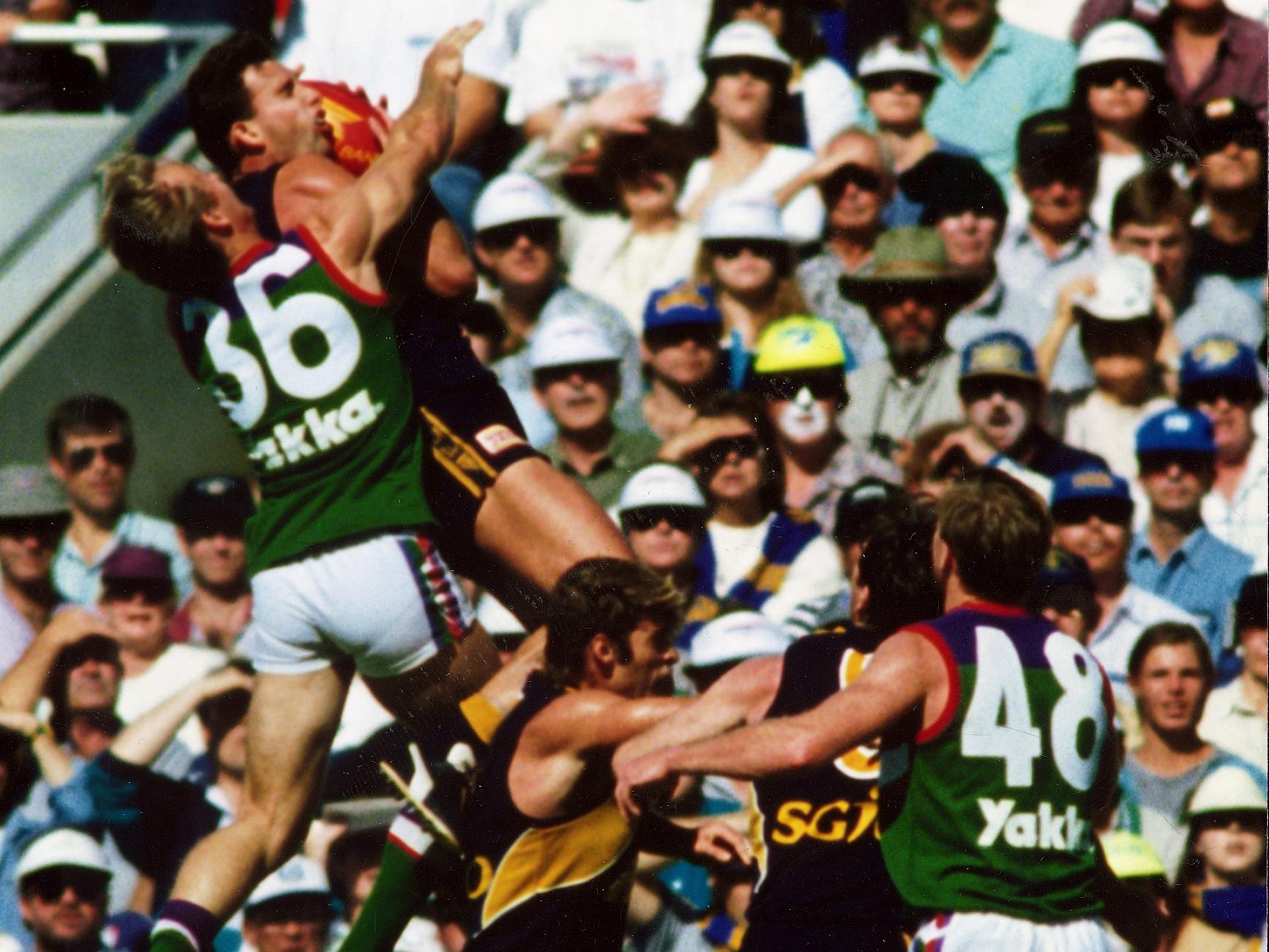
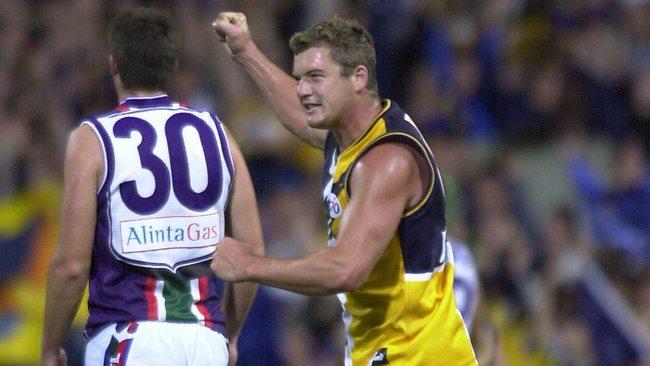
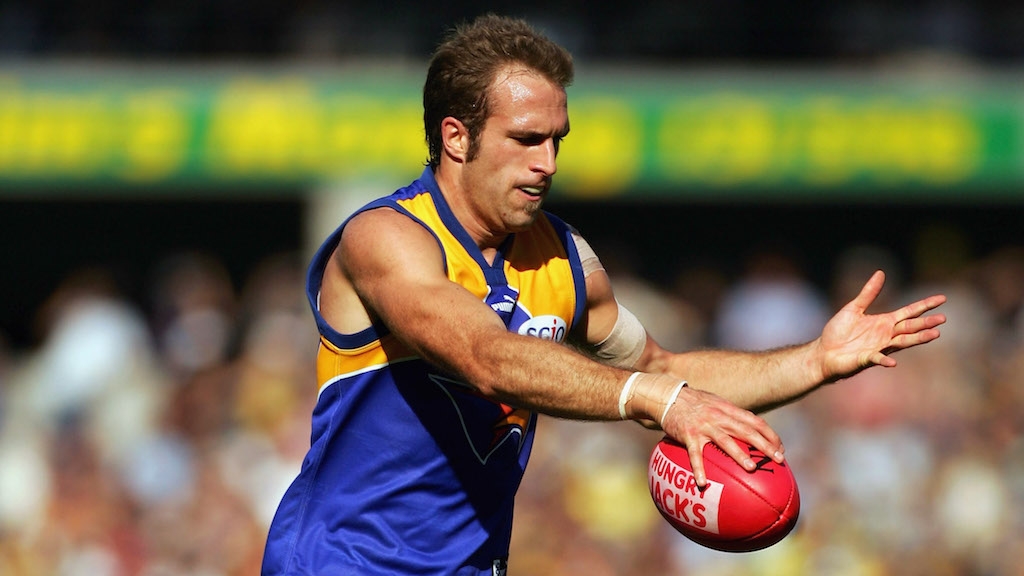
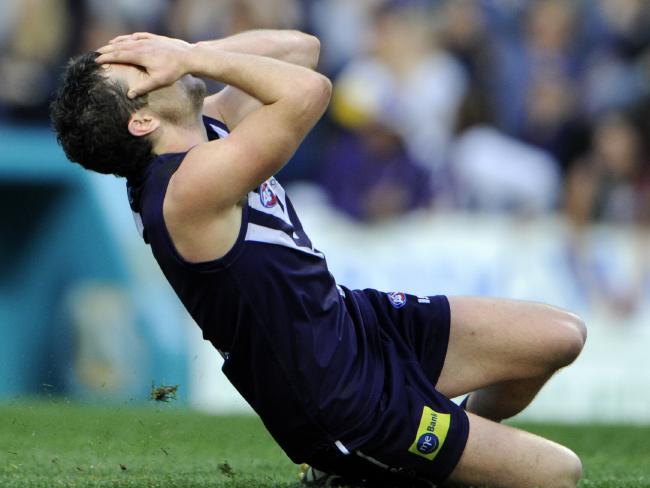

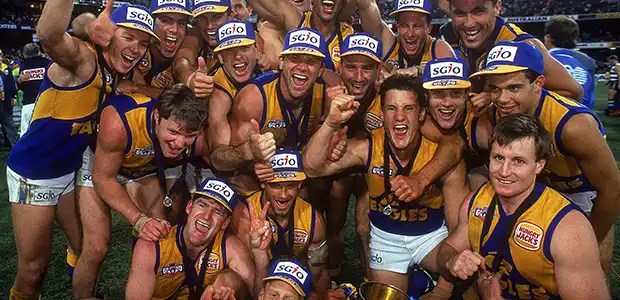
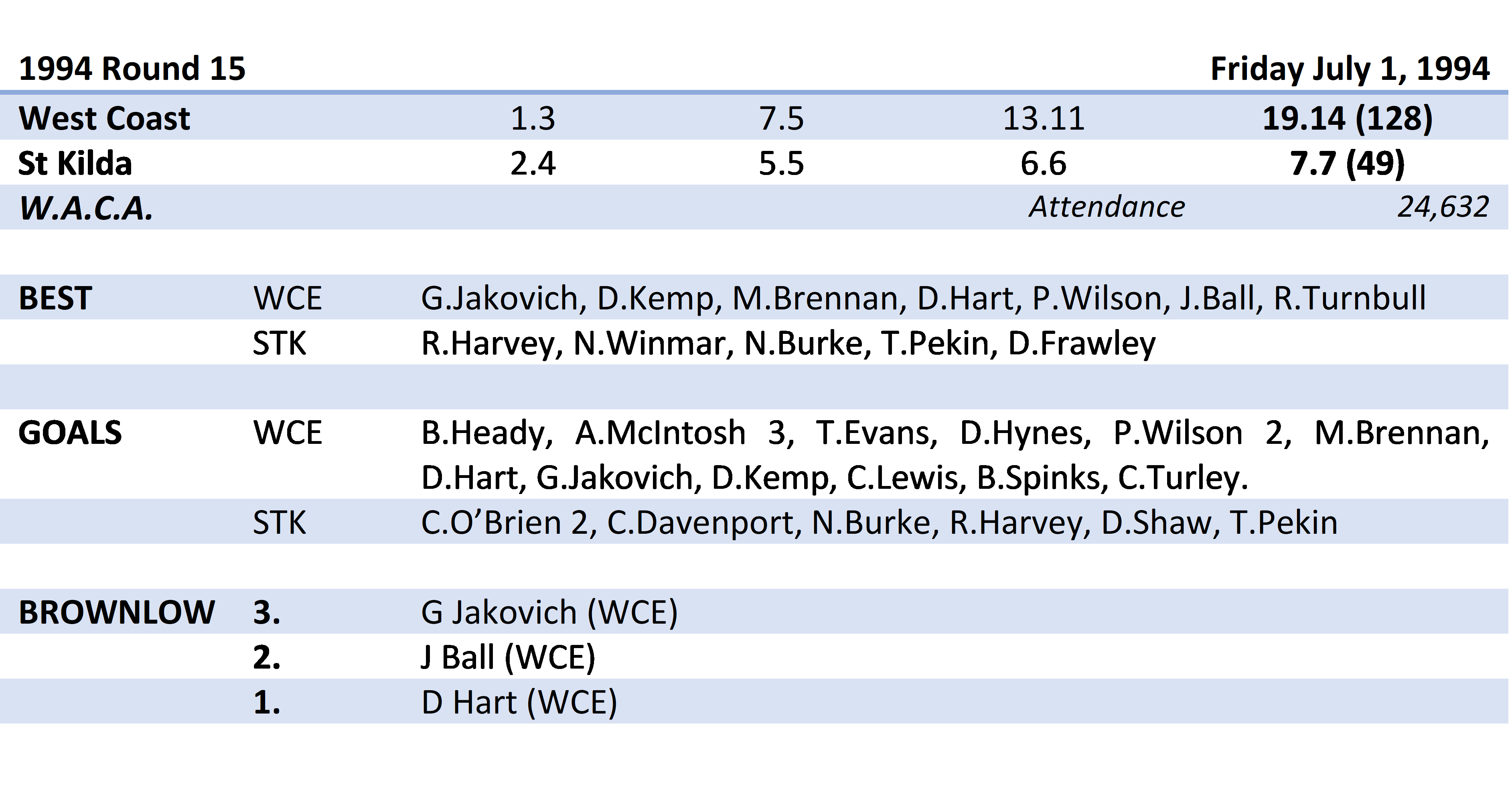
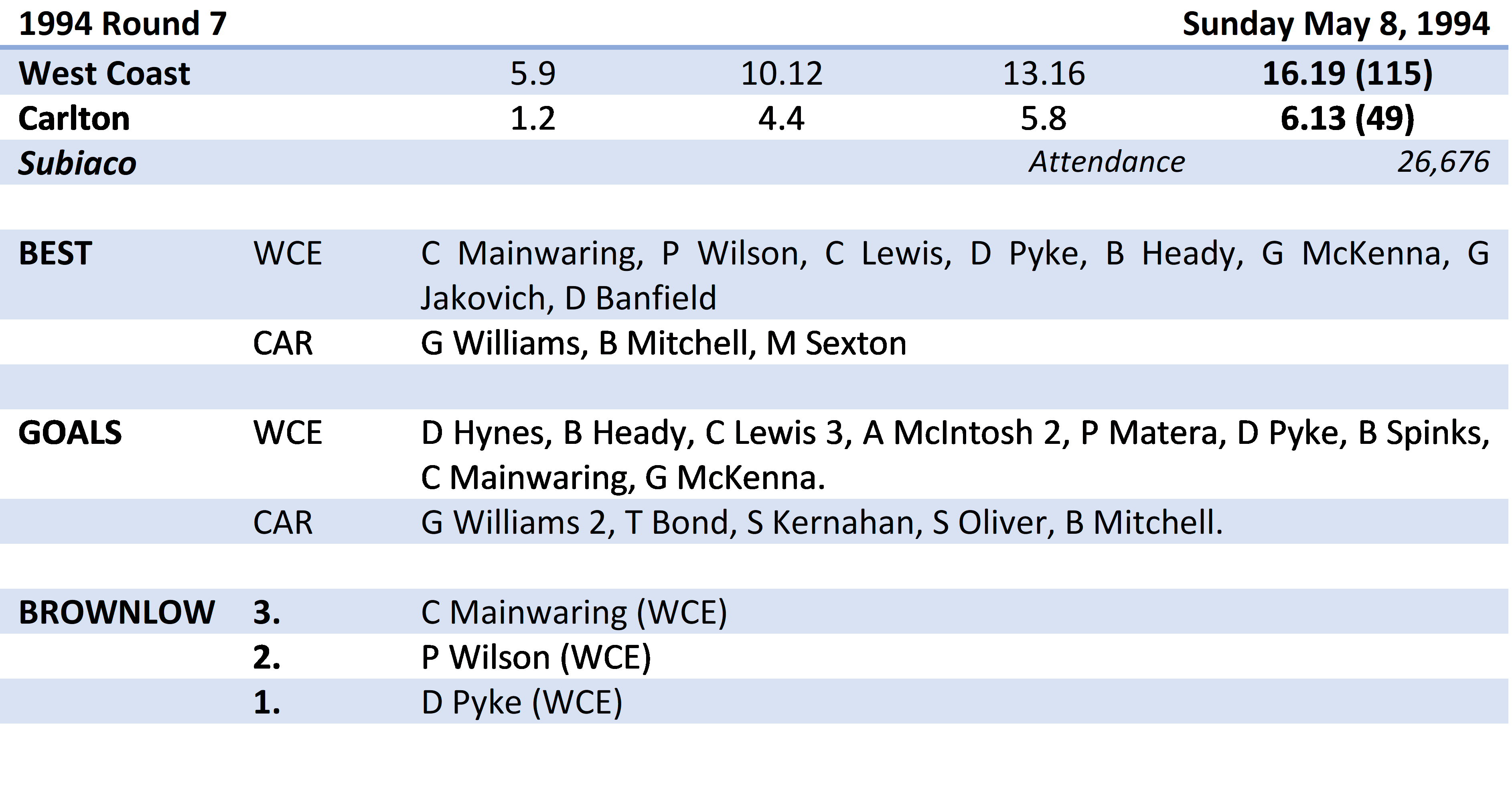
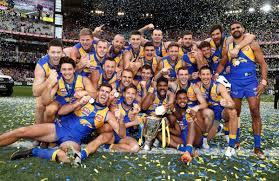
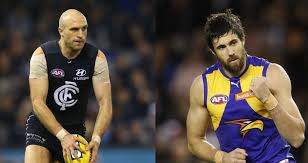
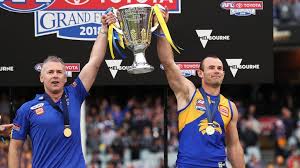

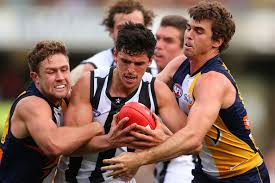
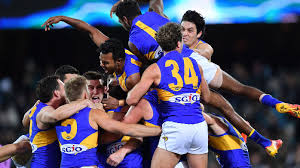
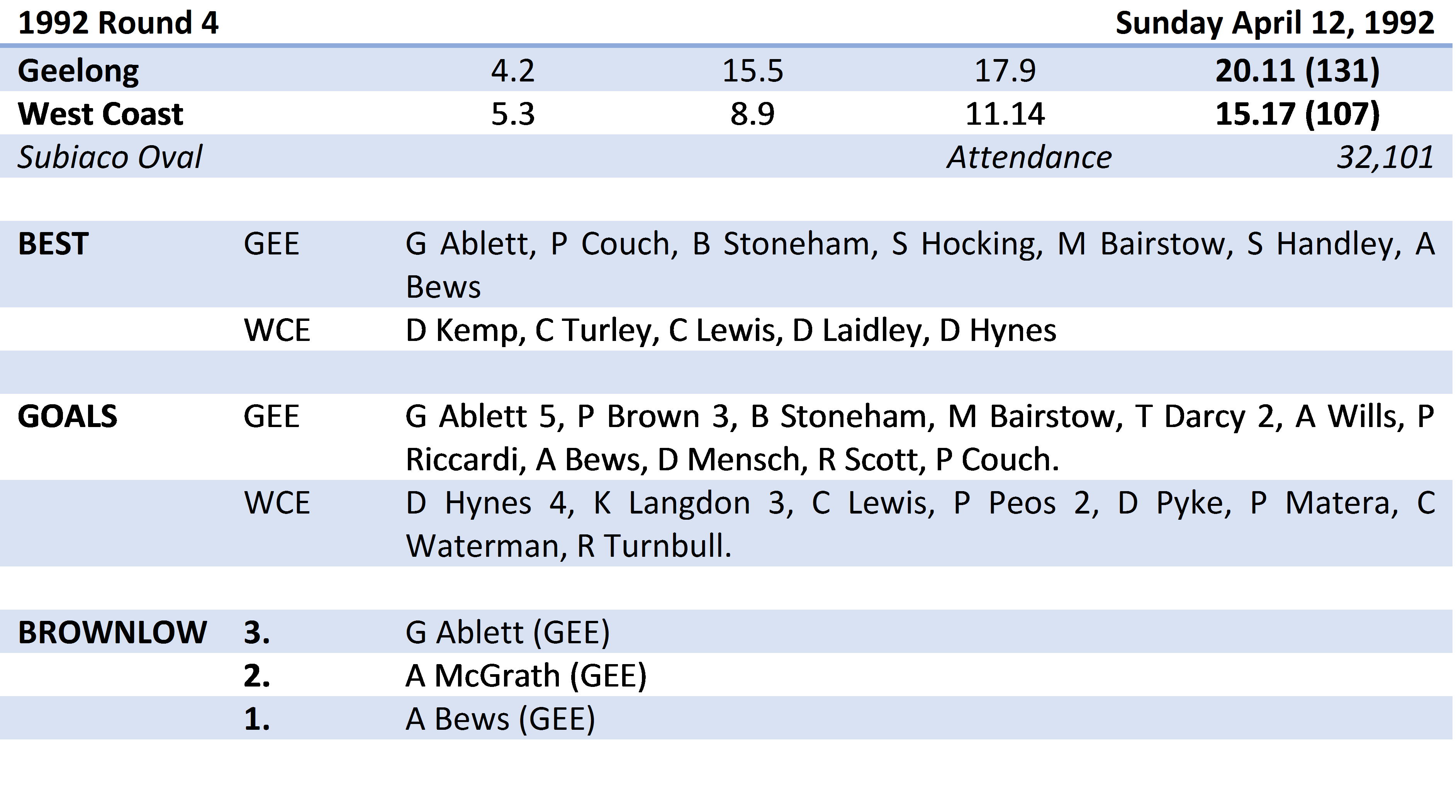
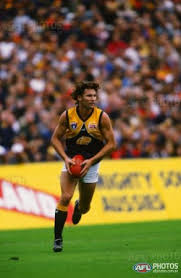
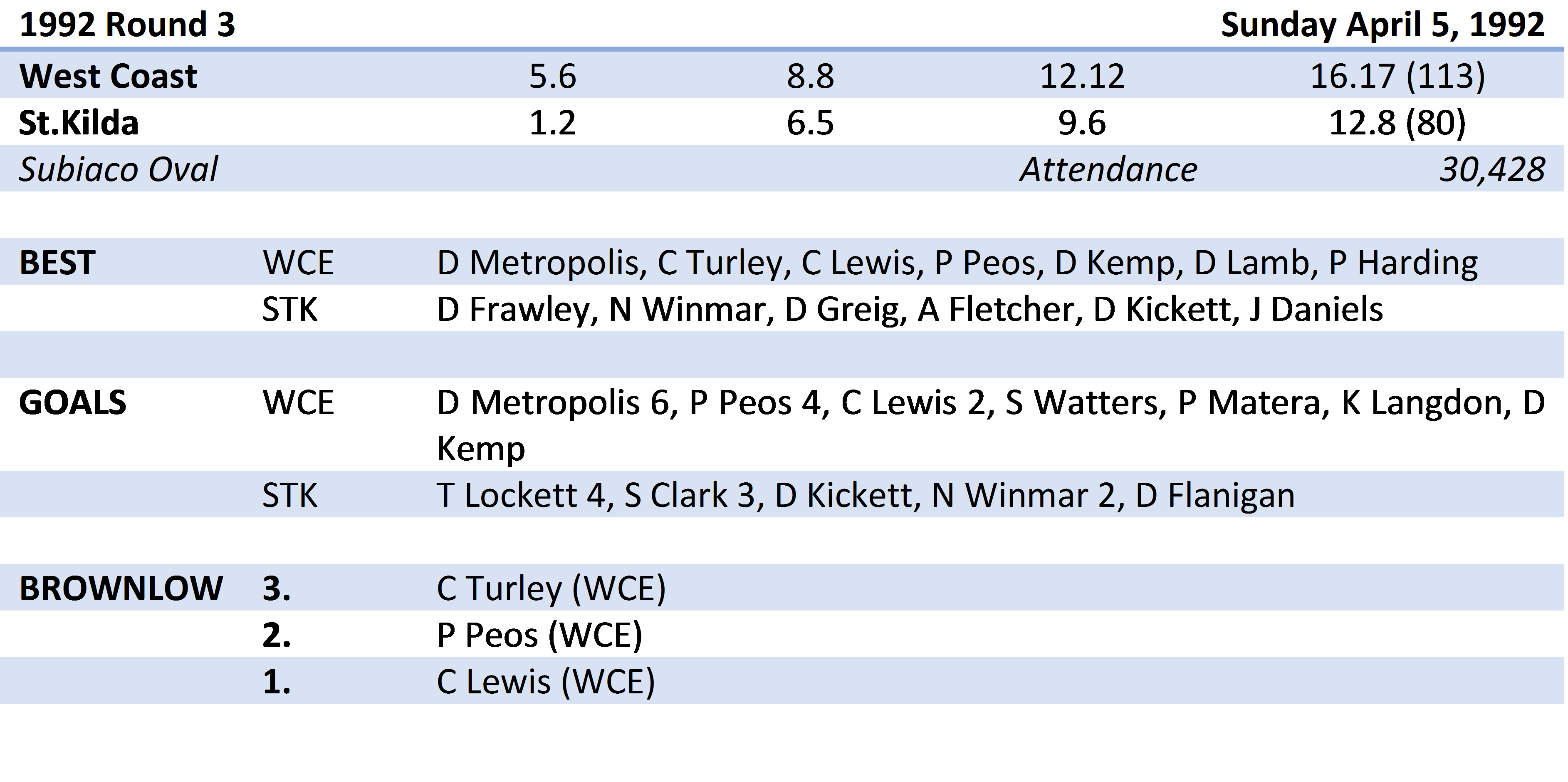
 sportsphrase.blog