
Second Quarter Burst Proves The Difference
The Eagles may have wondered where their goals were going to come from in their clash with Carlton at Princes Park, but they need not have worried as they tallied their highest score of the season so far in a 31 point win over the Blues.
The Eagles started the game without their three leading goalscorers from the season – Peter Sumich, Brett Heady and Karl Langdon – but found the spread of contributors they required to post a winning score.
Eleven Eagles kicked majors, with Craig McGrath and Peter Wilson leading the way with three apiece.
In a high scoring encounter, both sides opened with five goals, and each side managed eight goals after half time, but it was a seven goal burst to the Eagles in the second quarter that steered them to their 12th win of the season.
The victory also marked the Eagles’ first win over Carlton at their home ground in the third clash between the two teams at the Blues’ home ground.
West Coast coach Mick Malthouse believed the win would do wonders for the confidence of his side. “There was just that lingering doubt in the back of their minds about whether we could win here. I would hope that we have turned that corner.”
The Eagles made two changes with full-forward Peter Sumich ruled out with a hamstring injury and Brad Gwilliam dropped after just one game back with the senior team. Despite the absence of Sumich, Stevan Jackson was surprisingly overlooked as his replacement, having served his one match ban.
Instead Peter Melesso was picked for his first senior game in 1990 after a consistent season with East Perth. Dean Kemp also returned after a fortnight sidelined with a hamstring strain.
The Blues also made two changes with important players Fraser Brown and Peter Dean included for dropped pair Simon Verbeek and Tim Rieniets.
Carlton had won four of their past five games to have them outside the top five on percentage, with the only blemish a nine-goal defeat to league leaders Collingwood. With Hawthorn and Melbourne expected to account for their opponents in Brisbane and Fitzroy, a win at home against West Coast was imperative to stay in touch.
Jackson would find his way into the Eagles side ahead of the opening bounce, when Karl Langdon was a late withdrawal due to illness.
With losses in their last four visits to Melbourne, a strong start from West Coast was required, and the two teams traded blows in the first quarter, booting five goals apiece. The Eagles controlled much of the early play, but Carlton were able to maximise their opportunities up forward.
But in the second quarter, it all turned the way of the visitors.
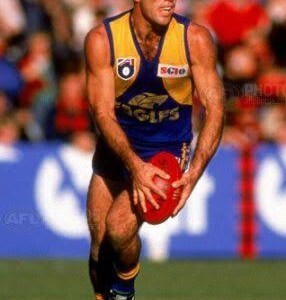
Stephen Malaxos was once again the catalyst, as West Coast got the upper hand in the stoppages. The Eagles captain teamed up with Craig Turley, in the centre as the Eagles continually surged the ball forward to hit the scoreboard.
Conversely, the Blues started to struggle under the Eagles man-on approach and were made to pay for costly mistakes down back.
The Eagles had customarily built their season on their rebound from defence and their ability to outgun the opposition, but West Coast employed a far tighter approach on their opponents, and the Blues cracked.
Malaxos put the Eagles two goals clear early in the term when he marked an errant kick out of the back pocket from Tom Alvin, before Melesso marked his return to senior football with a goal after Jon Dorotich dropped a defensive mark in the goal square.
Fraser Murphy twice responded with goals in the quarter, first after Melesso’s major, and then again after Dwayne Lamb goaled, but the Eagles finished with the final three goals in the term in what would be a match-winning break.
Craig McGrath ran onto a clever handball from Troy Ugle to boot the first, before Craig Turley goaled from a long range effort after some quick transition play by Chris Mainwaring and John Worsfold through the middle of the ground. Dwayne Lamb then added a second goal for the term after being found in space by Dean Kemp to put West Coast 33 points clear at the main break.
The Eagles applied the clamps through the second half as the margin hovered around the five goal mark for the rest of the game.
Dwayne Lamb claimed another victim for the year in his tagging role on Craig Bradley, restricting the Blues prime runner to 19 disposals. Lamb himself finished with 22 touches and two goal to be one of the Eagles’ best, with the centreline of West Coast getting the better of their counterparts.
David Hart ran with Andrew Phillips, Malaxos had the better of Adrian Gleeson and Craig Turley and Chris Mainwaring were too strong on the wings for Mil Hanna and David Glascott.
Guy McKenna led the Eagles possession winners with 28 from half back, with Turley the next best with 25 and two goals. Chris Lewis had 23 disposals through the centre, while Peter Wilson was ever-present with 20 possessions at half forward.
Craig McGrath appeared to relish being the focal point, producing the finest game of his short career with 22 touches and three goals.
In defence, Michael Brennan had the better of Simon Minton-Connell, although the Blues forward managed to boot three goals late.
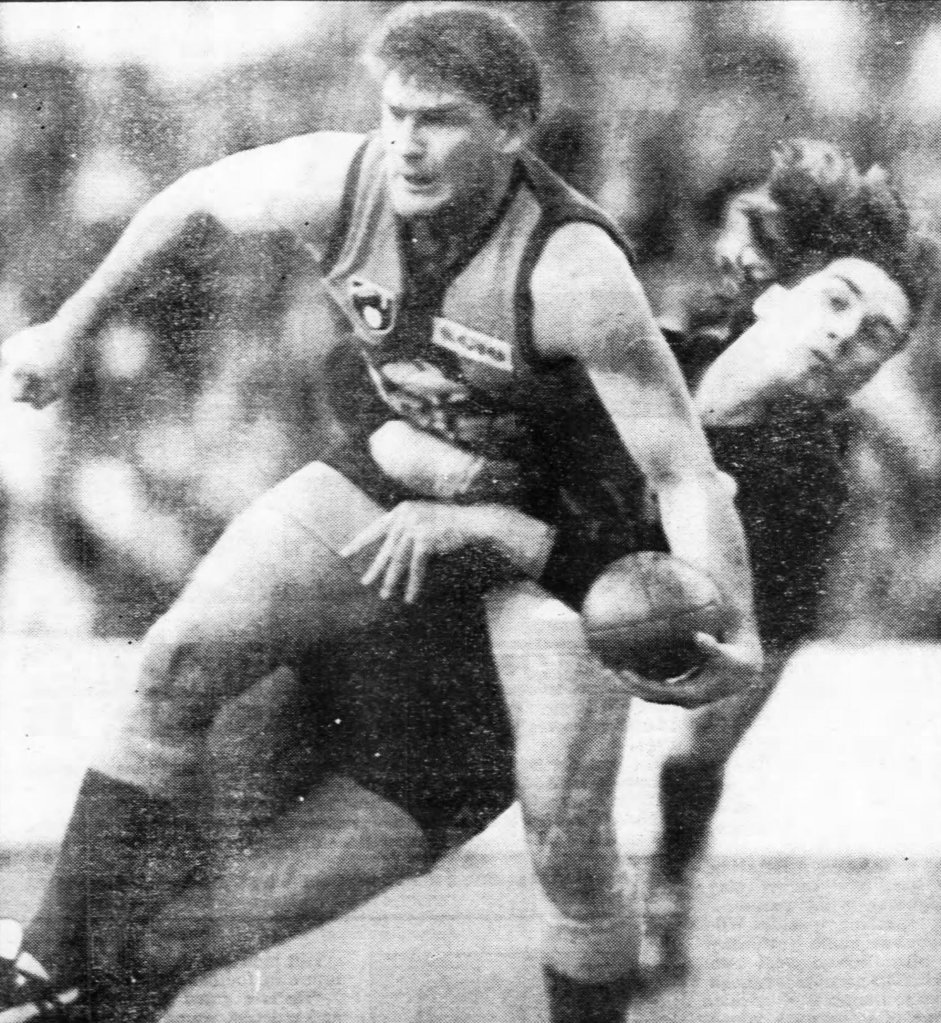
Wayne Johnston was the clear best for Carlton with 32 touches in the middle of the ground, while Stephen Silvagni stood tough in defence in the first half before switching forward after half time. Stephen Kernahan booted four goals from 15 disposals and ten marks, in an intriguing battle with Phil Scott.
After the game, Alex Jesaulenko was upbeat about his sides’ hopes of still making finals, but the defeat to West Coast saw them complete the round in eighth spot, a game and percentage behind the Hawks.
Hawthorn held onto fifth spot after fighting their way past a tough Brisbane outfit. The Hawks early inaccuracy almost proved costly as the Bears raced to a 25 point lead at quarter time. Hawthorn booted 1.7 in the first term, before closing within 11 points at the main break as their kicking on goal improved slightly.
Nine goals to four after half time saw the Hawks home, with Footscray taking the Blues spot in sixth position when they held onto a valiant three point win over the top-of-the-table Magpies in one of the games of the season. Like the Hawks, Collingwood fell to an early deficit due to poor conversion, before just failing in their bid to steal the win.
At three quarter time, the Magpies still trailed by 26 points – despite having two more scoring shots – but they grabbed the lead late in the final quarter after rattling on five goals. However, Stephen Kolyniuk bobbed up for the match-winner for Footscray when he marked 45 metres out and audaciously ran around Graeme Wright on the mark to kick the decisive goal.
The result saw Collingwood lose top spot on the ladder, with Essendon moving back to the top following a thumping 79 point win over a dismal Richmond. Melbourne made it consecutive wins when they held off Fitzroy by 19 points to stay a game ahead of the Hawks and Bulldogs in fourth.
North Melbourne and St Kilda remained in the logjam for fifth spot with wins over Geelong and Sydney. John Longmire booted seven goals as North Melbourne held off the Cats in a high-scoring encounter, while the Saints were just glad to have their full forward playing again in a comfortable win over Sydney.
Tony Lockett returned for his first game in over two months, booting three goals. Stewart Loewe (five goals) and Nicky Winmar (four) were the major contributors for the Saints as they put the disappointment of consecutive narrow losses to West Coast and Carlton behind them in a 75 point thrashing of the Swans.
The Saints were two games behind the Hawks, but their superior percentage meant they were still a sneaky chance for finals with five rounds remaining in the season.
For West Coast, losses to Essendon and Collingwood in the previous two weeks had seen the Eagle close within a game of the pair, opening the chance they could still finish in the top two.

 sportsphrase.blog