West Coast continued their winning ways in Perth, but it came at a cost with full-forward Peter Sumich suffering a concerning hamstring injury.
The Eagles recorded their 14th straight win at home, jumping out to a five goal lead at the first change before holding the Bulldogs at bay for the rest of the evening to run out 43 point winners.
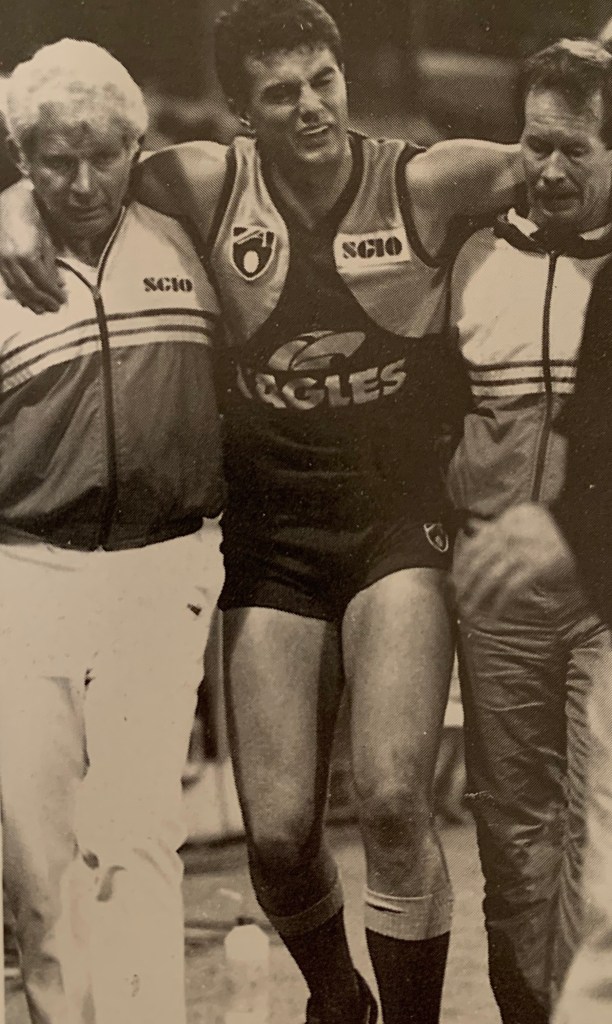
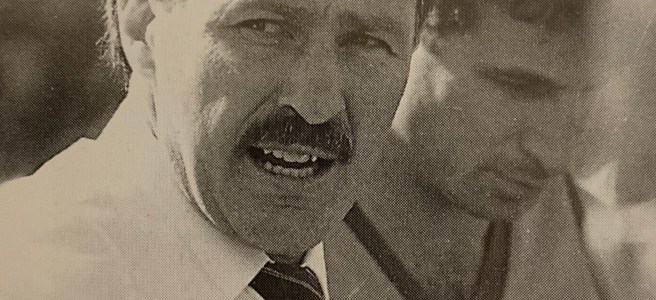
Peter Sumich was the key difference in the first half, booting six of the Eagles’ seven goals for the half, but his night quickly soured when he was helped off by trainers early in the third term. While Sumich remained upbeat after the match that the injury wasn’t too serious, coach Mick Malthouse was more downcast.
“Peter (Sumich) says he’ll be right for next week, but that would mean a miracle cure,” Malthouse said.
“Injuries like that are generally two to four weeks, so we’ll have to get by without our major goal-scoring avenue.”
The Eagles made two changes to the side to tackle Footscray with Brad Gwilliam and Dean Turner coming into the line-up. Turner replaced Dean Kemp, who had originally been named as a replacement for Brett Heady but was forced to withdraw ahead of the opening bounce. Stevan Jackson was the other omission, serving a one week ban for striking Russell Jeffrey.
Footscray arrived in Perth on a three game winning streak, having broken into the top five the week before after their win over Sydney. The Bulldogs made just the one change with captain Doug Hawkins returning to the side, replacing Mark Williams.
After conceding nine goals in the opening quarter against the Saints a week earlier, it was a vastly different start for West Coast.
The Eagles held the Bulldogs goalless in the opening term, kicking five goals with the breeze to take an early advantage. Peter Sumich kicked the first four goals in the match, proving a handful for Footscray defender Adrian Campbell with Peter Wilson swooping on a loose ball to add a fifth late in the term.
Footscray got on the board with two majors early in the second term, but Sumich added his fifth and sixth goals for the game to keep West Coast four goals to the good at half-time. Bulldogs coach Terry Wheeler was forced to shuffle his defence in a bid to stop Sumich, but in the end it was Sumich’s left hamstring that halted the full-forward’s influence.
Not that Wheeler didn’t have other matters on his mind.
Malthouse was winning the tactical battle between the two coaches as West Coast smashed the Bulldogs through the midfield.
David Hart and Dwayne Lamb were both assigned negative roles restricting the influence of Tony McGuinness and Tony Liberatore. Stephen Malaxos was matched against former Hawthorn teammate Terry Wallace in the centre and he claimed the honours with Wallace dragged during the third term, remaining on the bench until the final siren.
Malaxos finished the game as one of the Eagles’ best with 35 disposals and a goal, but he was bettered for best afield honours by wingman Chris Mainwaring.
Mainwaring managed a personal best 45 disposals (20 kicks and 25 handpasses), falling just three possessions short of Malaxox’ club record 48 touches against the Saints in the final round of 1987.
The blonde Eagle provided the link between the Eagles defence and forward half, as West Coast regularly hurt the Bulldogs on the rebound. Without Sumich through the second half, the Eagles went small, with the goals shared amongst the midfield and half forwards.
Peter Sumich is helped off by trainers after damaging a hamstring
As well as Malaxos and Mainwaring, Chris Lewis (23 diposals) and Craig Turley (22) were both proficient through the middle and Guy McKenna provided the rebound with 20 touches. David Hart was able to get the better of McGuinness with 19 disposals and two second half goals.
Despite the attention of Dwayne Lamb, Tony Liberatore still managed to lead the Bulldogs’ ball winners with 29 touches. Brian Royal was arguably Footscray’s best with 23 touches and a goal, while Glenn Coleman had the better of Dean Irving around the ground to collect 27 disposals and eight marks.
Up forward, Chris Grant was providing a strong focal point for the Bulldogs. The 17 year old was too nimble for Michael Brennan but he wasted his chances on goal finishing with an inaccurate 2.5. Grant’s tally was symbolic of the Bulldogs night, with Terry Wheeler remaining positive about his sides’ finals hopes post-match.
“We blew a chance to consolidate our place in the top five, but I couldn’t question the endeavour of the players or the way they fought the game out.”
“With a bit more goal-shooting luck, we could have been five points behind at quarter-time, not five goals and that would have made a big difference.”
The defeat saw Footscray fall back out of the five as the rest of Round 16 played out. Hawthorn moved back into fifth position with a percentage boosting win over Richmond, courtesy of an 11 goal performance from Dermott Brereton.
Brereton himself outscored the Tigers by four points as Hawthorn controlled the contest from the outset to run out 91 point winners. The Hawks had yet to show their premiership winning form of 1989 on a consistent basis, but were doing enough to keep themselves in the finals hunt.
Carlton also moved past the Bulldogs when they beat an inaccurate St Kilda at Princes Park. The Saints had five more scoring shots, but still went down by 15 points to the frustration of coach Ken Sheldon. Nicky Winmar (4.5) and Ricky Nixon (0.4) were the main culprits on the scoreboard, with the defeat all but ending St Kilda’s finals hopes for 1990.
1989 Grand Finalists Geelong also appeared done for 1990 when they slumped to a 27 point loss to Fitzroy. The Cats led by five points at half-time, but ten goals to five after the major break saw the Lions home at Waverley Park. Paul Roos (six goals) and Richard Osborne (four) were the difference between the two sides.
The race for the final spot in the top five was effectively down to four clubs, with the Hawks, Blues and Bulldogs all sitting on nine wins and the Kangaroos still in the hunt, one win back, after they came from four goals down at quarter time to defeat the Brisbane Bears by 36 points.
At the head of the ladder, the Magpies moved one game clear after Melbourne produced a stunning resurgence against the Bombers. The Demons were staring down the barrel of a fourth straight defeat early in the final quarter at Windy Hill when Greg Anderson’s goal from the boundary stretched the Bombers lead out to 34 points.
Melbourne then produced a stunning flurry, booting seven goals in 17 minutes to secure a narrow win, and right their ailing season. Collingwood moved to the top of the ladder with a 24 point win over the Swans in an entertaining clash. The two sides combined for 40 goals in the match with Sydney defying their second-last position to take it right up to the Magpies.
Collingwood led by five goals at three quarter time, but on three occasions in the final term the Swans closed within five points. However the Magpies were able to settle and bank the four points.
The Eagles sat comfortably third on the ladder following the win over Footscray and with games to come against Carlton, Sydney and Richmond, hopes of a double-chance finish were well within their sights.
Early in the second quarter of the Eagle’s clash against St Kilda, most of the 20,000 strong crowd who had braved the inclement conditions sat in stunned silence.
An errant handball out of defence by Dwayne Lamb had gone straight to Saints wingman Robert Harvey, who swung the ball inboard to Nicky Winmar. Winmar strolled through the 50m arc and sent the ball through for the Saints 10th goal.
It was Friday the 13th and the Eagles were in their own horror story, trailing by 50 points.
Just over an hour later West Coast were celebrating one of their most famous wins, off the back of a Jekyll and Hyde performance from utility Troy Ugle.
Ugle had had the ignominy of being dragged to the bench late in the first term as opponent Craig Davenport ran riot in St Kilda’s fast start.
Davenport booted the opening three goals of the game and by the first break he had five to his name, and was on to his third opponent. After starting in the middle, Dwayne Lamb had been deployed to the back pocket, replacing David Hart who had switched into defence as Ugle’s replacement.
Davenport had ignited the Saints, who piled on seven goals before West Coast had scored. In fact, the Eagles had entered their forward 50 just once, with the Saints routinely winning the ball out of the middle through Frank Coghlan and Nathan Burke.
The Eagles finally hit the scoreboard when Peter Sumich received a free kick for being held, after the home side’s most productive passage of play for the evening. Nathan Burke responded with a clever goal from the boundary before Brett Heady added a second for West Coast. The rookie midfielder ran into an open goal after he snuck out the back of a marking contest, set up by Chris Mainwaring on the wing who won two decisive contests to send the ball forward.
However, Peter Russo was able to goal after the quarter time siren to record St Kilda’s ninth goal for the term, resulting in their best first quarter score in over a decade.
After the insipid performance against the Magpies the week before, this was not the start Mick Malthouse would have been hoping for.
The Eagles made four changes to the side that lost to Collingwood. Dean Kemp and Phil Narkle were both sidelined with injury, while Todd Breman and Murray Rance were dropped. Chris Mainwaring returned from a knee injury, Craig McGrath was back from suspension and Geoff Miles and Tony Begovich were also recalled.
The selection of Begovich was particularly surprising, with Begovich rising to the senior squad after a fortnight with the Claremont reserves team – bypassing the senior Claremont side to earn a spot in the Eagles squad. The inclusion of McGrath was also noteworthy, because with Stevan Jackson holding his place, the Eagles forward line was set to be top-heavy with McGrath, Jackson, Langdon and Sumich all forward of centre.
The Saints made three changes for the trip to Perth, with West Australian Nicky Winmar returning to the side, while Kain Taylor earned a recall and Greg Doyle was selected for his debut. Doyle was named at full forward with the Saints still without spearhead Tony Lockett.
St Kilda also lost half forward Ricky Nixon and midfielder Jim Krakouer to injury. Jody Arnol was dropped.
Despite the failed case example of the Hawks a fortnight earlier, the Saints opted to fly into Perth on the morning of the game. Hawthorn coughed up eight of the first nine goals against the Eagles, but it was the complete opposite for the Saints who burst out of the blocks.
Incessant rain leading up to the opening bounce had turned the WACA into a muddy quagmire – not dissimilar to the playing conditions normally expected at Moorabbin – and it was St Kilda who adapted quickest.
An all-in brawl ahead of the first bounce had players riled up early, but while West Coast were intent on attacking the man, the Saints maintained their focus on the ball. The result was a one-way stream of goals, with Davenport the recipient.
Davenport had the first of the match inside 30 seconds, and added two more before Coghlan floated forward to mark in front of Michael Brennan and Doyle to put through the Saints’ fourth. Davenport then chimed in with two more majors as West Coast struggled to get a hold of the contest.
When Phil Scott overran a bumbling ball inside the Saints forward 50, Stewart Loewe had slammed through the visitor’s seventh goal of the term with West Coast unable to get the ball past the halfway mark.
The Eagles were finally able to get onto the scoreboard through the goals to Sumich and Heady, but their first quarter performance was best summed up by a bizarre piece of play by Chris Lewis inside the final minute of the term.
With the Eagles attempting to the win the ball back on their half forward line close to the boundary, Lewis believed the ball had crossed the line ahead of the boundary umpire making the call. Lewis stopped the play and nonchalantly handpassed the ball directly over the line, only to give away a free kick for deliberate out of bounds.
The Saints ultimately managed a point from the free kick, but made the Eagles pay shortly after when Jayson Daniels won the ball back from the resultant kick-in and found Peter Russo at half forward to goal and take their quarter time lead to 44 points.
If the perplexity of Lewis’ error on the forward line wasn’t enough, there was further drama through the middle of the ground as St Kilda built their play leading up to Russo’s missed attempt. Centre half forward Stewart Loewe was felled behind play with the Saints medical team frantically running onto the field and calling for the stretcher.
With great relief to Saints fans, Loewe refused the stretcher and was able to join his teammates in their quarter time huddle, walking off under his own steam.
Eagles coach Mick Malthouse was expectedly displeased with his sides showing, chastising his players’ ‘disgraceful’ effort.
Malthouse may have hoped for an immediate response at the start of the second term, following his quarter time spray, but the Saints maintained their control on the game stretching out their lead to 50 points when Winmar slotted the opening goal of the quarter.
Troy Ugle had made the switch from the back pocket to the forward pocket, but that did little to change his fortunes when he gave away a free kick just as Craig McGrath was set to kick on goal.
With the game on the Saints’ terms, the Eagles needed a spark and they found it through firebrand Karl Langdon.
The enigmatic blonde kicked two goals and set up a third as West Coast worked their way into the game off the back of careless errors by the Saints. Jayson Daniels was the culprit on both of the goals to Langdon, first turning the ball over at half back to John Worsfold, who in turn found Langdon in space at the top of the 50m arc and then again moments later when an ambitious kick into the middle was picked off by Chris Lewis and resulted in a second major to Langdon.
Around the ground, West Coast were gaining the ascendancy. Dwayne Lamb continued to quell Craig Davenport, with the Saints suddenly looking short of options up forward. Despite the conditions, many of the Saints small forwards couldn’t find the ball, with John Worsfold and Guy McKenna providing plenty of rebound for the home side.
Through the middle Coghlan and Burke both drifted out of the game, while Nicky Winmar was being well contained by Craig Turley. Chris Mainwaring was providing the link up play on the opposite wing and ruckman Dean Irving was starting to wield an influence in the ruck, bringing the likes of Stephen Malaxos and Lewis into the game.
Stewart Loewe kicked a settler for the Saints after marking on the behind line, but the Eagles continued to push forward with Ugle hitting the scoreboard after another poor Saints error. A simple dropped mark by Damian Kitschke on the wing allowed Turley to gather the loose ball and find David Hart in space.
Hart kicked inside forward 50 looking for Peter Sumich, but Ugle was able to drift across the pack and mark, kicking his first goal in the match and heading into half time with a small hit of confidence.
The Eagles still trailed by five goals at the main break, but momentum in the game had noticeably shifted to the home side. Paul Harding was deployed as a loose man in defence for the Saints as West Coast continued to surge with the aid of the breeze.
A string of behinds in the dying minutes of half time prevented West Coast from being closer, but the Eagles coaching staff and players would have been immeasurably more pleased at their position in the game than quarter time.
Many of the Eagles’ playmakers had worked their way into the game through the second half of the quarter, although there were still concerns up forward with Jackson, McGrath and Sumich all lacking any significant impact.
Saints captain Danny Frawley was wearing Sumich like a glove, although there was concern for the skipper when he headed into the changerooms at half-time over a shoulder complaint.
The third quarter started very much as the second quarter had ended, even with West Coast now working back into the wind. The Eagles monopolised the early possession and were able to lock the ball in their forward half but failed to capitalise on the scoreboard.
Against the run of play, debutant Greg Doyle stepped up to kick a major, but the Eagles would not be deterred. Ugle bobbed up for his second goal of the game after a clever one-handed juggling mark before a tight battle ensued.
Both defences were on top as the game sat on a knife’s edge.
Robert Harvey and Stewart Loewe both failed to score for the Saints, while the Eagles also wasted opportunities at their end. Chris Lewis and Peter Wilson both missed gettable chances, while Craig Turley has a shot marked on the line.
The desperation in the game was no more evident than a sickening clash that saw Langdon forced off the ground after being crunched by Peter Sumich and Kain Taylor.
Eventually, it was the Eagles who broke through. After a period of sustained ball in their forward half, Tony Begovich marked a clearing defensive kick from the Saints, and sent the ball back to the top of the goal square where McGrath floated through to mark and convert the simple finish.
Stewart Loewe had one final chance for the term, after the three-quarter time siren, but his shot from 60m failed to make the distance, and the Eagles would turn for home just 19 points in arrears.
The start of the final term was played at a frenetic pace. The ball zipped up and down the WACA as both sides looked for the vital first goal. Bernie Harris was brought down twice close to goal, before Chris Mainwaring had a long shot that sailed out of bounds.
Peter Sumich would ultimately kick the all-important first goal.
The Eagles full forward was the recipient of a free kick against Frawley and duly slotted his second goal of the evening from the forward pocket. The goal kick-started a flurry of majors for the home side, with the Eagles kicking four goals in as many minutes to take the lead for the first time in the evening.
Stewart Loewe – now virtually the Saints only viable target forward of centre – restored the Saints lead after marking in the goal square, but West Coast continued to press. Ugle and Begovich both missed to tie the scores up, before Ugle had the final say on the contest.
The diminutive forward was proving a handful for Kain Taylor, kicking the next two goals. The first came after Stephen Malaxos was released from a clearance through clever work by David Hart, hitting Ugle in space. Shortly after, Chris Mainwaring’s long ball to the top of the goal square was marked by Ugle drifting in front of the pack.
Loewe kicked his fourth for the night to bring the Saints back within a goal, but Ugle’s fourth goal for the quarter, and sixth for the match had the game in West Coast’s keeping. Karl Langdon symbolically kicked the final goal of the game to complete the Eagle’s historic comeback, having miraculously returned to the field after having his face smashed in during the third term.
Troy Ugle proved the epitomy of the Eagles’ performance against St Kilda, well beaten early in the game before returning to ignite a famous West Coast win.
The storming final quarter had produced eight goals for the Eagles – as many as they had kicked in the first three quarters – to produce their 10th win of the season and position them two games inside the top five. For St Kilda, their eighth loss of the year had all but ended their finals hopes.
Shatteringly for the Saints, all eight losses in 1990 had been under 20 points. Coach Ken Sheldon wouldn’t give up on their finals hopes, despite falling two games behind the Bulldogs who had moved up to fifth spot. “We just have to win at least six out of the last remaining seven games if we want to play finals.”
Sheldon though dismissed the Saints’ decision to fly in on the day of the match had led to his sides fadeout. “We gave it our best shot and that just wasn’t good enough. We didn’t run out of legs. They just ran over the top of us.”
While Ugle and Langdon provided the finishing up forward, Chris Mainwaring provided the impetus through the middle as West Coast engineered their fightback. The Eagles’ defence created plenty of run through the likes of John Worsfold and Guy McKenna, while David Hart relished playing further up the ground to finish with 25 touches.
For St Kilda, Stewart Loewe was a one-man band by the end of the game, as he eclipsed Phil Scott. Malthouse persisted with Scott in defence throughout the contest, but he was no match for Loewe who tallied the impressive stats of 24 disposals, 18 marks and four goals.
Unfortunately for the Saints, most players drifted out of the game after quarter time. Craig Davenport disappeared after his opening quarter performance, spending time in defence towards the end of the game as St Kilda desperately clung to the lead.
Midifelder Robert Harvey toiled hard for 19 disposals and Nathan Burke finished with a game-high 29, but not many Saints stood up when the game was there to be won late.
The 68 point turnaround marked Mick Malthouse’s 150th game as a senior coach in style and sat West Coast a game clear of Melbourne in third spot.
The Demons lost their third straight match, falling to Geelong by 10 points at Kardinia Park. They were joined on 36 points by Footscray, who worked their way into the top five for the first time this season after coming from behind to beat Sydney by 16 points.
The Bulldogs pushed past Carlton and Hawthorn, who both suffered heavy losses to league leaders Collingwood and Essendon. The Blues could manage just one goal to half time, going down to the Magpies by 54 points, while 14 goals to five in the second half in favour of the Bombers saw Essendon coast to a 75 point win.
Fitzroy made West Coast work, but the Eagles’ class rose to the top as they pulled away to a 37 point win at Subiaco Oval.
The Eagles led by just eight points at half-time against the lowly Lions, but a seven goal third quarter separated the two sides, consolidating the Eagles’ position inside the top five.
Peter Sumich booted six goals and Brett Heady four, while Dean Kemp put in the finest performance of his 12-game career to collect 35 disposals.
Sumich’s haul saw him move to the top of the Coleman medal, overtaking both Tony Lockett and Darren Bennett to lead the competition with 56. Lockett had been the pacesetter at the start of the season, booting 52 goals in the first eight games. But the Saints spearhead had been sidelined with a medial ligament injury since, allowing the likes of Sumich, Bennett and Kangaroos full forward John Longmire to make ground on the goalkickers list.
With the state-of-origin clash between Western Australia and Victoria taking place at the W.A.C.A. in the lead up to the Fitzroy clash, the Eagles had had a 16 day break following their win over the Hawks.
However, the gap between the two games hadn’t equalled a relaxing period for many of the players.
12 Eagles were selected for WA, with a further three – John Worsfold, Dwayne Lamb and Phil Scott – pulling out ahead of the match due to niggles lingering from the Hawthorn game.
Steve Malaxos captained the WA side, with key Eagles players Chris Mainwaring, David Hart, Chris Lewis and Peter Sumich partaking. Brett Heady was selected for his state debut after a stellar start to his first AFL season, while squad member Tony Evans (who had yet to join his Eagles teammates since being drafted the previous year) and under-19 sensation Glen Jakovich were also picked.
WA were favourites to beat the Victorian team, who had already been embarrassed by New South Wales and Tasmania in earlier state-of-origin matches, but the ‘Big V’ were able to restore some pride with a 37 point win.
Simon Madden claimed the Simpson medal with a dominant performance in the ruck, while Gary Ablett (six goals) and Paul Salmon (four) ably filled the positions that were normally reserved for injured pair Tony Lockett and Jason Dunstall.
Eagles coach Mick Malthouse admitted the state-of-origin hadn’t been ideal for his club.
“It is a fact that interstate football affects the Eagles more than any other team in the competition.”
“While we are the only AFL side in WA, we will always provide a large proportion of players for the match,” Malthouse continued. “The disruption makes it extremely hard to prepare the side for a game during what is a vital part of the season.”
Malthouse suggested playing interstate matches as a pre-season carnival would be of greater benefit.
Following the interstate game, the Eagles had several players facing fitness tests to play the Lions.
Chris Mainwaring was the greatest concern, lining up for WA despite having scans on his knee. Guy McKenna (groin), Dwayne Lamb (achilles), Michael Brennan (groin), Karl Langdon (wrist) and Peter Wilson (groin) all needed to get through training, while Brett Heady suffered bruised ribs after being collected heavily front on by Simon Madden, while playing for WA.
When the teams were released, all were selected to play, with the suspended Craig McGrath the only change to the side that defeated the Hawks. Stevan Jackson – who had been dropped for the previous game after a poor run of form – was given the chance to reclaim his spot in the senior side as McGrath’s replacement at centre half forward.
Mainwaring would ultimately pull out ahead of the opening bounce, with Todd Breman coming into the side.
The Lions flew to Perth having found their best form ahead of the split round. Wins over Hawthorn and Sydney came either side of a competitive effort against the Kangaroos. And unlike West Coast, Fitzroy had enjoyed the benefit of a fully rested squad, with only ruckman John Ironmonger taking part in the mid-week interstate clash.
The Lions made two changes to the side that defeated the Swans in their last start by 45 points. Paul Broderick and Mark Trewella were both dropped in favour of Darren Kappler and David Strooper.
Interestingly, the Lions chose not to bring back full forward Richard Osborne, who had impressed in three consecutive reserves games in his comeback from a serious knee injury suffered the year before.
Regular defender Murray Rance started on the bench for the Eagles, with Phil Scott preferred at centre half back against Fitzroy superstar Paul Roos. At the other end, Alastair Lynch lined up at full back on Peter Sumich, while Kappler returned to the middle, opposed to Dean Kemp.
Despite half the side coming off just a five day break, there were no signs of sluggishness from the Eagles when they burst out of the blocks with the opening four goals, to establish a 21 point lead. Fitzroy soon closed down the contest and with Roos getting the better of Scott at half-forward, the Lions were able to work their way back into the game.
Fitzroy had almost 40 more disposals in the second quarter as they started to control the centre line. Matthew Dundas had 10 disposals on his own for the term up forward for the Lions, while Scott Clayton and Andrew Johnston had seven each as Fitzroy got on top through the middle.
Dale Kickett was relatively well held in the match, but his extraordinary checkside kick from the 50m arc helped Fitzroy bridge the Eagles lead back to eight points at the major break.
Twice during the third term Fitzroy drew within two points, but Troy Ugle sparked the Eagles up forward when he was switched from the back pocket. Ugle booted a goal and had a hand in four others as West Coast piled on seven for the quarter – five of which came in just nine minutes.
Leading by 39 points at the final change, the Eagles continued on with their momentum in the final term, but Wally Matera came off the bench to add three late goals and reduce the final margin.
The final quarter effort from Matera would prove costly for his former side. The Eagles were set to replace the Demons in third spot, but lost crucial percentage as Matera got off the chain, leaving West Coast sitting in fourth spot – just 0.07% behind the Demons.
In fact, just one more point would have been enough to elevate West Coast into the double chance positions.
Fitzroy coach Rod Austin conceded the Eagles’ burst in the third quarter was costly for his side. “We had done well to fight back, but we missed some opportunities – and that has been the story of the year as far as we’re concerned.”
Eagles coach Mick Malthouse was understandably pleased with the win, but quickly moved the focus post-match to the upcoming clash against the Magpies at Victoria Park.
“You haven’t played football until you’ve played at Victoria Park.”
Malthouse admitted that there was plenty to work on ahead of the Eagles match against the second-placed Magpies, but believed a lack of continuity had affected his sides’ preparations.
“… the past three weeks have been indifferent, in as much as we rarely trained together.” Happy to get the win and take the four points, Malthouse said his side ‘used the ball correctly after half-time.’
As well as Kemp’s 35 possession game through the middle, he was ably supported by captain Stephen Malaxos who tallied 32 touches. Chris Lewis finished with 27 possessions and Brett Heady recovered enough to pick up 25 rotating through the middle and half forward.
Paul Roos did all he could to keep the Lions’ in the contest with 19 disposals, 11 marks and 3.3 from centre half forward, but there were too few who could sustain the pressure on West Coast for the full four quarters. Michael Gale and Tony Woods each picked up 23 touches to lead the ball winners for the visitors, while former Eagle Wally Matera finished with four goals and Roos and Matthew Dundas three each.
The Eagles sat two games clear in fourth spot with nine wins after Hawthorn fell to the Bulldogs by 17 points at Waverley Park. The Hawks were replaced by the Saints in the top five, after David Grant booted five goals to engineer a 33 point win over a flat Melbourne.
Four teams sat behind the Eagles on seven wins as the race to qualify for the 1990 finals appeared to be down to one final spot. St Kilda, Hawthorn, Carlton and Footscray were all in the battle, with the Blues’ win over Geelong appearing to end the Cats finals’ hopes.
The Cats again paid dearly for woeful goal kicking, booting 13.26 in a 19 point loss. Ken Hinkley was the biggest culprit for Geelong finishing with 2.7, while Robert Scott managed just four behinds. The result followed similar matches earlier in the year when the Cats dropped points to Richmond and Sydney because of inaccurate kicking.
At the top, Essendon and Collingwood stayed a game ahead of the competition with routine wins over Brisbane and Richmond.
Malthouse believed his side was well placed heading into the second half of the season, but knew the Eagles’ greatest test would come the following week against one of the premiership favourites.
“We’ve had a good win under our belts and a good week of training in front of us before we go to Victoria Park.”
Mick Malthouse declared in the lead up that it would be the Eagles’ greatest test of character.
The Eagles, coming off two disappointing losses to North Melbourne and Essendon and with their hold of a top five place under threat from the swarm of sides clambering to break their way into finals contention, needing to win against the twice-defending premiers.
West Coast’s poor record in Victoria had once again become the conversation as many questioned the Eagles legitimacy in the premiership race. Poor form had also seen a number of changes in recent weeks, unsettling the Eagles line-up.
To further frustrate Malthouse, incessant rain during the week prevented the Eagles from running their main training session on the WACA, which was sitting under a deluge of water. Players and staff arrived at the ground only to find a square tarp across the middle of the cricket wicket, forcing a mad dash back to Subiaco Oval.
However, by the time players had battled peak hour traffic to reach the other side of the city, the session was lost.
“We feel like lepers,” Malthouse said.
“That’s the sort of treatment we expect when we go to Melbourne and what Melbourne teams should cop when they come here.”
“It’s the same argument we had with them last time… Our whole preparation has been messed up.”
Like West Coast, Hawthorn had hit a mid-season stumble. After winning four of their first five games, including an emphatic 115 point demolition of Geelong in the opening round grand final rematch, injuries and suspensions had the Hawks similarly fighting for their top five spot.
Spearhead Jason Dunstall was sidelined with a fractured skull and Dermott Brereton was serving a four game suspension for striking Garry Lyon. The Hawks would also lose captain Michael Tuck ahead of the opening bounce after he failed a fitness test. Veteran Peter Schwab would take his place in the midfield, joining ruckman Stephen Lawrence who was named as an inclusion when teams were first announced.
The Eagles made just one change to the team that lost to Essendon, with Stevan Jackson dumped in favour of rookie midfielder Dean Kemp. Craig McGrath was shifted to centre half-forward, joining Sumich and Langdon in a three-pronged attack.
Hawthorn opted to change with routine, flying into Perth on the morning of the game.
At half-time, they may as well have still been on the plane.
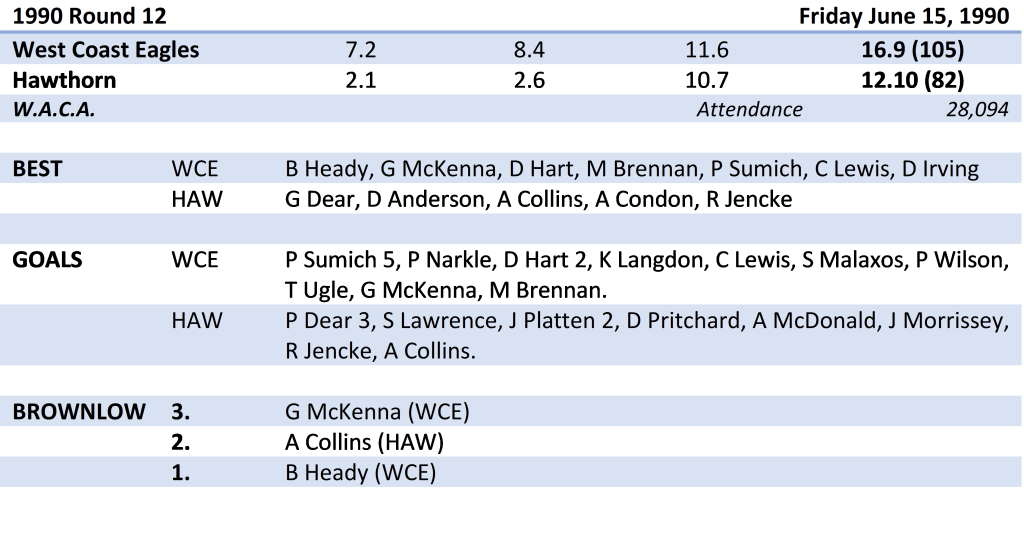
The Eagles got the fast start on the visitors, kicking seven first quarter goals – four of which were booted by full forward Peter Sumich – to open up a 31 point lead at the first change.
The runners of West Coast were running rings around a sluggish Hawthorn, with rookie Brett Heady leading the way through the middle. Heady, along with Chris Lewis and Steve Malaxos were winning plenty of ball around the contest, with Chris Mainwaring giving the drive along the wing.
Steve Malaxos led from the front with 23 disposals in the middle
The Hawks closed the game up in the second quarter, managing to hold the Eagles to just one goal, kicked via Chris Lewis, but were unable to hit the scoreboard themselves going goalless. Making matters worse for the Hawks, Gary Buckenara and Peter Curran had both left the ground with knee injuries, meaning they were without a bench for the remainder of the game.
When Malaxos goaled early in the third quarter, the Eagles lead was out to 40 and the game looked done.
But Hawthorn then raised a gear, storming back into the contest with eight of the next nine goals. When John Platten – who was well held by David Hart all night – kicked truly just before three-quarter time, the Hawks had taken the lead, unthinkable just half an hour earlier.
Greg Dear was the architect of the Hawks’ comeback as he gained the upper hand in his intriguing battle with Eagles ruckman Dean Irving. Dear finished the match with 41 hit-outs, to go with 22 disposals and eight marks. In particular during the third term, Dear provided first use to the Hawk’s midfield brigade, with Dean Anderson, Anthony Condon and Peter Schwab all enjoying plenty of the ball.
The Eagles grabbed back the lead before the final change, before Platten booted his second goal early in the final term to put the Hawks back in front.
That would be the last salvo from the Hawks, as West Coast met the visitors’ challenge to boot five of the last six goals in the game. The Eagles rediscovered their run against a tiring Hawthorn outfit, with defenders Guy McKenna and Michael Brennan both running down the ground to kick goals.
Sumich added a fifth in the final term to take his season tally to the half-century mark and third on the goal kickers list behind Tony Lockett (52) and Darren Bennett (51).
Heady finished with 28 disposals and seven marks, while Chris Lewis and ruckman Dean Irving were the next best with 26 disposals. Guy McKenna had 21 coming out of defence, while Michael Brennan shut out Alex McDonald who came onto the ground as Buckenara’s replacement.
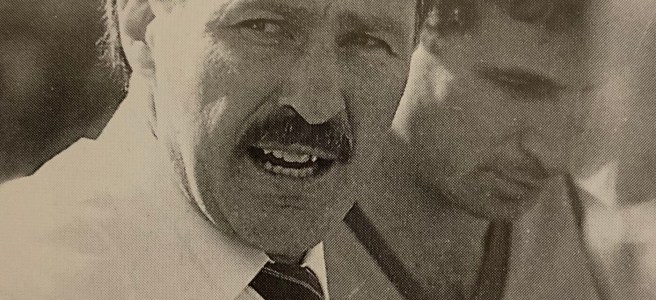
Malthouse was understandably pleased with the result.
“You’ve got to be happy when you beat Hawthorn.”
“Some might say that you throw (Dermott) Brereton and (Jason) Dunstall into the Hawthorn team and we lose that game, but who knows.”
Malthouse admitted that the Hawks got the better of his players through the middle stages, as they clamped the Eagles run.
But Allan Jeans said his side didn’t do enough to contain West Coast’s midfield, with their influence at the start and end of the match decisive in the defeat.
“Their running players got on top and created opportunities for their forwards and then we played catch-up footy for most of the night.”
Anthony Condon was the leading ball winner on the night with 30 disposals, and was well supported by Dean Anderson (29) and Peter Schwab (28), but not enough players were able to contribute across the night.
Without the key pillars of Brereton and Dunstall, the Hawks couldn’t gain an ascendancy forward of centre, bar the third quarter. Paul Dear kicked three goals and Stephen Lawrence and John Platten each chimed in with two.
Malthouse lauded his players for their continued fight in the last quarter.
“We sent 20 players down the race and they sent 20 and it was a terrifically courageous last quarter. We had some of our guys running up and down on the spot and they still came from behind to win.”
The result saw the two sides switch positions on the ladder, with West Coast moving up to fourth and the Hawks dropping to fifth. The Eagles remained one game behind Essendon, Melbourne and Collingwood, who all recorded victories.
The Bombers defeated the Kangaroos, while Melbourne and Collingwood beat finals aspirants Footscray and Geelong. They remained a game behind the Hawks outside the top five, along with St Kilda and Carlton.
The Blues easily defeated Brisbane at Princes Park to lift themselves into seventh, but it was the Saints who were kicking themselves the most after the suffered a shock defeat to the Tigers. St Kilda booted eight goals in the opening term, but were slowly reeled in the Tigers over the next three quarters, with a five goal final term giving Richmond a 20 point win. The defeat cost the Saints a chance to move back into the top five.
The string of results across the round meant the Eagles sat two games inside the top five and maintained their hopes of securing a double chance. But while there were plenty of positives to take from the win, the sour point of the evening was a two game suspension handed out to Craig McGrath, who was cited for striking Ray Jencke in the final minutes of the match.
With the upcoming state-of-origin clash between WA and Victoria at the WACA the following Tuesday week, those Eagles not selected had a fortnight to recover before the Eagles’ next game against Fitzroy in the second weekend of the split Round 13.
West Coast made it three wins from four games when they easily defeated the Blues in their round four clash, in front of a record attendance at the WACA.
A crowd of 28,568 were on hand to witness the Eagles 50 point win, bettering the ground’s previous highest attendance at the Australia v Pakistan one-day international the previous summer.
The Eagles extended their lead at every change in the routine win, which was highlighted by the impressive debut of midfielder Brett Heady.
Heady had starred for Subiaco four days earlier in the Lions’ 50 point win over Perth, and despite the short turnaround, gathered 18 disposals and booted two goals in a notable performance first-up effort with West Coast.
The inclusion of Heady was one of three for the Eagles after their thumping win over Footscray. David O’Connell was selected for his first match of the season and Michael Brennan returned from a groin injury picked up in the round two defeat to St Kilda. Paul Peos was ruled out with a knee injury, while Brad Gwilliam and Dean Irving were both dropped.
After losing their first two games, the Blues arrived in Perth off the back of a 14 point win over the Saints. However the win came at a cost with both Mark Naley and Simon Minton-Connell injured and subsequently ruled out against the Eagles. Chris Bond was also dropped, with David Glascott, Ian Herman and Andrew Phillips all included.
With Minton-Connell sidelined and Stephen Kernahan used through the ruck with Justin Madden unavailable for selection, the Blues lacked any forward presence.
Richard Dennis kicked the opening goal after receiving a 50m penalty, but the Eagles had control of the play from early in the game. Only the strong defensive efforts of Stephen Silvagni and David Rhys-Jones prevented West Coast from hitting the front, but when Peter Sumich and Karl Langdon goaled right before quarter time, the Eagles had taken a lead they would not relinquish.
Three goals to one in the second term extended the Eagles’ lead to 20 points at the main break, but the lead could have been so much more if not for inaccurate kicking. Dean Laidley and Guy McKenna created plenty of drive off half back, the pair combining for 20 disposals in the second quarter alone.
Laidley had picked up 19 disposals by half time, while debutant Heady tallied eight touches in the second quarter, as did Stephen Malaxos and Dwayne Lamb. As West Coast flexed their superiority in the game, things got worse for the Blues when they lost Silvagni to injured ribs after a heavy collision, denying the Blues another of their key talls.
With his side needing a spark, Alex Jesaulenko swung Rhys-Jones to full forward and got an immediate response as Rhys-Jones booted three goals in six minutes to bring the Blues back within touching distance.
However, West Coast settled with the final five goals of the quarter to take their lead out to 38 points, before a six-goal final term ensured a comfortable win.
Sumich led the Eagles goal kicking with four majors, while Peter Wilson and Craig Turley each booted three.
Laidley finished with 30 disposals after his barnstorming first half and Stephen Malaxos was industrious through the middle with 29 touches. As well as hitting the scoreboard, Wilson and Turley were both productive with the ball, collecting 25 and 22 dipsosals respectively.
Dwayne Lamb shut down Craig Bradley on the wing, while the Eagles defence, led by Laidley, Guy McKenna and Murray Rance were again steadfast. After four rounds, the Eagles had conceded the least amount of points – 310 – in the league; 118 of which came in the loss to St Kilda.
“Our backline is functioning very well”, a delighted Malthouse declared after the game. “It’s early days, but its slowly and surely coming about.”
The win lifted the Eagles back into the top five at the expense of North Melbourne, who dropped out after a five goal defeat to Geelong. West Coast sat in fifth, percentage behind the Saints, Hawks and Bombers, with Melbourne still undefeated when they overturned a half time deficit to defeat Fitzroy.
With winnable games to come against lowly Sydney and Richmond, the Eagles were primed to consolidate their position in the finals placings, despite starting to build a concerning injury list.
Chris Mainwaring had missed a fortnight with a back fracture, while Chris Lewis and Chris Waterman both remained sidelined from injuries picked up in the pre-season. John Annear and Don Pyke were both injured the previous week playing for their respective WAFL sides after falling out of the Eagles line-up following the Saints defeat, while Tony Begovich and Andrew MacNish were also injured the previous week in the WAFL.
Geoff Miles hadn’t made an appearance at any level as he battled a hamstring injury and Paul Peos was expected to miss the majority of the season with a knee complaint.
Dwayne Lamb made club history when he became the first
player to play 150 games in the Eagles 26 point win over lowly Sydney at the
WACA.
Already the first player to reach 50 and 100 games, Lamb had slowed up in his attempt to notch game 150. Lamb had managed just one appearance in the back end of the 1993 season, and was then overlooked for the opening five games of 1994.
However, the veteran was brought back into the Eagles line-up following the debacle against Hawthorn, stringing together the four games required to earn life membership with the club.
The Eagles were expected to brush aside the 14th
placed Swans but Sydney proved to be stronger competition than anticipated. A
week after upsetting the Demons at the MCG, Sydney threatened to repeat the
dose when they held a 19 point lead closing in on half-time.
David Hynes kicked truly on the half-time siren to reduce
the deficit to a goal at the main break before the Eagles clicked into gear in
the third term. The home team booted six goals in 10 minutes to separate the
two sides, eventually running out 26 point winners.
While happy with the four points, Eagles coach Mick
Malthouse was more interested in praising the opposition than discussing his
own team. “Four points is four points. It’s so easy to say we were terrible,
but the basic thing from football’s point of view is that the Swans were
terrific.”
“It’s important to acknowledge that the Swans played
football almost as good enough to win the game. We played one good quarter of
football”, Malthouse said.
With Dwayne Lamb given the honour of starting on the ground
in his milestone game, David Hart spent most of the first half on the bench,
but his introduction just before half-time helped get the game on the Eagles’
terms.
Hart booted two goals and had a hand in several others as
West Coast went on their third-quarter run, as well as curbing the influence of
Jamie Lawson, who had been dynamic for the Swans in the first half. Lawson had
12 first-half possessions and along with Peter Filandia and Dale Lewis, thrived
on the ruck dominance of Gavin Rose.
Rose was too strong in the hit-outs opposed to the Eagles
trio of Jason Ball, David Hynes and Ryan Turnbull and it was no coincidence that
the Eagles six goal run came when he was given a breather on the bench.
Sydney coach Ron Barrassi was proud of his side’s effort, but
expressed disappointment in the third-quarter lapse. “I guess we’ll have a good
look at that third quarter and see where we came unstuck.”
“It’s hard to contain a side for four quarters, let alone a
top four side.”
Despite the mostly unimpressive performance, the win saw
West Coast move a game clear at the top of the ladder, courtesy of Brisbane’s
upset win over North Melbourne. The Bears trailed by five goals at quarter
time, but steamrolled their way home to record a 27 point win over the
Kangaroos at the GABBA.
Melbourne ended their losing run with a comfortable win over
the Saints to join North Melbourne on six wins, while six teams – Geelong,
Collingwood, Carlton, Hawthorn, Essendon and Adelaide – sat a further game back
on five wins, as the top eight started to take shape.
Dwayne Lamb played game 150
While there was plenty to celebrate for West Coast, the win
came at a cost. Peter Sumich and Brett Heady both sat out the second half due
to hamstring injuries and Chris Lewis was nursing a knee problem at game’s end.
Sumich’s latest injury occurred in his first game after
damaging his hamstring in the round six win over North Melbourne. Recalled at
the expense of young forward Brett Spinks, the spearhead failed to last a half,
limping off late in the second quarter with Heady following him off the ground
a minute later.
Malthouse was forced to defend the selection of Sumich, with
the full-forward facing another spell on the sidelines. “Any medical people in
the country would have allowed him to play – he was half an inch off playing
last week.”
“With another week’s training you can’t blame anyone. The simple
fact is that he probably has a weakness in that area.”
With Sumich and Heady both sitting on the bench, the Eagles
were forced into a re-shuffle of their forward line after half-time. Ashley McIntosh
was moved to the Eagles goal square, after failing to get a hold of Simon
Minton-Connell in defence at the start of the game. The Sydney full-forward had
four shots early in the opening term, kicking 1.3 (including a poster), with
Michael Brennan shifted to the last line.
Minton-Connell finished with 3.4 for the match to be the Swans’
most productive forward, but the Eagles defence were again superb, particularly
in the first half when Sydney’s midfield had control. Guy McKenna provided
plenty of dash off half-back collecting 29 possesions, while Worsfold restricted
enigmatic forward Derek Kickett to just three disposals, before he was ultimately
benched in the third quarter.
Dermott Brereton was another Swan who spent several stints on
the bench, when he was well beaten by Glen Jakovich at centre-half forward.
Brereton had made his first Swans appearance the week before, his club debut delayed
due to a seven week suspension for stomping on Hawk Raydon Tallis in a
pre-season practice match.
However, Brereton struggled in his second game, managing
just five disposals while also giving away two 50m penalties on a poor night.
Along with Jamie Lawson, Peter Filandia (22 disposals) and Robert
Neill (22) gave the Swans drive out of the middle, with Ed Consadine and Andrew
Dunkley holding their ends in defence. However, the Eagles midfield stamped
their authority in the third quarter.
Peter Wilson and Don Pyke both lifted after half-time as did
Chris Waterman who enjoyed the rare chance to spend four quarters on the ground.
Shane Bond was productive, finishing with 22 possessions to be the second
highest ball-winner for West Coast, behind McKenna.
Leading up to the game, Barassi had identified the two wingmen
as the Eagles’ greatest weapons and duly slapped tags on both of them. Jayson
Daniels was given the run-with role on Peter Matera, while Daryn Cresswell was
stationed on the other wing to stop Chris Mainwaring.
While Mainwaring was well held by Cresswell, Matera got the
early break on his opponent with seven kicks in the first quarter. Matera was
one of the few four-quarter performers for West Coast finishing 18 possessions
and 1.3.
Post-match, much of the attention was on Mainwaring and his
future at the club. The Fremantle Dockers were compiling their priority list of
uncontracted players for their inaugural 1995 squad and had made no secret that
Mainwaring was their number one priority.
Fremantle were expected to table a substantial offer to the East
Fremantle product in excess of what West Coast had presented, as well as
offering Mainwaring the opportunity of being the club’s first captain. Mainwaring,
to this point, had been non-committal over his future at West Coast with chief executive
Brian Cook declaring the ‘ball was in his court’.
The Eagles had been wary of the Dockers poaching their
stars, signing the likes of Peter Sumich, Peter Matera and John Worsfold to
long-term deals earlier in the season.
As part of the AFL’s establishment rules, the Dockers were
entitled to select 12 players who were uncontracted at opposition clubs. As
well as Mainwaring, several Eagles were yet to sign contracts for 1995
including Michael Brennan, David Hynes, Brendan Krummel, Jason Ball and Damien
Hampson.
While confident that they would be able to hold onto most,
if not all, of their uncontracted players, West Coast were adamant that they
would keep an eye on Fremantle to ensure they followed the correct protocols in
signing new players.
“We did have some misgivings about some of the methods they
were using a month or two ago with some part-time staff. Since then we have
contracted most of our players… they have got no excuses to talk to our
players.”








 sportsphrase.blog