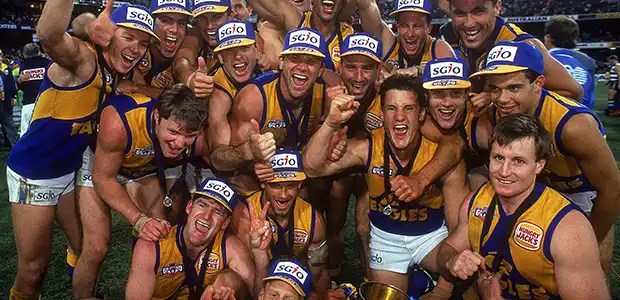
1994 Rewind: Lewis Shines in Top of the Table Fizzer

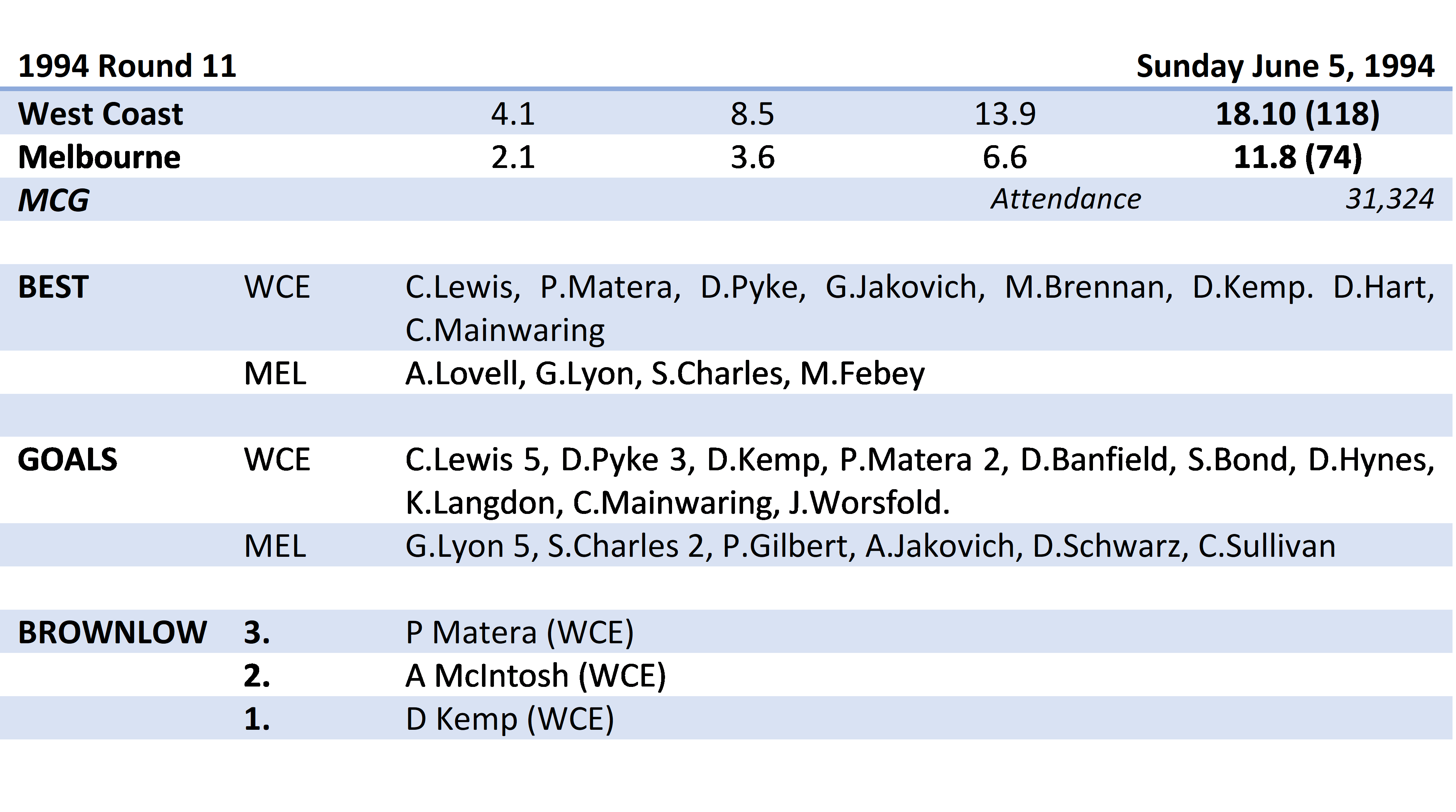
The Eagles turned a potentially intriguing top-of-the-table clash with Melbourne into a one-sided masterclass when they were too strong for Melbourne at the MCG.

The Eagles and Demons were sitting in first and second spot coming into the clash, but the strong performances of West Coast players, coupled with an excellent coaching effort, prevented the Demons from ever being a realistic chance.

The win was the Eagles’ fifth in a row, while the Demons had slumped to their fourth loss in five games, after starting the season with five straight wins.

Chris Lewis was the star for West Coast in a performance that Mick Malthouse described as the ‘best he has played in several years.”

Stationed permanently in the forward line – and operating mostly out of the goal square – Lewis was the class between the two sides, finishing with five goals (from nine scoring shots) and having a hand in several others.

With Peter Sumich once again sidelined with a hamstring injury, the Eagles were forced to experiment with their forward set up. Ashley McIntosh was swung back to the forward line, alongside Lewis, while there was also an element of the old and the new brought back into the team.

Rookie Brett Spinks returned to the forward line after being a shock omission the week before, while Karl Langdon was named for just his second game since the 1992 premiership. Injuries had restricted the blonde firebrand to just one game in 1993, with suspension then delaying his start to the 1994 season.

Langdon copped a three week ban for tripping Mark Bickley during the Fosters Cup and was then forced to bide his time at Subiaco until a spot opened up at West Coast. Langdon and Spinks were joined by half-forward Tony Evans who was playing his first game since injuring a foot in the round one loss to Essendon and second-year midfielder Jarrad Schofield.

Out of the side with Sumich, were omitted trio Jason Ball, Tony Godden and Dwayne Lamb, the latter having celebrated his milestone 150th game the week before.

After naming their initial side, there was still plenty of intrigue over the Eagles’ final team. Under recently revised AFL rules, clubs playing on Sundays were allowed to add an extra emergency player to their squad on the Friday, with West Coast curiously adding Dean Kemp to the squad, the midfielder having not played since injuring a knee in the round 7 win over Carlton.

Kemp would ultimately be a late inclusion ahead of the first bounce replacing Brett Heady. Heady had limped off the ground with a hamstring injury the previous game and was a surprise selection on the half-forward flank.  

While the Eagles played games over their playing 21, the Demons were having their own player issues. Steven Febey and Todd Viney were both named in the Melbourne line-up, despite looking incredibly proppy during the week, before Jim Stynes created a stir when he limped off the training track 24 hours before bouncedown.

Stynes appeared to roll an ankle but made it out to the field, in what was his 158th consecutive appearance. While Stynes, Febey and Viney all took their place, Jeff Hilton wasn’t as fortunate after he was another casualty at training. Hilton strained a calf and was one of two changes along with Kevin Dyson who was left out of the side despite a 24-possession, two goal effort against St Kilda the week before. Sean Charles and Glenn Molloy were the two players to come in.

After plenty of activity leading into the game, the match itself turned into a one-sided affair quickly. The Eagles ruck duo of David Hynes and Ryan Turnbull overwhelmed Stynes and the Eagles midfield capitalised on the ruck advantage.

Kemp, Don Pyke and Drew Banfield were all busy early, as the Eagles kicked four goals to two in the first quarter. Melbourne were unable to get their hands on the ball, as West Coast controlled possession and often outnumbered their opponents at the stoppages and around the ground.

With a weight of possession forward of centre, Lewis was given plenty of opportunity to show his wares. Lewis proved too elusive for Sean Wight and Graeme Yeats, finishing with his best haul in a game since round 6, 1988.

Malthouse was glowing in his praise of Lewis after the match and had a simple reasoning for his impressive outing. “He enjoys his footy now. People who enjoy their football play with that sort of enthusiasm.”

Lewis’ creativity up forward brought others into the game, with many of the Eagles’ smaller players hitting the scoreboard. Ashley McIntosh provided a solid target up forward but could manage just three behinds from 18 possessions and nine marks, but Brett Spinks and Karl Langdon both failed to have any influence.

Spinks went possession-less, registering just five hit-outs, while Langdon fared slightly better with one goal from four touches and two marks. Don Pyke and Dean Kemp combined for five goals as they alternated through the centre and half-forward, while Peter Matera kicked two goals from the wing.

Malthouse was happy with the ‘good even performance’ despite the quiet games from his tall forwards, commenting that he was happy Langdon ‘got through a game without getting injured or reported’.

Glen Jakovich was strong at half-back, getting the better of David Schwarz with 29 disposals and six marks. Don Pyke had 29 possessions through the middle to go with his three goals, while Chris Mainwaring was rampant on the wing on his way to 27 disposals, six marks and a goal.
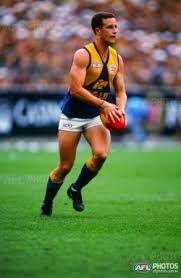
The Demons on the other hand had few winners. Garry Lyon finished with five goals from the half-forward flank in his battle with 100-gamer Chris Waterman and Andy Lovell and Matthew Febey tried hard with 26 and 20 disposals, respectively.

Allan Jakovich – who was the difference the last time the two teams met, with six goals in an upset Melbourne victory – was well beaten by Michael Brennan, managing just six disposals before he was dragged in the third quarter and replaced by Phil Gilbert.

After the game, Melbourne coach Neil Balme was in no doubt as to where the Eagles sat in the competition. “Before the game I rated them very highly – and I probably rate them even higher now.”

While Neil Balme was declaring the Eagles the team to beat, Malthouse was looking to deflect attention elsewhere. He declared the reigning premiers, Essendon, as the benchmark of the season, despite West Coast sitting a game and 18 percent clear of 2nd placed North Melbourne.

“Essendon are the best side contrary to what Kevin (Sheedy) would like everyone to believe. They won the premiership last year and they’re going along in very much the same way.”

The Bombers were sitting seventh with six wins, but equal on points with Melbourne who held onto third place on percentage, despite the humbling defeat to West Coast. Carlton, Hawthorn and Collingwood filled the positions in between after all recording comfortable wins.

With eight wins from their opening ten games, the Eagles were one win better off than at the same time in 1993. The Eagles had recorded wins over North Melbourne and Melbourne at the MCG, as well as thumping Carlton at home. Still, Malthouse was cautious over the Eagles’ standing.

“If you gave me 8-2 at the beginning of the year I’d take it… we don’t judge where we’re going to be. We just like to be competitive and better than what we were last year,” Malthouse said.

“We’re steady at the moment. Nothing over the top. We’re steady.”
1994 Rewind: Lamb Creates History

Dwayne Lamb made club history when he became the first player to play 150 games in the Eagles 26 point win over lowly Sydney at the WACA.

Already the first player to reach 50 and 100 games, Lamb had slowed up in his attempt to notch game 150. Lamb had managed just one appearance in the back end of the 1993 season, and was then overlooked for the opening five games of 1994.

However, the veteran was brought back into the Eagles line-up following the debacle against Hawthorn, stringing together the four games required to earn life membership with the club.

The Eagles were expected to brush aside the 14th placed Swans but Sydney proved to be stronger competition than anticipated. A week after upsetting the Demons at the MCG, Sydney threatened to repeat the dose when they held a 19 point lead closing in on half-time.

David Hynes kicked truly on the half-time siren to reduce the deficit to a goal at the main break before the Eagles clicked into gear in the third term. The home team booted six goals in 10 minutes to separate the two sides, eventually running out 26 point winners.

While happy with the four points, Eagles coach Mick Malthouse was more interested in praising the opposition than discussing his own team. “Four points is four points. It’s so easy to say we were terrible, but the basic thing from football’s point of view is that the Swans were terrific.”

“It’s important to acknowledge that the Swans played football almost as good enough to win the game. We played one good quarter of football”, Malthouse said.

With Dwayne Lamb given the honour of starting on the ground in his milestone game, David Hart spent most of the first half on the bench, but his introduction just before half-time helped get the game on the Eagles’ terms.

Hart booted two goals and had a hand in several others as West Coast went on their third-quarter run, as well as curbing the influence of Jamie Lawson, who had been dynamic for the Swans in the first half. Lawson had 12 first-half possessions and along with Peter Filandia and Dale Lewis, thrived on the ruck dominance of Gavin Rose.

Rose was too strong in the hit-outs opposed to the Eagles trio of Jason Ball, David Hynes and Ryan Turnbull and it was no coincidence that the Eagles six goal run came when he was given a breather on the bench.  

Sydney coach Ron Barrassi was proud of his side’s effort, but expressed disappointment in the third-quarter lapse. “I guess we’ll have a good look at that third quarter and see where we came unstuck.”

“It’s hard to contain a side for four quarters, let alone a top four side.”

Despite the mostly unimpressive performance, the win saw West Coast move a game clear at the top of the ladder, courtesy of Brisbane’s upset win over North Melbourne. The Bears trailed by five goals at quarter time, but steamrolled their way home to record a 27 point win over the Kangaroos at the GABBA.

Melbourne ended their losing run with a comfortable win over the Saints to join North Melbourne on six wins, while six teams – Geelong, Collingwood, Carlton, Hawthorn, Essendon and Adelaide – sat a further game back on five wins, as the top eight started to take shape.

Dwayne Lamb played game 150

While there was plenty to celebrate for West Coast, the win came at a cost. Peter Sumich and Brett Heady both sat out the second half due to hamstring injuries and Chris Lewis was nursing a knee problem at game’s end.

Sumich’s latest injury occurred in his first game after damaging his hamstring in the round six win over North Melbourne. Recalled at the expense of young forward Brett Spinks, the spearhead failed to last a half, limping off late in the second quarter with Heady following him off the ground a minute later.

Malthouse was forced to defend the selection of Sumich, with the full-forward facing another spell on the sidelines. “Any medical people in the country would have allowed him to play – he was half an inch off playing last week.”

“With another week’s training you can’t blame anyone. The simple fact is that he probably has a weakness in that area.”

With Sumich and Heady both sitting on the bench, the Eagles were forced into a re-shuffle of their forward line after half-time. Ashley McIntosh was moved to the Eagles goal square, after failing to get a hold of Simon Minton-Connell in defence at the start of the game. The Sydney full-forward had four shots early in the opening term, kicking 1.3 (including a poster), with Michael Brennan shifted to the last line.

Minton-Connell finished with 3.4 for the match to be the Swans’ most productive forward, but the Eagles defence were again superb, particularly in the first half when Sydney’s midfield had control. Guy McKenna provided plenty of dash off half-back collecting 29 possesions, while Worsfold restricted enigmatic forward Derek Kickett to just three disposals, before he was ultimately benched in the third quarter.

Dermott Brereton was another Swan who spent several stints on the bench, when he was well beaten by Glen Jakovich at centre-half forward. Brereton had made his first Swans appearance the week before, his club debut delayed due to a seven week suspension for stomping on Hawk Raydon Tallis in a pre-season practice match.

However, Brereton struggled in his second game, managing just five disposals while also giving away two 50m penalties on a poor night.

Along with Jamie Lawson, Peter Filandia (22 disposals) and Robert Neill (22) gave the Swans drive out of the middle, with Ed Consadine and Andrew Dunkley holding their ends in defence. However, the Eagles midfield stamped their authority in the third quarter.

Peter Wilson and Don Pyke both lifted after half-time as did Chris Waterman who enjoyed the rare chance to spend four quarters on the ground. Shane Bond was productive, finishing with 22 possessions to be the second highest ball-winner for West Coast, behind McKenna.

Leading up to the game, Barassi had identified the two wingmen as the Eagles’ greatest weapons and duly slapped tags on both of them. Jayson Daniels was given the run-with role on Peter Matera, while Daryn Cresswell was stationed on the other wing to stop Chris Mainwaring.

While Mainwaring was well held by Cresswell, Matera got the early break on his opponent with seven kicks in the first quarter. Matera was one of the few four-quarter performers for West Coast finishing 18 possessions and 1.3.

Post-match, much of the attention was on Mainwaring and his future at the club. The Fremantle Dockers were compiling their priority list of uncontracted players for their inaugural 1995 squad and had made no secret that Mainwaring was their number one priority.

Fremantle were expected to table a substantial offer to the East Fremantle product in excess of what West Coast had presented, as well as offering Mainwaring the opportunity of being the club’s first captain. Mainwaring, to this point, had been non-committal over his future at West Coast with chief executive Brian Cook declaring the ‘ball was in his court’.

The Eagles had been wary of the Dockers poaching their stars, signing the likes of Peter Sumich, Peter Matera and John Worsfold to long-term deals earlier in the season.

As part of the AFL’s establishment rules, the Dockers were entitled to select 12 players who were uncontracted at opposition clubs. As well as Mainwaring, several Eagles were yet to sign contracts for 1995 including Michael Brennan, David Hynes, Brendan Krummel, Jason Ball and Damien Hampson.

While confident that they would be able to hold onto most, if not all, of their uncontracted players, West Coast were adamant that they would keep an eye on Fremantle to ensure they followed the correct protocols in signing new players.

“We did have some misgivings about some of the methods they were using a month or two ago with some part-time staff. Since then we have contracted most of our players… they have got no excuses to talk to our players.”

1994 Rewind: Eagles Blast Blues

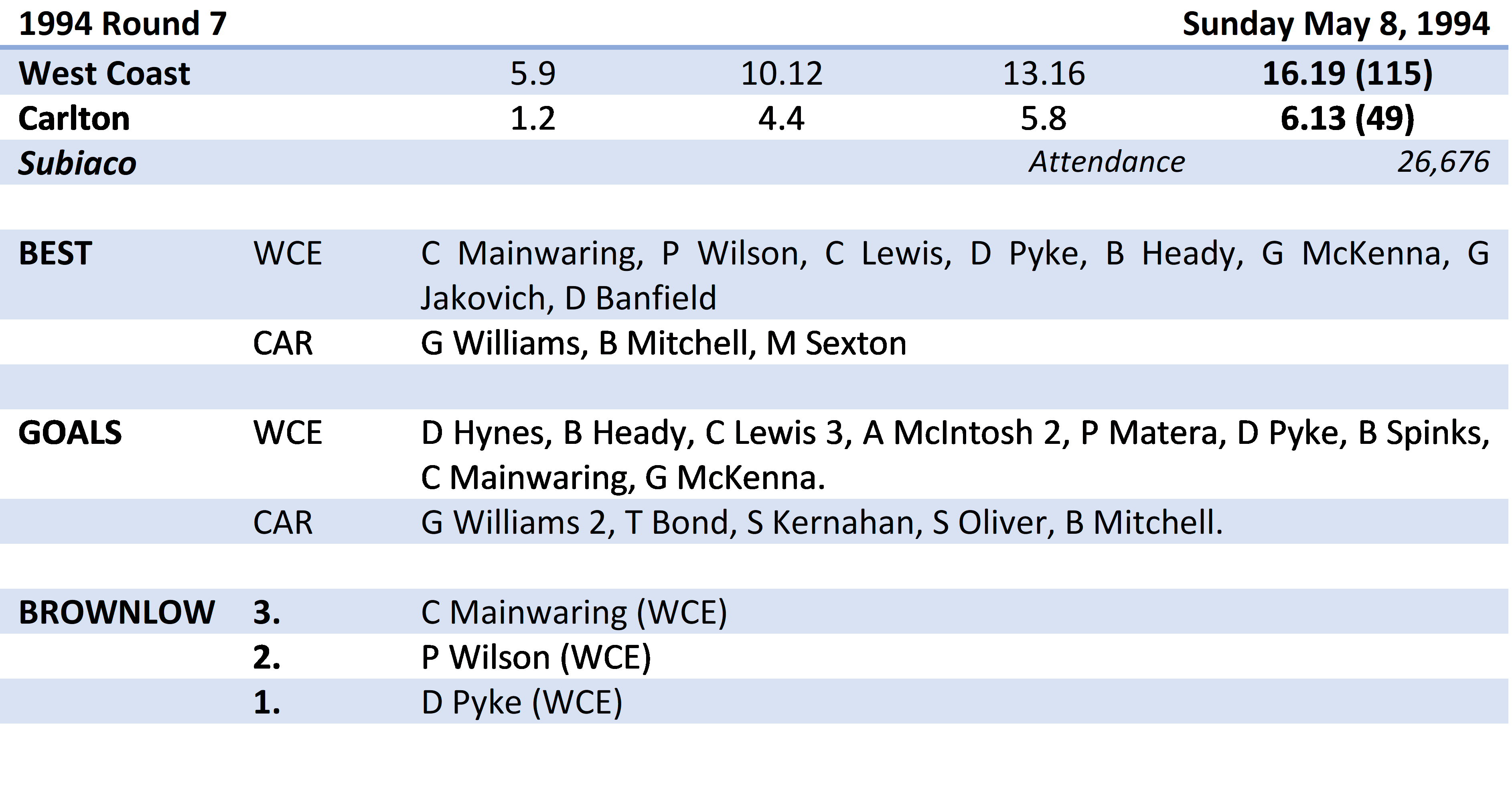
The Eagles confirmed themselves as premiership favourites when they thrashed a sluggish Carlton at Subiaco. West Coast were in control from start to finish, romping to a 66 point win against the 1993 Grand Finalists.

David Hynes, Brett Heady and Chris Lewis each kicked three goals in a multi-faceted forward line that was without the injured Peter Sumich, while the defence was as steady as ever, holding the visitors to just six goals.

The writing was on the wall early as West Coast registered 14 scoring shots in the opening quarter – to just three to the Blues – and only inaccuracy prevented their lead from being greater than 31 points at the first change. The Eagles steadily extended their advantage at each of the breaks through the afternoon, leading by 44 at half time, 56 at three-quarter time and 66 by the final siren.

For the second week in a row, Chris Mainwaring had the better of several opponents as he provided plenty of run for West Coast on the wing. Mainwaring had been in doubt after leaving the training track early during the week but he was a driving force in a dominant midfield display. Wing partner Peter Matera resumed after a week out sidelined with concussion, although he was slightly shadowed by Matthew Hogg.

Matera was one of two inclusions for the Eagles, with Jason Ball recalled for his first senior game in over 12 months. Ball was one of a number of players who rotated through full-forward in the absence of Sumich with Ashley McIntosh, David Hynes and Ryan Turnbull also spending time in the Eagles goal square.

The Blues made just one change coming into the game, despite a handful of players potentially four games in 14 days. Carlton had played Sydney the previous Sunday before six players – Stephen Silvagni, Stephen Kernahan, Mil Hanna, Matthew Hogg, Troy Bond and Andrew McKay – took part in the mid-week state-of-origin clash between Victoria and South Australia. The Blues were then scheduled to take on Richmond five days after the Eagles clash in Perth, drawing criticism from coach David Parkin.

Brett Oliver was brought in after booting eight goals for Carlton’s VSFL side the week before in his return from injury. Oliver joined Stephen Kernahan and James Cook up forward, with the Blues looking to stretch the West Coast defence.

However, it mattered little in the first quarter as the ball was camped in the Eagles forward half. The West Coast midfield exposed the Blues’ lack of pace and the visitors cause wasn’t helped when they lost Brett Ratten inside the opening ten minutes to a knee injury.

Chris Mainwaring had seven kicks and a handpass for the opening term, eclipsing Fraser Brown, and had good support from Peter Wilson (seven kicks, three handpasses) and Don Pyke (five kicks, three handpasses) who was working offensively off Greg Williams at every opportunity.

The Blues had a brief foothold in the game to start the second term, but a flurry of goals late in the quarter effectively ended the contest. David Hynes – who had been the Eagles sole representative in the state-of-origin during the week – kicked three goals in a purple patch opposed to Carlton full back Stephen Silvagni. Chris Lewis contributed two of his own and the Eagles held a commanding 44 point lead at the main break.

The Eagles booted six goals to two in the second half to make it five wins from the opening seven rounds, lifting them to 2nd on the ladder behind only Melbourne.

After seeing off Brown, Mainwaring then had the better of Tommy Alvin and Mil Hanna, finishing with 26 disposals and a goal in a performance worthy of three Brownlow votes. Peter Wilson played his best game of 1994 to gather 25 disposals, while Don Pyke finished with 23 in his battle with Greg Williams.

Williams was arguably the Blues best player, collecting 28 possessions and kicking 2.3 to edge Pyke in their individual battle, while Barry Mitchell also had 28 possessions. The Blues though had few winners on the ground, with their key forwards well beaten.

Glen Jakovich and Guy McKenna were dominant at half-back, with Jakovich shutting Carlton captain Stephen Kernahan completely out of the game. Guy McKenna provided plenty of run off the back flank, as did Chris Waterman who lined up on the opposite half back flank. James Cook failed to get a touch in the first half against Michael Brennan, with Oliver not doing much better when he came on after half-time.

Brett Heady and Chris Lewis were constant threats up forward, while Ashley McIntosh had the better of Ang Christou forcing Parkin to move Anthony Koutofides into the Carlton defence.

Eagles coach Mick Malthouse was satisfied with the ‘good win’ but was clearly agitated both at three quarter time and after the game. Malthouse was unimpressed with the umpiring performance, directing captain John Worsfold to question a number of calls at three-quarter time. The Blues won the free kick count 24-14.

“The boys played pretty well. We became a bit wasteful at times but given the fact we played here two weeks ago and were very poor, with only a couple of winners, I guess we had a lot of contributors today.”

Malthouse also rejected suggestions post-match that the Eagles forward line – who had booted 16 goals from 35 scoring shots – functioned better without spearhead Peter Sumich.

“A lot of people would like to think we are better off. He (Sumich) has his critics. But I’ll say right now he is our best full forward… and he will play there as soon as he is right.”

After impressive wins against North Melbourne and Carlton, the bye had threatened to come at the wrong time for West Coast with Malthouse admitting that it wasn’t ideal. However, he remained positive it wouldn’t affect his side.

“We rarely have a bad result after the bye, although I can’t remember last year. Certainly the two years before that we did well after the bye.”

Building The Premiers

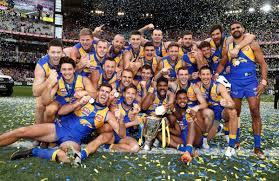
The trade period has ended for 2018 and the focus of 18 clubs now turns to this month’s draft as 17 clubs look to emulate the achievement of West Coast in 2019. The Eagles claimed their fourth flag – against pre-season odds – building a squad through a variety of trade and draft choices. How did West Coast bring their premiership side together? Here are five crucial trade and draft decisions that shaped the 2018 premiers.


The Chris Judd Trade

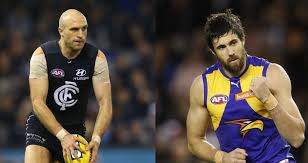
One of the most famous trades in modern AFL history brought two players to the Eagles who would play a part in the Eagles’ premiership success in their 11th season with the club. After being bundled out in straights sets in the 2007 finals series, the Eagles were rocked by confirmation from their club captain that he would return home to Victoria.

Captain of the 2006 premiership side, Judd was also a Brownlow medallist, a Norm Smith medallist and multiple best and fairest winner in six seasons with West Coast. The hottest property in the game, Judd commanded a big trade in return and after canvassing several clubs, Judd and West Coast believed that Carlton had the best to offer.

The Eagles were after the West Australian born forward taken two drafts earlier at number 4 and despite Carlton’s resistance (and also initially the player), Josh Kennedy was traded to West Coast in exchange for Judd. Also part of the deal were two of Carlton’s early draft picks, numbers 3 and 20 overall. While Tony Notte delivered little success with pick 20, Chris Masten arrived with the Eagles’ first selection and was an important link-man in 2018. With Kennedy, after years of debate, the Eagles have come out on top with that trade, Kennedy now the greatest goal kicker in the clubs history, and booting three important goals in the 2018 decider.

judd kennedy


Daniel McConnell Heads to the Kangaroos

Daniel McConnell had just a brief stint at West Coast, but his departure indirectly led to the Eagles’ selecting their 2018 premiership captain. McConnell had been an early draft pick in the 2003 National Draft, but after two games in two years, McConnell decided he wanted to head back to his native Victoria.

The Kangaroos were keen on the midfielder and stumped up two early draft picks in the 2005 National Draft to gain his services. North Melbourne gave West Coast picks 13 and 29, with the Eagles handing pick 18 back the other way along with McConnell. Having improved their initial position five spots in the draft, the Eagles settled on the strongly built Shannon Hurn from Central Districts. The Eagles would select forward Ben McKinley with pick 29, but he would find his way back to North Melbourne despite a promising 2008 season.

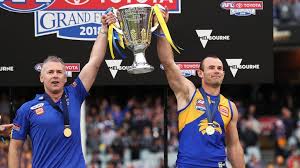
North for their part would trade pick 18 to the Hawks in exchange for Jonothan Hay, but the Eagles would be the big winners out of the trade in selecting their future captain. Hurn is set to play game 250 early in 2019 and will be etched in West Coast history in lifting the 2018 cup.

shannon hurn

Dale Thomas defects to Carlton

It has already circulated on social media, but Dale Thomas’ decision to leave Collingwood and join arch rival Carlton indirectly led to Dom Sheed – who would prove to be the match-winner in the Grand Final – finding his way to the Eagles. At the end of 2013, Thomas made the call to leave the Magpies and re-unite with former coach Mick Malthouse who had joined the Blues.

Thomas’ decision to leave Collingwood as a free agent resulted in the Magpies receiving a compensation pick through the middle of the first round – number 11 overall. The Eagles entered the 2013 trade period with pick 6 after a disastrous season had seen them fall to 13th on the ladder and signal the end of John Worsfold’s 12 year tenure at the club.

West Coast were set from the outset on taking Dom Sheed who hailed from Subiaco with pick 6 but were also in discussions with the Lions about securing Elliot Yeo, who after two seasons in Brisbane, had requested a move back home. The Lions wanted nothing less than the Eagles’ 2nd round selection (number 28 overall), but West Coast weren’t as keen as being without a pick in the second round.

Enter a pick swap with the Magpies who were desperate to hold two picks inside the top ten at the draft. West Coast and Collingwood negotiated a trade that would see the Eagles give away picks 6 and 44 in exchange for picks 11, 31 and 49 from the Magpies. Despite dropping five places, the Eagles were confident they would still land Sheed.

Collingwood had picks 6 and 10 and no doubt there would have been a side-agreement that they stay away from Sheed. North Melbourne had pick 8, but were already locked into recruiting father-son option Luke McDonald, leaving just Brisbane at pick 7 and Melbourne at pick 9 to bypass Sheed. The Lions and Demons took James Aish and Christian Salem, respectively, and Sheed was snapped up with pick 11.

The other two picks that West Coast received would prove to be busts, with the Eagles picking up small forward Malcolm Karpany at 31 and midfielder Dylan Main at 49, but a separate and much more convoluted pick swap with Collingwood helped West Coast land Tom Barrass with pick 43.

When Josh Fraser was selected by the Gold Coast Suns as part of their inaugural list at the end of 2010, the Magpies received a third round compensation pick which could be used over any of the following five drafts (2011-2014). The Magpies traded this pick with West Coast for their third round selection in the 2010 Draft, with West Coast sitting on this pick until the 2013 trade period. Having traded out pick 44 as part of the draft swap above, the Eagles got back into the third round by swapping the compensation pick they received from Collingwood to the Suns, in exchange for pick 43, which West Coast used on Barrass.

dom sheed


Two Defenders for a Forward

Andrew McDougall arrived at the Eagles at the end of 2000, as the great white hope in the forward line for the next decade. Peter Sumich had retired in 1997 and Fraser Gehrig had departed for the Saints as part of the trade period, leaving big holes up front. Fast forward to the end of 2006 and the promise that McDougall showed ahead of being selected with the fifth pick of the 2000 draft had not materialised, with both club and player keen on changing things up.

McDougall had played just 38 games in six seasons but found a new suitor in the Western Bulldogs who were keen on taking a punt on the former first rounder. The Eagles and Bulldogs engineered a multiple-round pick swap to get McDougall to the Bulldogs, resulting in West Coast receiving picks 29 and 50 in exchange for picks 34, 66 and McDougall. The Bulldogs would get just five games out of McDougall for their investment, but for the Eagles, the picks would deliver two stalwarts of the club.

Eric Mackenzie would be taken with pick 29, playing 147 games before retiring at the end of 2018, his last few years at the club cruelled by injury. Pick 50 would be used to select Will Schofield, with the veteran defender one of the Eagles’ best in their 2018 premiership. Schofield would play a near-perfect role, stepping into the shoes of Brad Sheppard after being unlucky to be left out earlier in the finals series. Schofield would curtail De Goey’s influence up forward and be the lockdown defender needed in the back half.

will schofield

Bargain Saints

Two Saints found their way to the Eagles during the 2012 trade period in contrasting manners. Jamie Cripps had spent two years with St Kilda for a modest return, but was keen on making his way back to WA. The Eagles recent draft picks for high half forwards had not come to fruition, with the likes of Ryan Neates, Gerrick Weedon and Andrew Strijk all delisted at the end of the season.

The Saints weren’t rapt on letting Cripps go and were initially hesitant with the offer from West Coast, who had already given away their first round selection (number 18) to Collingwood in a trade for Sharrod Wellingham. With new franchise GWS given bulk early draft picks, the Eagles’ next selection was number 40, which the Saints would eventually accept as part of a trade.

West Coast had received pick 43 from the Bulldogs for Koby Stevens, so both picks were packaged and sent to the Saints, with West Coast then receiving pick 45 in return, along with Cripps. Having given away their first two selections, the Eagles entered the draft in the third round, selecting midfielder Brant Colledge with pick 45 and then small defender Adam Carter with their ladder-allocated draft pick at 59.

The Eagles then had pick 60 to use, which they received as compensation for the departure of Quinten Lynch. Lynch had taken up a two year offer from the Magpies, following ten seasons with the Eagles, which resulted in an extra third round pick for West Coast. At pick 60, the Eagles chose Mark Hutchings, who had previously been on the Saints rookie list in 2011.

Hutchings only lasted one season with St Kilda, without playing a game, before returning to the WAFL, where he finished 2nd in the Sandover Medal. That was enough for West Coast to pick up the midfielder, with Hutchings evolving his game into being a solid run-with player. Hutchings would play vital role in the 2018 decider, clamping the influence of Steele Sidebottom, restring the Brownlow runner-up to just 14 disposals.

jamie cripps mark hutchings


And the rest?

1 Liam Ryan. The small forward would be picked up with the Eagles’ third selection in the 2017 draft after Geelong thwarted the Eagles’ initial intention of selecting Tim Kelly with their pick.

2 Mark LeCras. Selected with pick 37 in the 2004 National Draft, a selection the Eagles received from Collingwood in exchange for Chad Morrison.

8 Jack Redden. Traded to the West Coast from Brisbane, with the Lions receiving the Eagles’ first round selection in the 2015 draft, which would be number 17 overall. Redden arrived at the club as an inside mid, but found his role changed with the presence of Matt Priddis and then Sam Mitchell. Following the pair’s retirement, Redden showed his worth, claiming the joint Player of the Finals award with Dom Sheed.

13 Luke Shuey. The Norm Smith medallist would arrive to the club courtesy of a compensation pick. Following a disastrous 2008 season which reaped just four wins, both the Eagles and Demons received an extra pick at the end of the first round. Melbourne selected Sam Blease with pick 17; the Eagles got far greater return in picking Shuey with pick 18.

14 Liam Duggan. The Eagles first selection in the 2014 draft, selected at number 11 overall, allocated to West Coast for finishing ninth in 2014.

18 Daniel Venables. Another first round selection for West Coast, coming at pick 13 in the 2016 National Draft. Venables was considered a surprise selection ahead of local product Sam Powell-Pepper, but repaid the Eagles in 2018 after an injury-riddled first season.

19 Nathan Vardy. A trade more through necessity with first choice ruckmen Nic Naitanui and Scott Lycett expected to miss the 2017 season. Vardy came cheaply from the Cats; the Eagles offloaded pick 72 in the deal, a pick they had earlier received from the Hawks as part of the Sam Mitchell trade.

20 Jeremy McGovern. One of the bargain finds in Eagles history, with the defender coming with pick 44 in the 2010 rookie draft. McGovern would take some time to push through to the senior side, with a couple of close calls in between, but is now the premier defender in the competition after three consecutive All-Australian selections.

23 Lewis Jetta. A direct trade with the Sydney Swans for ruckman Callum Sinclair following the 2015 Grand Final defeat. The Eagles identified a lack of pace, and hoped Jetta’s line breaking and ball use would take the club the extra step in 2016. A little slow to get going, Jetta was worth the price in the finals series.

27 Jack Darling. Another compensation pick, with the Eagles receiving an end of first round selection for winning less than five games in 2010. Remarkably, Darling slid all the way to pick 26 despite being touted as a potential top five selection for much of his draft year.

28 Tom Cole. Drafted by the club in the 2015 National Draft, as one of two Eagles’ picks in the second round. The Eagles had given away their first pick for Jack Redden, but received an extra pick in the second round following the surprise decision by Matt Rosa to leave the club. Rosa headed to the Gold Coast for pick 36; the Eagles selected Tom Cole.

29 Scott Lycett. Part of the triumvirate of star players that were selected in the 2010 National Draft, Lycett came to the club with the Eagles’ third pick, number 29 overall. The 2010 Draft would see the Eagles also bring in Andrew Gaff and Jack Darling.

44 Willie Rioli. Used with one of the picks that changed hands between the Eagles and Hawks in the Sam Mitchell deal, Rioli was an astute choice selected with the Eagles’ third round selection – number 52 overall – in the 2016 draft.