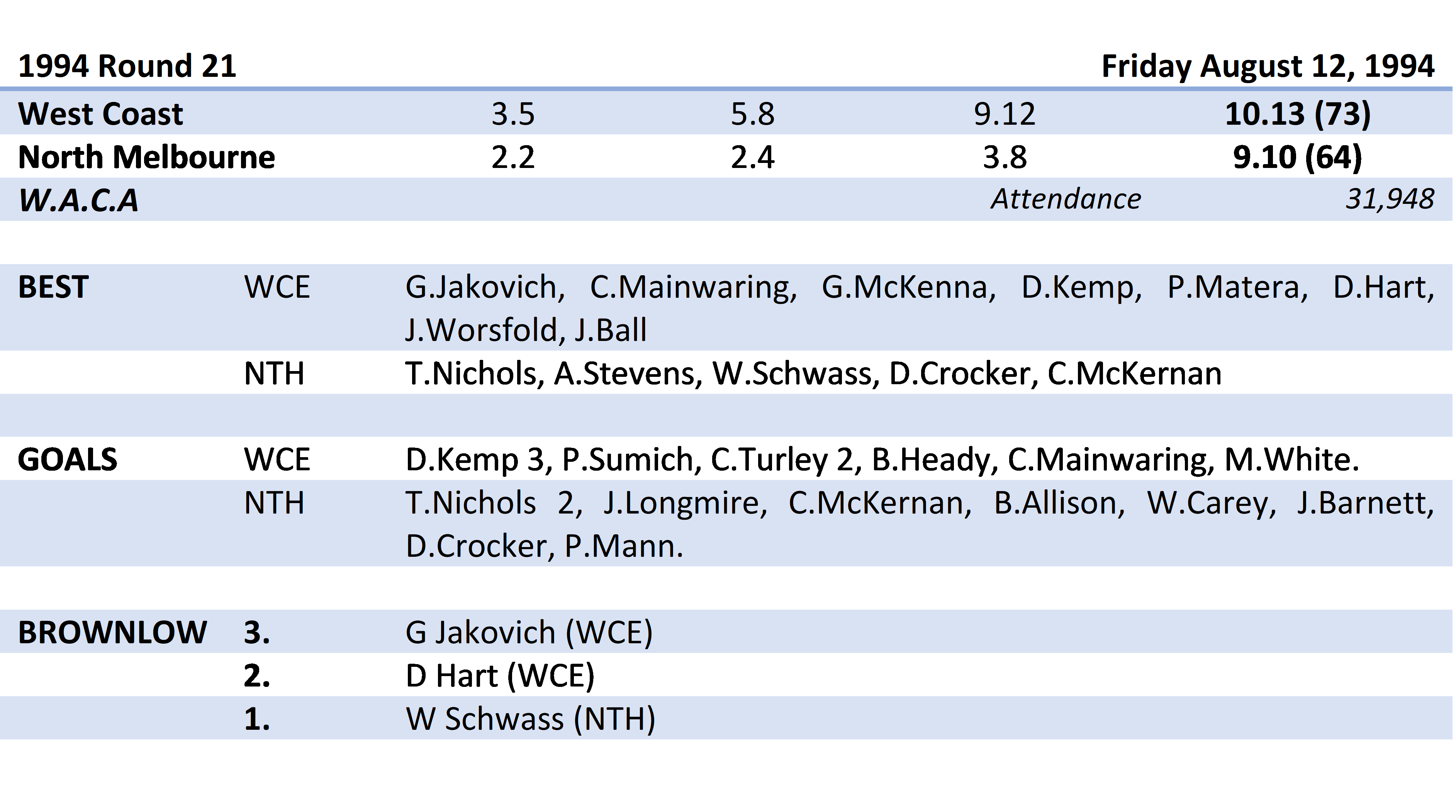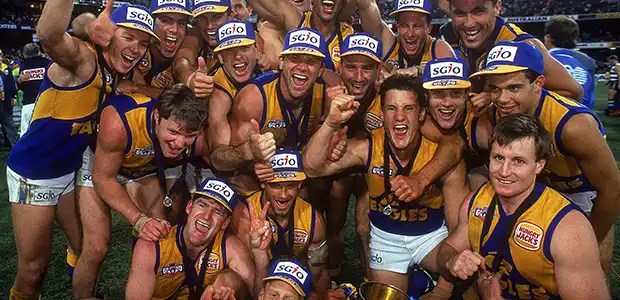
1994 Rewind: Eagles Slide From Top Spot

At the completion of Round 23, the Eagles found themselves not atop the AFL ladder, a position they had held since Round 7.

With the bye in the penultimate round of the 1994 season, the Eagles watched Carlton obliterate the Tigers and take top spot. For much of the year, West Coast had had the advantage of an extra game on the rest of their finals rivals, but the top eight finally found parity with all teams now having played the same number of games.

The Blues usurped the Eagles in top spot, courtesy of a better percentage that had jumped in the past fortnight on the back of two thumping victories. After defeating the Eagles the week before by 10 goals, Carlton established themselves as the premiership favourites with a 113 point hiding of the Tigers. Fraser Brown was the surprise packet up forward with seven goals in a result that left Richmond desperately clinging onto their position in the top eight.

Just three weeks after they sat in the top four and seemed all but certain to end their 12 year finals drought, their poor percentage – which had taken a six percent hit in the Carlton loss – had them trailing a host of sides on 12 wins and just one game ahead of Melbourne in ninth position.

With a round to play, only three teams were assured of finals action in 1994. Carlton and West Coast had been the clear two teams for much of the season, with Footscray emerging late as a contender when they easily accounted for the Demons by 40 points. The win saw the Bulldogs jump up to third on the ladder, ahead of an enticing trip to battle West Coast in the final round.

Behind the Bulldogs, North Melbourne, Geelong, Hawthorn and Collingwood all sat one game behind on 12 wins (along with Richmond) following a varying degree of results. The Kangaroos easily defeated Fitzroy by 86 points in the opening game in the round, while the Cats and Hawks were forced to scrape out wins against lowly opposition.

The Cats trailed Sydney by 21 points at half-time in their game at Kardinia Park, before an eight goal third term had Geelong in front and seemingly in cruise control. However, the Swans wouldn’t give up the game, pushing the home side all of the way, with the Cats eventually eking out a 12 point win. The Hawks were also made to work in an 11 point win over Brisbane at the GABBA, three late goals enough to secure the win after Brisbane hit the front during the final quarter.

Collingwood missed a chance to cement a top four spot when they suffered a shock two point defeat to St Kilda. Tony Lockett booted eight of the Saints 14 goals in the game, to inspire the win, with the Magpies late rally to steal victory falling short.

The Magpies were due to face North Melbourne in the final round, with Geelong and Richmond also fixtured to meet, meaning the two losers were at the mercy of the ninth-placed Demons. Melbourne held a better percentage than all of the teams on 12 wins, bar the Kangaroos, and with a final round clash against wooden spooners Sydney, the Demons were heavy favourites to work their way back into the top eight.

For West Coast, the week off was used to address a number of questions.

Firstly, the long-running query over where West Coast would host their first final was answered, with the AFL confirming the WACA would be used for finals. After meeting with the WAFC and the WACA Board, and with an expectation that the ground’s capacity would be increased to 36,000 to accommodate fans, the AFL ticked off the venue. Despite the success of the first ever night final the year before, where Essendon and Carlton played off a thriller in the qualifying final, the Eagles match would not be a night game, instead scheduled for the unusual mid-afternoon time of 3.30 on the Sunday of the opening weekend of the finals.

On field, match committee eyes were focused on the WAFL as a number of key Eagles used the weekend to build match fitness. Brett Heady, Mitchell White, Tony Evans and Shane Bond had all endured interrupted second halves to the 1994 season and used the chance to get game time into their bodies.

Heady and White were two of 11 Eagles that took part in the WAFL match between Subiaco and South Fremantle, with the vast majority playing for the Lions. As a result, Subiaco went on to win by a record margin of 121 points over the Bulldogs, with many fringe Eagles also doing what they could to garner the attention of selectors.

Karl Langdon returned from a two week suspension to boot three goals, while the Subiaco midfield which consisted of Dwayne Lamb, Tony Godden, Matt Connell and Damien Hampson all found plenty of the ball. Jason Heatley – in his second game from a long term injury – cashed in on the Lions dominance to boot 10 goals, as the Lions racked up a total of 30.23 (203).

Godden in particular was the standout and his showing rocketed him into senior contention for the final game of the season. At the other end, David Hynes and Brett Spinks had little impact in the South Fremantle forward line, but there was little they could do in the thrashing.

Peter Sumich didn’t partake in that match for the Bulldogs, as one of a number of key Eagles who had injury concerns. Glen Jakovich, Don Pyke, Ryan Turnbull and Dean Kemp were all injured in the loss to Carlton, with Jakovich the major worry with a knee complaint.

John Worsfold was still to recover from a groin complaint, while Ashley McIntosh was battling an ongoing knee injury that was the biggest issue within the squad. The defender-turned-forward had been plagued for much of the year, and despite repeated assurances from the club that his lack of recent training had been purely precautionary, it was hard to dismiss the large knee brace McIntosh had been wearing.

For another Eagle, the break brought a close to a career, with Dwayne Lamb announcing his retirement the day before stepping out in the WAFL. An inaugural squad member, Lamb had had the distinction of being the first player to reach 50, 100 and 150 games with the club but had only managed five games with West Coast this season.
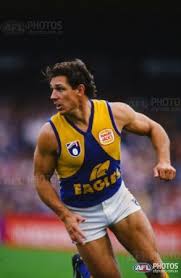
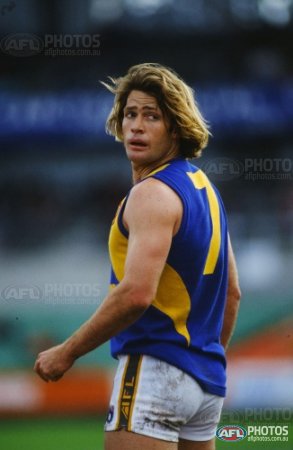
Dwayne Lamb announced he would retire at the end of season 1994

1994 Rewind: Eagles Crash To Blues

Mick Malthouse had just one thought following the Eagles 64 point drubbing to Carlton.

“The bye has come as a blessing in many respects.”

That a week off was the one positive from the top-of-the-table clash against Carlton said plenty about the performance. Jason Ball kicked the opening goal of the game, but it was all the home side from that point on, as Carlton booted 10 of the next 12 goals to storm to a 42 point half-time lead.

It fared little better through the second half as Carlton did as they pleased to move back within a game of West Coast at the top of the ladder and with a game in hand.

The result also produced a crucial 10 percent swing the between the two sides in the tight race for the minor premiership. The Eagles lost seven percent from the heavy defeat, dropping from 135.6 to 128.1, while the Blues improved from 126.4 to 129.3.

Following the defeat, Malthouse implored his players to regroup from the result ahead of their final home and away game of the season in a fortnights time, after their round 23 bye.

“No one likes to lose by 10 or 11 goals. Your confidence goes out the door.”

To compound matters, West Coast lost several key players with injury and had Craig Turley placed on report. Turley would later receive a two week ban for striking Greg Williams.

West Coast could have wrapped up top spot with a win over the Blues, but Carlton – who were desperate to atone for a shock eight point loss to Sydney the week before – were desperate to keep their shot at the minor premiership alive.

The Blues made four changes for the clash with Mil Hanna, Adrian Whitehead, Brett Ratten and young ruckman Matthew Allan all coming into the side. Forward James Cook was forced out with a heel injury, while Troy Bond, Brett Sholl and Stephen Oliver were all omitted.

The Eagles made no changes to the team that defeated North Melbourne the previous Friday night, despite injury concerns during the week over Chris Lewis and Ashley McIntosh.

West Coast lined up as expected, but David Parkin threw his side around in a bid to quell many of the Eagles playmakers. Andrew McKay was moved to half-forward in a tagging role on Guy McKenna, while the Blues also considered their match-ups for the Eagles midfield trio of Peter Matera, Dean Kemp and Chris Mainwaring.

Matthew Hogg was given the run-with role on Kemp, while offensive runners Craig Bradley and Anthony Koutofides lined up on the wing to go head-to-head with Matera and Mainwaring. Carlton coach David Parkin said the Blues had placed a focus on limiting the Eagles midfield drive.

“With both sides having such strong backlines we knew the game would be won in the midfield. We knew we had to harass players like Kemp, Matera and Mainwaring and not let them break away.”

Hogg kept Kemp to just four possessions to three quarter time, with the Eagle midfielder then moved into the forward line when he became hampered with an achilles injury. Koutofides had the better of Mainwaring, while Bradley’s run forced Matera to play defensively, depriving West Coast of attacking flair.

Bradley had 10 first-quarter possessions, and finished the term with one of the goals of the year. Taking possession on the wing, Bradley had several bounces running the outer wing, partaking in a one-two with Andrew McKay, and then curling the ball from 40m with a checkside from the boundary, just out of reach of a sprawling Jakovich on the goal line.

While the Blues perfected their plans for the Eagles midfielders, there was nothing West Coast could do to stop Greg Williams. The Carlton centreman was central to everything early and by quarter time he had made his mark on the game.

Williams had 13 possessions by quarter time and had directly created three of the Blues six first quarter goals. Craig Turley was given the initial assignment on Williams, but was on the bench midway through the term after going into the umpire’s book for striking. Don Pyke and Drew Banfield both spent time during the day on Williams but he proved unstoppable.

Craig Turley copped a two week suspension for striking Greg Williams.

Four goals down at the first break, Malthouse swung the changes in an attempt to get his side back into the game. Jason Ball was sent to full back to mind Stephen Kernahan, who had booted two goals in the first term on Glen Jakovich.

Jakovich was moved to his customary position at centre half back on Earl Spalding, with Michael Brennan coming off the bench in place of Mitchell White. Brett Heady – a surprise starter on the interchange – was also introduced into the game, but the moves did little to stop the Blues as Carlton’s midfield continued to control proceedings.

The Blues booted the first four goals of the quarter to race to a 49 point lead and all but end the contest, with a late Ryan Turnbull long bomb just before half-time breaking the drought for West Coast.

In the second half, West Coast were forced into preservation mode as they regularly lost players to injury. John Worsfold had a recurrence of a groin problem and was joined on the bench soon after by Jakovich who suffered a knee injury from landing awkwardly in a marking contest.

Ryan Turnbull then became the third player consigned to the bench with his own knee concerns, with Pyke (wrist) and Kemp (achilles) stuck on the ground to battle through their ailments. For Malthouse, the game had left plenty to ponder.

Instead of going into the bye in a position of strength, the Eagles now had a fortnight to patch players up before their final game against Footscray and then a finals campaign.

“We are under a lot of pressure because we have a lot of players who have received injuries. [The bye] gives us the chance to get a couple of blokes up. But I don’t know whether we are going to get them all up. That’s the trouble.”

Carlton’s win saw them move up to equal flag favouritism, along with West Coast, as doubts grew over the Eagles late-season form. The defeat was their third in six games and with fresh injury concerns, questions started to grow over the Eagles premiership contention. The shift in percentage meant that the Blues could now take top spot with a win over Richmond the following week, while West Coast had the week off.

David Parkin praised the response of his players, describing the win as one of the best of his career, while also acknowledging the unpredictability of the season.

“I guess to be beaten by the bottom side at its lowest ebb and then to come out and beat the top side, which is in pretty good form, is one of the things that makes Australian football so exciting.”

Greg Williams continued on from his blistering start, doubling his opening quarter tally by half-time and eventually finishing with 45 touches. The Carlton centreman tallied 17 kicks and 28 handballs and was central in many of Carlton’s forward entries.

Williams was the clear best on ground, but there were no shortage of best players amongst his teammates. Craig Bradley finished with 29 touches and two goals and was far too good for Matera, Barry Mitchell had 27 possessions and also booted two goals in his 200th game, while Brett Ratten finished with 26 touches. Up forward, Stephen Kernahan completed the work of the midfielders with six goals and half-forward Tom Alvin chipped in with three.

For West Coast, it was hard to find a winner on the ground. Jason Ball toiled hard in defence against Kernahan and Tony Evans and Don Pyke each finished with 20 disposals, but too many Eagles had no impact on the game.

While West Coast and Carlton’s battle for top spot was set to go the whole way, the rest of the top eight was also still up for grabs with just one win separating third from ninth.

North Melbourne’s third straight loss – a 20 point defeat to Melbourne – saw them drop from third to sixth as Footscray, Collingwood and Richmond moved past them. The Bulldogs climbed to third when they saw off a late Brisbane challenge to beat the Bears by 10 points, the Magpies squeaked past Geelong by three points courtesy of a late Nathan Buckley winner and Richmond easily accounted for Fitzroy by ten goals.

Melbourne’s win over the Kangaroos saw them jump back into the top eight ahead of Geelong who fell from fifth to eighth, and Hawthorn who tumbled out of the top eight after they lost to Essendon by 52 points in a disappointing display.

1994 Rewind: Eagles Secure Top Two

West Coast ensured they would finish in the top two at the close of the home and away season when they held off a rampaging North Melbourne at the WACA, in the opening game of Round 21.

The Eagles put in one of their best defensive efforts of the year when they held the free-flowing Kangaroos to just three goals to three quarter time to lead by 40 points.

But the Kangaroos rallied, kicking the last five goals of the game to have the home side and the home fans nervous, with only some desperate defence in the final minutes putting a halt to a famous comeback.

The win meant that the Eagles sat four games clear of North Melbourne with three matches remaining to confirm a top two finish. However, West Coast were yet to receive confirmation from the AFL that a top two finish would equate to two home finals under the new top eight finals format.

Subiaco Oval was due to start comprehensive construction of the new Southern Stand immediately following the Eagles final round game against Footscray and the WACA had yet to be accepted as an alternative venue due to its smaller capacity.

The AFL were also locked into an agreement with the MCC that stipulated a final at the MCG every week, and while the remaining seven positions on the ladder were filled with Victorian sides, the AFL refused to confirm West Coast would receive a second home final beyond the opening week.

The situation mirrored the scenario that West Coast faced in 1991 when they were forced to travel for a semi-final against Melbourne and a preliminary final against Geelong, despite finishing top.

While that was still to play out between West Coast and the AFL, on the field two of the premiership fancies showed their best and their worst in front of an electric crowd of just under 32,000 people. 

Both teams named strong line-ups with the Eagles bringing back three premiership players in captain John Worsfold and half-forwards Tony Evans and Brett Heady. Guy McKenna was able to take his place despite still nursing a broken nose from a Darren Jarman hit the week before, as did Ryan Turnbull who was limited during the week at training with a left wrist complaint.

The Kangaroos made just the one change to the team that narrowly lost to Geelong the week before, with midfielder Alastair Clarkson making way for utility Peter Mann. North Melbourne coach Denis Pagan admitted that the selection of Mann was in response to the 37 point defeat to West Coast earlier in the season, when the Eagles exposed the Kangaroos for lack of height.

Another inclusion to the Kangaroos side from the one that lost in round 6 was Corey McKernan who had been a revelation in his first season. The rookie ruckman/forward had added another dimension to the Kangaroos in 1994 and lined up in the forward half along with Wayne Carey and John Longmire in a three-pronged attack.

Jason Ball was given the task in defence of minding McKernan, with Michael Brennan taking Longmire and Glen Jakovich matching up with Carey in the next instalment of their individual rivalry.

Jakovich would emerge the winner out of their battle with a best on ground display. The Eagles centre half back finished with 29 disposals and seven marks as he often stood in the way of many North Melbourne forward entries.

He was well supported by Guy McKenna (19 disposals) and John Worsfold (20 disposals) as North Melbourne allowed the Eagles half-back line to dictate play.

The Kangaroos used Alex Ishchenko as a spare man in defence, replicating a tactic that had worked successfully against Gary Ablett the week before. With Ishchenko heading into the back 50 after contesting the centre bounce, the Kangaroo half-forwards pushed up the ground to neutralise the Eagle midfield.

That meant McKenna and Worsfold were often allowed to set up without an opponent, feeding off the loose balls created from spilled balls in the North Melbourne forward 50.

The Eagles also had plenty of winners through the middle of the ground as Dean Kemp, Peter Matera and Chris Mainwaring dominated the North Melbourne centreline. Kemp dismissed the tagging effort of Anthony Stevens to pick up 12 first-half possessions and also booted the only two goals of the second quarter as West Coast worked their way to a 22 point half-time lead.

While Kemp was less influential after half-time, Mainwaring got the better of Wayne Schwass with 18 second-half disposals to finish with a match haul of 25 (along with eight marks). Peter Matera tallied 23 disposals on the other wing and Don Pyke was just as effective with 22 touches.

After controlling the first half, the Eagles were dominant in the third term, but it took until late in the quarter when consecutive goals to Craig Turley – who started the game on the bench – gave the Eagles what appeared to be an unassailable lead.

At three-quarter time, Pagan reverted back to a more typical structure holding his half-forwards deeper and the Kangaroos got the rewards on the scoreboard. They opened the scoring in the first minute before Peter Sumich responded shortly after with his second major of the evening to restore the Eagles’ 40 point lead.

That would be the last significant score for West Coast in the game as North Melbourne flew home in a rush. The Kangaroos kicked the final five goals of the game and had their chances in the dying minutes. With the margin just nine points and still three minutes remaining, the Kangaroos butchered several forward 50 entries.

Jakovich twice was able to intercept North Melbourne, including one John Blakey kick when he had Carey 15m free in space. Jakovich had 12 disposals and took four marks in the final term alone as the Eagles defence stood tall in the face of repeat Kangaroo entries.

After the match, the mood of the two coaches could not have been further apart.

Denis Pagan was seething of his side’s performance, with many of his prime movers leaving their imprint on the game until it was too late. Corey McKernan, Wayne Schwass and Darren Crocker all lifted in the final term as North Melbourne rallied, but it mattered little to Pagan.

“We were pretty disappointing for three quarters, and to come back hard in the last quarter proved that there is nothing conclusive about West Coast and North Melbourne.”

On the flipside, Mick Malthouse wasn’t bothered by his team’s last quarter, instead choosing to focus on the earlier effort that won the game.

“I thought the workload of the boys was outstanding for three quarters and there probably wasn’t any reward on the scoreboard.”

“North got their momentum up and they were very hard to stop… we got a couple of running injuries and that put a bit of pressure on us,” Malthouse explained. “We had to leave a couple of players out there when we wouldn’t have normally.”

In the post-script, both sides had setbacks to counter.

The Eagles finished the game without a fit player on the bench after John Worsfold and Tony Evans re-aggravated injuries in their first games back, while Chris Lewis had fresh worries over a thigh.

North Melbourne lost Anthony Rock during the game with a serious ankle injury, that was likely to see the midfielder miss the remainder of the regular season, but their concerns lay more critically with the tribunal.

The Kangaroos had three players reported on the night, with Brett Allison and Corey McKernan both reported for tripping Jason Ball on separate occasions, while Glenn Archer went into the book for disputing an umpires decision. Archer and Allison would escape suspension, but McKernan would not be so lucky, copping a one week ban. Cruelly, the guilty finding would leave McKernan ineligible for the Rising Star award, which he had been favourite to win.

If the nine-point win on a Friday night was a positive way to start the weekend, it only got better for the Eagles when Carlton – who were vying with West Coast for top spot – were humbled by last-placed Sydney at the SCG.

In a result that David Parkin declared would ‘have severe ramifications for the club’, the Swans recorded a famous eight-point win in a low-scoring clash, despite four goals to Carlton captain Stephen Kernahan. The Blues entered the game as $1.05 favourites, but the upset defeat left Carlton two games behind West Coast in second place ahead of their meeting the following week.

An inaccurate Richmond dropped their match against Hawthorn, while a goalless last quarter saw Melbourne fall to the Magpies. The losses to the Tigers and the Demons, on top of defeats to the Blues and Kangaroos meant that the teams placed second through to fifth coming into round 21 all lost, as the race for the top four got tighter.

The six teams behind West Coast and Carlton all had 11 wins for the season, with percentage determining the order.

North Melbourne remained third courtesy of their superior percentage with the Bulldogs moving into the top four after they easily accounted for St Kilda. The Saints got the early jump, but Footscray took control after quarter time, booting 15 goals to 6 on their way to a 45 point victory.

Geelong moved up to fifth when they got over the Lions, although it took until the last quarter to be completely assured of the win. Hawthorn, Collingwood and Richmond rounded out the eight, with the Magpies returning to the top eight after knocking on the door for several weeks.

Richmond suddenly looked vulnerable as they dropped from fourth to eighth, with their poor percentage threatening to undo their run to the finals. Melbourne made way for the Magpies dropping to ninth, as they sat one game behind the teams above them; the loss to Collingwood proving a real eight-point result.

1994 Rewind: Hawks Humble Eagles

For the second time in season 1994, the Eagles faced a Hawthorn side who were reeling off the back of three consecutive heavy defeats.

And, for the second time in season 1994, the Eagles were well beaten. After thrashing the Eagles by 71 points in their round 5 meeting, the Hawks were able to complete the double with a 46 point triumph that re-invigorated their finals hopes and opened up the race for top spot.

Making the Hawks’ win even more impressive was that they did it without champion full forward Jason Dunstall, after he strained a calf against the Blues the week before.

Paul Hudson stepped up to the plate in Dunstall’s absence, booting five goals and having the better of a handful of Eagle opponents.

Apart from a brief period in the second quarter when they had the advantage of the breeze, the Eagles never looked like threatening the Hawks, in a performance that coach Michael Malthouse labelled ‘absolutely dreadful’.

With Carlton having the bye, the Eagles remained one game clear of the Blues, despite the loss, but their hold of top spot was starting to look shaky. The two teams were set to do battle in a fortnight’s time, with West Coast also due to face top eight sides North Melbourne and Footscray in the final rounds of the regular season.

There was little change in the top eight, with most results going as expected. The one surprise was the Cats thrilling one-point win over North Melbourne, where Gary Ablett notched his 100th goal for the season. However, despite the win, the Cats actually dropped from sixth to eighth. The Hawks stayed seventh with their win over West Coast, while the Bulldogs swapped positions with Geelong after thumped a dispirited Adelaide by 84 points at Western Oval. The defeat all but ended the Crows’ slim finals hopes, with the future of inaugural coach Graham Cornes in question.

Richmond accounted for the Saints to remain in fourth spot, but joined the Kangaroos on eleven wins, while Melbourne scored a vital win over Brisbane at the GABBA to stay fifth. The Demons led a pack of five teams, all on 10 wins, with Collingwood sitting ninth after they defeated the Bombers. Essendon and Brisbane sat one game out of the top eight, but both teams had yet to have to their second bye, meaning they were essentially two games out of finals contention.

Dunstall was one of four changes for the Hawks, with Paul Barnard, Scott Crow and Tim Hargreaves all dropped following the 32 point loss to Carlton. Anthony Condon, Greg Madigan, Alex McDonald and Jason Taylor all came into the side, with Taylor named at centre half forward and Paul Dear starting in the goal square.

Alex McDonald also started forward with Peter Knights throwing his side around in a bid to arrest the three game losing streak. Greg Madigan and Andrew Gowers both spent time through the centre, while Shayne Stevenson often pushed up the ground from half-forward to create an additional number around the ball. Young defender Mark Graham was put to full back to mind Peter Sumich with Chris Langford shifted to centre half back.

West Coast made two changes with Chris Mainwaring and John Worsfold both named at selection but each needing to pass a fitness test before taking their place. Mainwaring made it through, but Worsfold was ruled out for the fifth game in the past eight weeks. His place was taken by veteran Dwayne Lamb. Brendan Krummel and Damien Hampson were both omitted.

After losing his place at West Coast, Krummel’s week got worse when he was suspended by the WAFL tribunal following an investigation into the Fremantle derby a fortnight earlier. Krummel was found guilty of rough conduct when he elbowed South Fremantle youngster Owen Woods while attempting to shepherd, which left Woods with a fractured cheekbone. Krummel was rubbed out for a week.

The writing was on the wall early for West Coast when Michael Brennan dropped a simple chest mark just three minutes into the game, allowing Paul Hudson to swoop on the loose ball and snap through the opening goal. With the aid of the wind, Hawthorn raced to a 28 point quarter time lead, with six goals to one.

Having lost Worsfold before the game, the Eagles half-back line took another hit when Guy McKenna created history to became the first player sent off by the umpires under the AFL’s newly implemented blood rule in the first quarter.

McKenna was on the end of a heavy bump from Darren Jarman that left the defender with a bloodied nose. McKenna returned in the second term, only to be sent off again when the patchwork didn’t hold and his jumper got stained. McKenna wouldn’t appear after half-time due to blurred vision.

The Eagles got the game on their terms in the second quarter, reducing the Hawks lead to 15 at the major break. Peter Wilson led the way for the visitors with 11 possessions in the quarter, but the Hawks wrapped up the contest on the back of a Darren Jarman masterclass.  

The Hawks more than doubled their half-time score in the third term, with Jarman having a hand in nearly all of Hawthorn’s seven goals for the quarter. Drew Banfield, Matt Clape and Peter Wilson were all given the task of stopping Jarman, but there was little any of the Eagles players could do.

Paul Hudson booted three of the Hawks’ seven goals and, likewise, created headaches for the Eagles coaching box who were unable to find a player to curb his influence. Chris Langford proved a wall for Hawthorn across half-back, picking up 21 dipsosals and six marks as he completely shut out Ashley McIntosh.

Shane Crawford picked up 26 disposals in a run with role on Peter Matera on the wing, holding the Eagle to just 11 possessions, while Rayden Tallis blanketed Dean Kemp in the middle. On a day of few winners for West Coast, Peter Wilson and Chris Mainwaring each finished with 20 disposals and a goal.

The Eagles sluggishness could have been attributed to consecutive trips to Melbourne, with the Hawthorn clash six days after taking on Fitzroy at the sodden Western Oval. However, Eagles coach Michael Malthouse refused to use the fixture as an excuse.

Instead, the Eagles coach was left to ponder whether the Hawks now had the psychological edge should the two teams meet in the finals. “They have the edge at the moment. Next week is a different week, but they slaughtered us.”