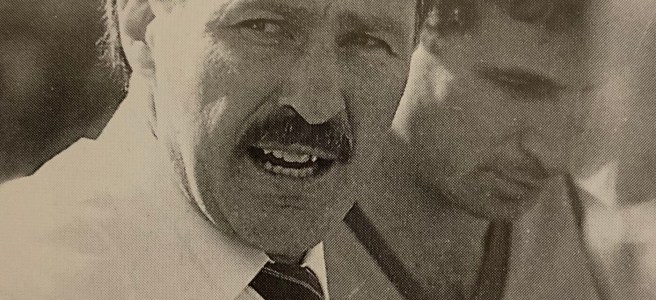
1990 Rewind: Malthouse Begins

Off-Season of Change Brings Winning Start

The 1990 season promised a new beginning.

The AFL was officially born with league headquarters re-branding from the VFL to recognise that the competition was now national, with clubs located in Victoria, New South Wales, Queensland and Western Australia.

The West Coast Eagles had also undergone significant changes since a disappointing 1989 campaign.

John Todd was replaced as coach after two seasons, with Victorian Michael Malthouse taking over the reins following six seasons at Footscray. The Bulldogs had only made the finals once during Malthouse’s tenure as coach, falling agonisingly short of a Grand Final appearance in 1985 in Malthouse’s second year.

The Bulldogs had remained competitive since, hovering just outside the final five, before crashing to second-last in Malthouse’s final year in charge, as the club battled football extinction. The Bulldogs would exist in their own right for season 1990 – saved from merging with Fitzroy – but Malthouse sought a new challenge across the Nullabor.

The transition between Todd and Malthouse hadn’t been a smooth one; news of Malthouse’s appointment had been leaked before Todd was formally told he would not be offered a new contract, with the Eagles hierarchy scrambling together a press conference on the afternoon of October 3, 1989 to present Malthouse as the clubs third coach.

Malthouse would not be the only key change for the Eagles heading into 1990.

Brian Cook was appointed CEO, after two years with the WAFC, and Trevor Nisbett was appointed football manager. On-field, Stephen Malaxos was named captain with John Worsfold vice-captain and the club was able to establish Subiaco Oval as its permanent training base, having operated out of a number of different locations across their first three seasons.

Leading up to the clubs opening game against Collingwood, the signs were positive the Eagles could return to finals action.

The Eagles lost narrowly to Essendon in their Fosters cup opening game, but were given a reprieve in the competition after Brisbane failed to travel down for the pre-season competition. West Coast played the Bears’ opponent in North Melbourne, and narrowly lost again. The Eagles lost both games by three points, with poor kicking for goal to blame in both defeats.

West Coast then hosted the previous seasons Grand Finalists in practice matches to round out the pre-season. Both were resounding victories. The Eagles thrashed the Cats by 89 points and then followed up that performance with a 12 goal win over the Hawks.

West Coast named a fresh squad to tackle the Magpies, who were one of the premiership favourites heading into the season. Collingwood had made the finals the previous two seasons under Leigh Matthews, but had been bundled straight out in both years. With a number of key recruits over the off-season, many believed the Magpies were ready to take the next step.

The Eagles named four players for their AFL debut. Peter Matera – the Eagles first selection at the 1989 draft – Dean Kemp, Dean Irving and Brad Gwilliam were all selected for their first matches, while Peter Wilson was also picked for his first game with the club, having switched across from Richmond.

John Worsfold was left to lead the club, after new captain Steve Malaxos was forced to miss the game with a broken foot. Malaxos had suffered the injury, stepping on a picket at his home, missing the start of the season.

The Magpies named new recruits Tony Francis and Scott Russell, who had both joined the club from the SANFL, but prized addition Paul Hawke and defender Michael Christian were both unavailable due to hamstring injuries.

The two sides had met in the final round of the 1989 season, with Collingwood easy 49 point winners.

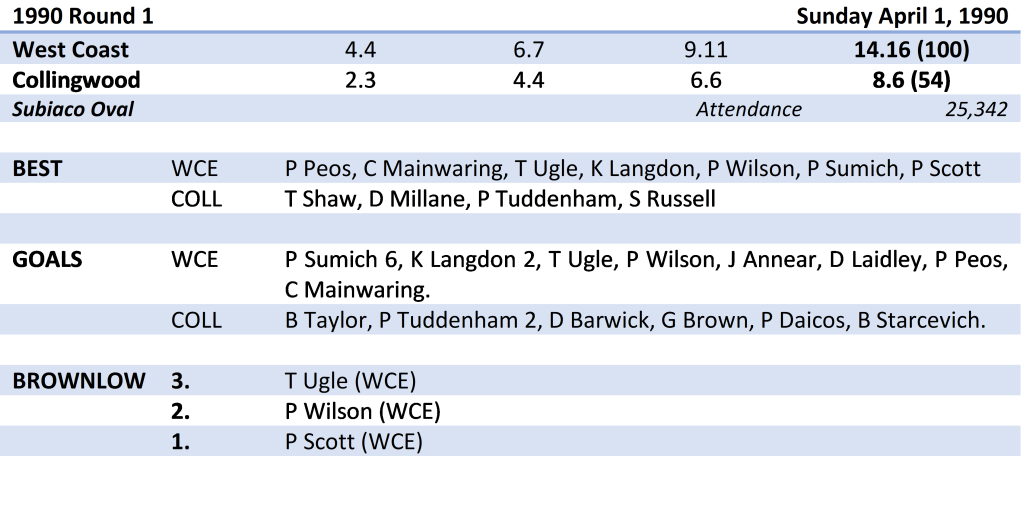
But in a clear sign of how much the Eagles had progressed in one summer, West Coast extended their lead in every quarter to run away with a 46 point win.

In a bruising encounter that had plenty of moments of spite between the two sides, it was an all-in brawl midway through the third quarter that set the course of the final outcome. Collingwood first-gamer Tony Francis lashed out at Eagles defender Murray Rance as the two tumbled over the boundary line, sparking an altercation that involved most players from both sides.

Play was held up for several minutes as the umpires tried to separate the players and when the two teams did get back to playing football, it was the Eagles who settled quicker. The Eagles booted the next three goals to stretch their lead out to 34 points, and while Collingwood responded with the last two goals in the term, a five goal to two last quarter sealed an impressive win for the home side.

Peter Sumich starred up forward with six goals, but it was the improved defensive attitude that pleased new coach Mick Malthouse most. Collingwood could manage just eight goals for the afternoon, with Michael Brennan shutting out full forward Brian Taylor and Murray Rance the better of Craig Starcevich.
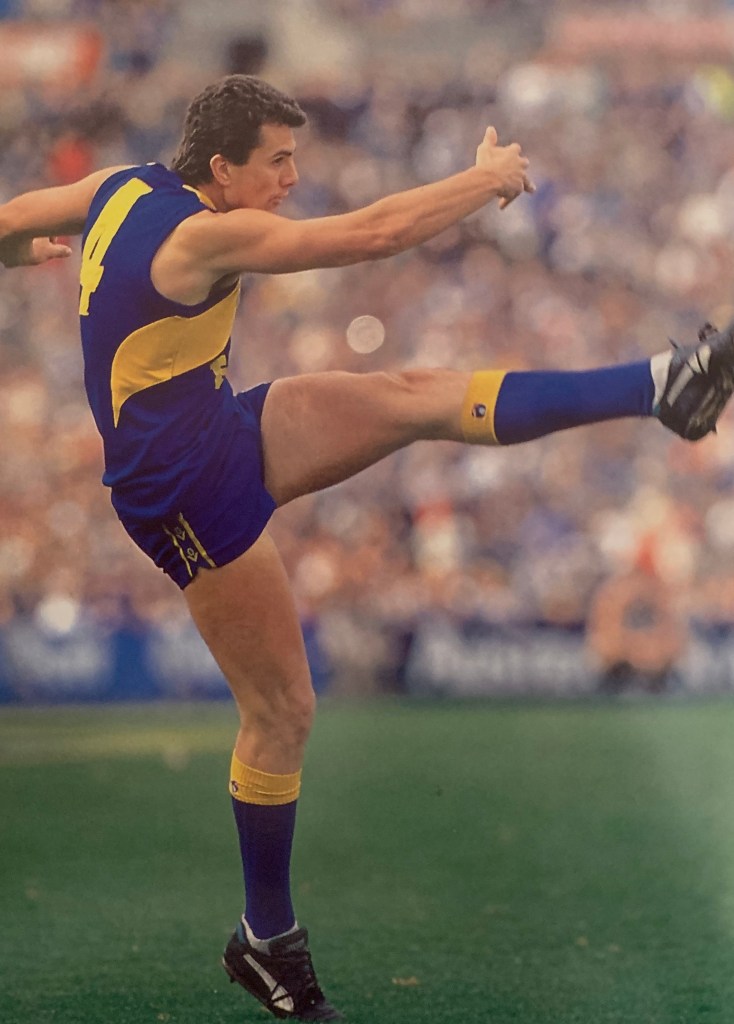
Sumich led the way up forward with six goals

Dean Laidley had the better of Jamie Turner, while John Annear found a new role in defence, marked with the task of minding Gavin Brown.

The Magpies struggled throughout the day with the man-on-man structure that Malthouse implemented, as well as the intense pressure around the ball.

“They (the players) didn’t talk about how much they’d won by or who kicked the goals. The first thing they said when they came in was the tackling was terrific”, an excited Malthouse proclaimed after the match.

“They acknowledged each other and it’s important that they think that’s one criterion of success, either at Subiaco Oval or Melbourne.”

Troy Ugle was stationed in the back pocket for the Eagles and provided plenty of dash through the first half, before being forced off the ground when he was caught under the pack of the melee, injuring an arm in the process. However, he returned to the field in the forward line for the final quarter, booting a goal and setting up two others in a best-afield display.

First-gamer Dean Irving combined well with Phil Scott in the ruck with the duo proving too strong for Collingwood pair Damien Monkhorst and James Manson at the stoppages. The Eagles midfield benefitted from this advantage with Paul Peos the leading ball-winner with 25 disposals and Chris Mainwaring next-best with 22.

Dean Kemp had 20 touches on the wing to get the better of Graeme Wright and Dwayne Lamb restricted Peter Daicos to just six kicks and a goal.

After having his colours lowered by Paul Tuddenham in the first quarter, acting captain John Worsfold was released into the middle, where he finished with 19 disposals and gave plenty of drive along with Karl Langdon, who collected 21 touches and booted two goals roaming between half forward and the centre.

For Collingwood, only captain Tony Shaw (24 disposals), newcomer Scott Russell (22) and Darren Millane (21) showed they were capable of matching the fierceness that West Coast brought to the contest.

It only got worse for the Magpies, with Francis later suspended for six games for kicking Rance. In his tribunal hearing, Francis remarked that he had been provoked when he felt Rance brush his groin area, and while he admitted responding with a kicking action, believed that he had missed Rance. The Eagles defender supported the claim by Francis that he didn’t make any contact, but that didn’t stop tribunal chairman Neil Busse rubbing the Collingwood midfielder out until round 8.

The Eagles themselves weren’t immune from the tribunal, with runner Rob Wiley charged for his involvement in the melee. Wiley was sanctioned and fined $1000.

While the result proved an awakening to the rest of the competition, Malthouse remained calm, saying there was plenty for his side to work on.

“If you come away from round one with a win, and plenty of work to do, that’s good.”
West Coast Demolish Cats For 1994 Flag

Two Out Of Three Ain’t Bad For Eagles

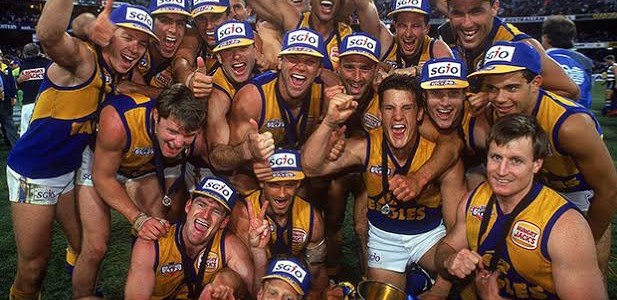
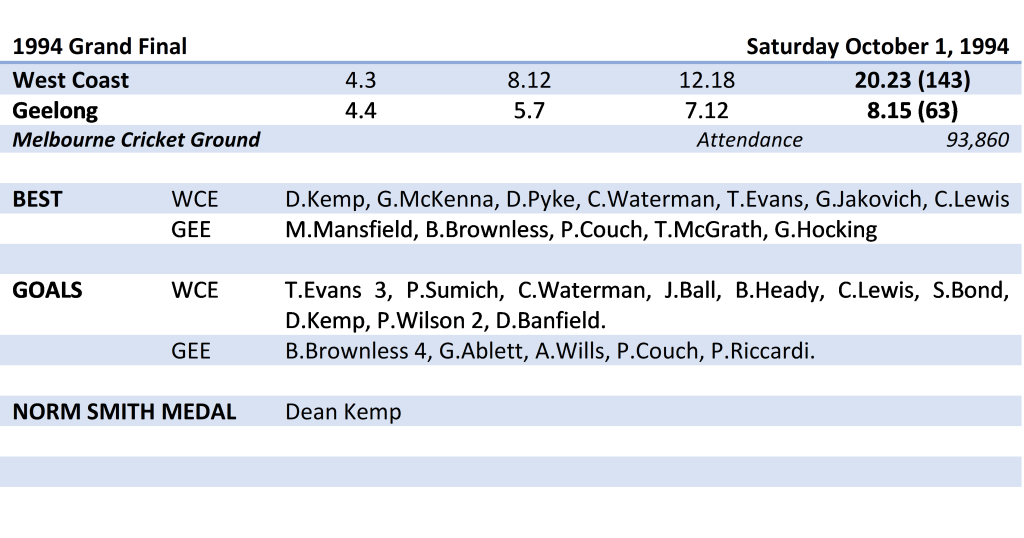
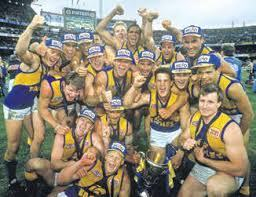
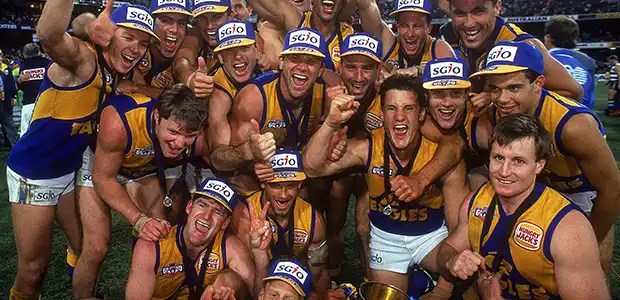
West Coast reinstated themselves as the kings of the competition when they crushed Geelong by 80 points to win the 1994 Grand Final.

Two years after an historic first flag, the Eagles steamrolled the Cats to their second premiership, erasing the disappointment of a failed 1993 season.

Dean Kemp claimed the Norm Smith medal for best afield and Tony Evans repeated his 1992 haul of three goals as West Coast booted their highest score in over two years.

Traditionally recognised as a defence-oriented side, the Eagles racked up 43 shots on goal in the Grand Final, a week after they posted 37 scoring shots against Melbourne. Ten Eagles in total hit the scoreboard as West Coast recorded the fourth largest winning margin in Grand Final history.

For the Cats, the defeat was their third loss in the season decider in six seasons, having gone down to the Eagles by 28 points in 1992 and the Hawks by six in 1989.

A shattered Malcolm Blight could offer no explanation after the match, saying there was ultimately nothing his side could do. “I could say a million things about what we might have done or could have done. But at the end of the day they were 80 points better than us, which is pretty hard to cop really.”

Eagles coach Mick Malthouse admitted he sympathised with the Cats, but was equally ecstatic with his side’s performance.

“I just love seeing the day for the club and all the players… I get a bigger kick out of seeing the players enjoy themselves.”

West Coast made just one change from the preliminary final, with Ashley McIntosh coming back into the team after missing with a knee injury. Mitchell White was the player to make way, after coming into the side as McIntosh’s replacement, but remained an outside chance on the morning of the game as West Coast debated whether to remove one of their ruckman.

However, the pair of David Hynes and Ryan Turnbull was retained to tackle John Barnes who was openly struggling with a lower leg injury. Geelong remained unchanged from their last-gasp six point win over North Melbourne, with Grant Tanner ruled out earlier in the week in his bid to recover from an ankle injury.

McIntosh started in defence on Bill Brownless, with Michael Brennan tasked with minding Gary Ablett. The Cats tried to throw the Eagles defence early, starting Ablett on the wing but he quickly moved to the goal square after failing to have an impact.

In a reverse to the 1992 meeting, it was West Coast who had the fast start, booting the first three goals in the game. Tony Evans, Chris Lewis and Shane Bond all kicked majors as the Eagles jumped to a 20 point lead.

West Coast had had all of the play out of the middle of the ground but the momentum of the game soon changed when Geelong piled on four goals in eight minutes. Tim McGrath and Michael Mansfield provided the dash off half back for the Cats with Paul Couch opening the Cats account.

Three more goals followed in quick time to give Geelong a seven point lead, before Brett Heady settled the Eagles just before quarter time to reduce the Cats lead to one point at the first change.

It would prove to be the only period of ascendency Geelong would have in the game.

West Coast resumed control at the start of the second term and only poor kicking on goal prevented the Eagles from having the game won by half time. Peter Wilson kicked consecutive goals to start the quarter as West Coast camped the ball in their forward half.

The Eagles created confusion at the Geelong kick-ins when they changed tack from their usual one-on-one set up to a zone defence. The usually precise Mansfield and Ken Hinkley were undecided with their re-entries preventing clean getaways from their back half, which had been a trademark through their finals campaign.

Twice in the second quarter West Coast picked off their kick-ins. Tony Evans intercepted a Ken Hinkley pass to mark and goal, before then having an intercepting hand that rebounded to Peter Sumich allowing the Eagles full forward to send the ball back over his opponent in Stephen O’Reilly.

The Eagles continued their dominance of general play but, remarkably, when Bill Brownless booted his third goal midway through the third term, the Cats were still within touching distance trailing by just 18 points.

However, three majors to Dean Kemp, Brett Heady and Peter Sumich extended their lead to six goals by three-quarter time and Geelong’s slimmer of Hope was all but gone.

The last quarter was a celebration for West Coast, as they slammed on eight goals to one to demoralise the opposition and the majority of the pro-Geelong crowd.

Symbolic of the day for West Coast and for their Norm Smith medallist Dean Kemp, their 17th goal came about purely by accident. Kemp’s kick inside 50 was intended for Chris Lewis who was crunched out of marking the ball by Tim McGrath, only for the ball to carry on its path and bounce harmlessly through for another goal.

Kemp was sublime for the Eagles on a day when they had a healthy number of contributors. The Eagles centreman had 23 disposals and booted two goals to outpoint Geelong captain Mark Bairstow, who had a dirty day. It also meant that Bairstow finished with the inglorious honour of once again playing on the Norm Smith medal, after lining up on Peter Matera’s wing in his five goal performance of 1992.

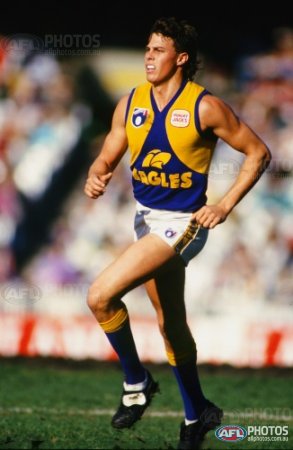
Dean Kemp was best afield for West Coast

Don Pyke collected 26 possessions through the middle and just had the edge over Geelong’s Paul Couch. One of Geelong’s prime movers was relegated into a defensive role as he tried to curb the influence of the Eagles centreline.

The Eagles defence was as impregnable as ever, led by Glen Jakovich (20 possessions) and Guy McKenna (23) across half back. Jakovich played his own game standing in the way of Geelong’s forward entries and proving too strong for both Steven Handley and David Mensch. McKenna provided the run from the backline as he outclassed Adrian Hickmott.

Michael Brennan blanketed Gary Ablett, with the Geelong superstar managing just one goal from five disposals and David Hart had the better of Leigh Tudor in the back pocket. Geelong’s only winner in their forward half was Billy Brownless, who exorcised some of his demons from the 1992 Grand Final when he was humbled by Ashley McIntosh.

Brownless kicked four goals for the Cats – he was the only Geelong player to kick a goal after quarter time – and took one of the great Grand Final marks when he soared over McIntosh and managed to hold onto the ball from a second attempt.

Michael Mansfield was arguably the Cats best player with 21 disposals out of defence and having the better of Shane Bond, while Tim McGrath also did his best to withstand the avalanche. Garry Hocking finished with 20 possessions after being forced off during the first term with a heavy cork and returning to the ground in the second half with heavy padding around his upper leg.

But it was a day that belonged to West Coast.

15 members of the 1992 triumph were now dual premiership players, while there was redemption for David Hynes and David Hart, who were the unlucky stories from two years earlier.

And even with two of the heroes from 1992, in Peter Sumich and Peter Matera, having subdued outings, there were plenty of others who stepped up. Sumich and Matera combined for 11 goals in the clubs first flag as West Coast had just four goal kickers for the day. This time around, nearly half of the team kicked goals, as the likes of Chris Lewis, Brett Heady and Jason Ball provided strong targets up forward.

Chris Waterman came onto the ground early in the second term after Chris Mainwaring was forced off with a corked hip and put in one of his finest performances with 18 disposals and two final quarter goals (to go with four behinds). Mainwaring himself was able to return to the field and pick up 18 disposals.

Mick Malthouse even broke with his own tradition in heading down to the bench with three minutes remaining. Malthouse had been reluctant to leave the box two years earlier, despite the urging of his coaching team, but with the game well in his side’s keeping, the Eagles coach revelled in the celebrations boundary side.

Malthouse admitted that he knew his side were home during the third quarter.

“We expected at some stage Geelong to give us a big quarter like they had over the last three or four weeks, so we were ready for it. We stuck to our basics, not to allow them to get that one quarter of football in.”

“At half-time I thought if we maintained our pressure, and we could hold them, we could do the job,” Malthouse said.

“So I guess three quarters of the way through the third quarter I thought we had them.”

Since taking over as senior coach at the end of 1989, Malthouse had steered the Eagles to no lower than fourth in five seasons, which now included two premierships from three Grand Final appearances.

The Eagles had massacred the Cats in one of the most emphatic premierships of the modern era and with that staked their claim as the pre-eminent club of the AFL.

1994 Rewind: Eagles Secure Top Two

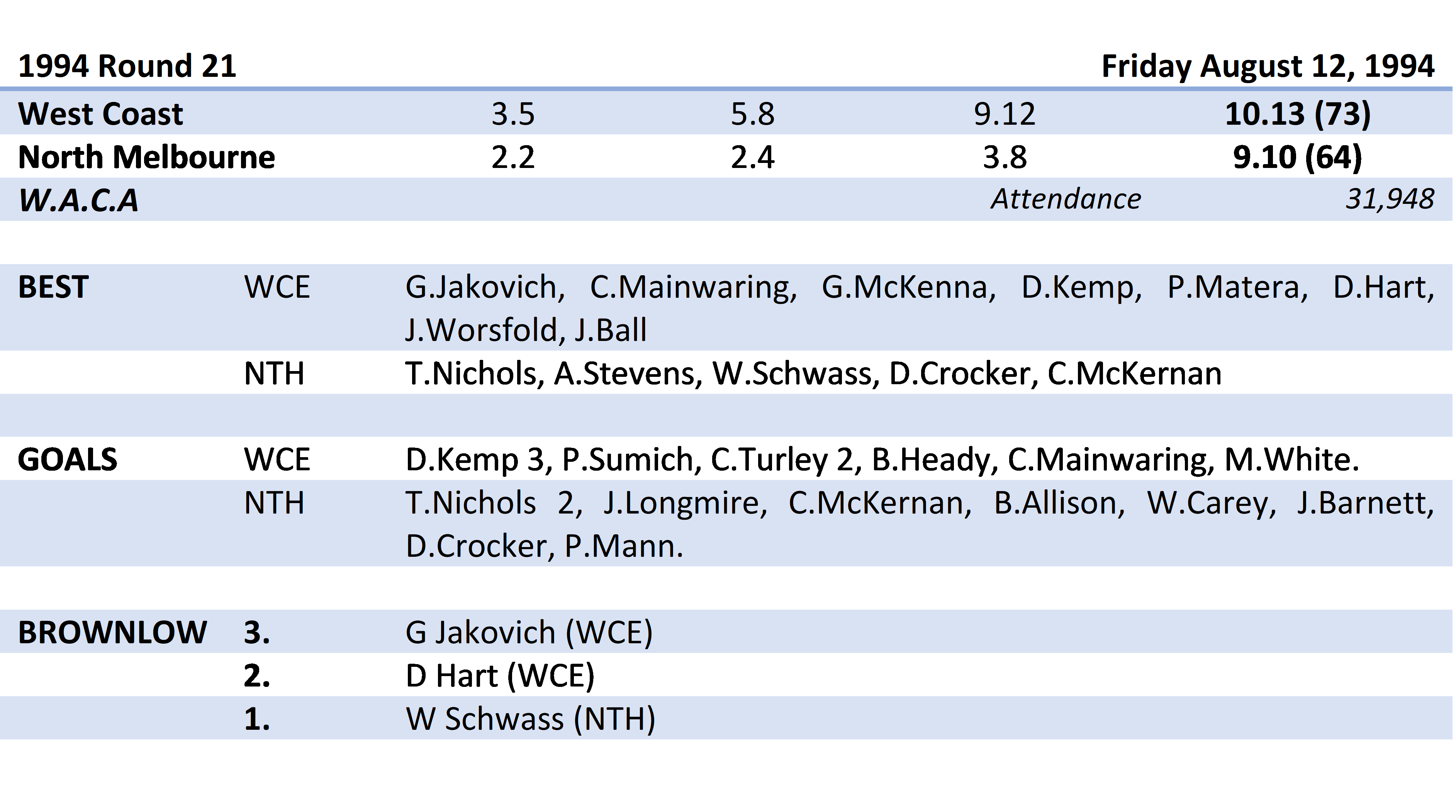
West Coast ensured they would finish in the top two at the close of the home and away season when they held off a rampaging North Melbourne at the WACA, in the opening game of Round 21.

The Eagles put in one of their best defensive efforts of the year when they held the free-flowing Kangaroos to just three goals to three quarter time to lead by 40 points.

But the Kangaroos rallied, kicking the last five goals of the game to have the home side and the home fans nervous, with only some desperate defence in the final minutes putting a halt to a famous comeback.

The win meant that the Eagles sat four games clear of North Melbourne with three matches remaining to confirm a top two finish. However, West Coast were yet to receive confirmation from the AFL that a top two finish would equate to two home finals under the new top eight finals format.

Subiaco Oval was due to start comprehensive construction of the new Southern Stand immediately following the Eagles final round game against Footscray and the WACA had yet to be accepted as an alternative venue due to its smaller capacity.

The AFL were also locked into an agreement with the MCC that stipulated a final at the MCG every week, and while the remaining seven positions on the ladder were filled with Victorian sides, the AFL refused to confirm West Coast would receive a second home final beyond the opening week.

The situation mirrored the scenario that West Coast faced in 1991 when they were forced to travel for a semi-final against Melbourne and a preliminary final against Geelong, despite finishing top.

While that was still to play out between West Coast and the AFL, on the field two of the premiership fancies showed their best and their worst in front of an electric crowd of just under 32,000 people. 

Both teams named strong line-ups with the Eagles bringing back three premiership players in captain John Worsfold and half-forwards Tony Evans and Brett Heady. Guy McKenna was able to take his place despite still nursing a broken nose from a Darren Jarman hit the week before, as did Ryan Turnbull who was limited during the week at training with a left wrist complaint.

The Kangaroos made just the one change to the team that narrowly lost to Geelong the week before, with midfielder Alastair Clarkson making way for utility Peter Mann. North Melbourne coach Denis Pagan admitted that the selection of Mann was in response to the 37 point defeat to West Coast earlier in the season, when the Eagles exposed the Kangaroos for lack of height.

Another inclusion to the Kangaroos side from the one that lost in round 6 was Corey McKernan who had been a revelation in his first season. The rookie ruckman/forward had added another dimension to the Kangaroos in 1994 and lined up in the forward half along with Wayne Carey and John Longmire in a three-pronged attack.

Jason Ball was given the task in defence of minding McKernan, with Michael Brennan taking Longmire and Glen Jakovich matching up with Carey in the next instalment of their individual rivalry.

Jakovich would emerge the winner out of their battle with a best on ground display. The Eagles centre half back finished with 29 disposals and seven marks as he often stood in the way of many North Melbourne forward entries.

He was well supported by Guy McKenna (19 disposals) and John Worsfold (20 disposals) as North Melbourne allowed the Eagles half-back line to dictate play.

The Kangaroos used Alex Ishchenko as a spare man in defence, replicating a tactic that had worked successfully against Gary Ablett the week before. With Ishchenko heading into the back 50 after contesting the centre bounce, the Kangaroo half-forwards pushed up the ground to neutralise the Eagle midfield.

That meant McKenna and Worsfold were often allowed to set up without an opponent, feeding off the loose balls created from spilled balls in the North Melbourne forward 50.

The Eagles also had plenty of winners through the middle of the ground as Dean Kemp, Peter Matera and Chris Mainwaring dominated the North Melbourne centreline. Kemp dismissed the tagging effort of Anthony Stevens to pick up 12 first-half possessions and also booted the only two goals of the second quarter as West Coast worked their way to a 22 point half-time lead.

While Kemp was less influential after half-time, Mainwaring got the better of Wayne Schwass with 18 second-half disposals to finish with a match haul of 25 (along with eight marks). Peter Matera tallied 23 disposals on the other wing and Don Pyke was just as effective with 22 touches.

After controlling the first half, the Eagles were dominant in the third term, but it took until late in the quarter when consecutive goals to Craig Turley – who started the game on the bench – gave the Eagles what appeared to be an unassailable lead.

At three-quarter time, Pagan reverted back to a more typical structure holding his half-forwards deeper and the Kangaroos got the rewards on the scoreboard. They opened the scoring in the first minute before Peter Sumich responded shortly after with his second major of the evening to restore the Eagles’ 40 point lead.

That would be the last significant score for West Coast in the game as North Melbourne flew home in a rush. The Kangaroos kicked the final five goals of the game and had their chances in the dying minutes. With the margin just nine points and still three minutes remaining, the Kangaroos butchered several forward 50 entries.

Jakovich twice was able to intercept North Melbourne, including one John Blakey kick when he had Carey 15m free in space. Jakovich had 12 disposals and took four marks in the final term alone as the Eagles defence stood tall in the face of repeat Kangaroo entries.

After the match, the mood of the two coaches could not have been further apart.

Denis Pagan was seething of his side’s performance, with many of his prime movers leaving their imprint on the game until it was too late. Corey McKernan, Wayne Schwass and Darren Crocker all lifted in the final term as North Melbourne rallied, but it mattered little to Pagan.

“We were pretty disappointing for three quarters, and to come back hard in the last quarter proved that there is nothing conclusive about West Coast and North Melbourne.”

On the flipside, Mick Malthouse wasn’t bothered by his team’s last quarter, instead choosing to focus on the earlier effort that won the game.

“I thought the workload of the boys was outstanding for three quarters and there probably wasn’t any reward on the scoreboard.”

“North got their momentum up and they were very hard to stop… we got a couple of running injuries and that put a bit of pressure on us,” Malthouse explained. “We had to leave a couple of players out there when we wouldn’t have normally.”

In the post-script, both sides had setbacks to counter.

The Eagles finished the game without a fit player on the bench after John Worsfold and Tony Evans re-aggravated injuries in their first games back, while Chris Lewis had fresh worries over a thigh.

North Melbourne lost Anthony Rock during the game with a serious ankle injury, that was likely to see the midfielder miss the remainder of the regular season, but their concerns lay more critically with the tribunal.

The Kangaroos had three players reported on the night, with Brett Allison and Corey McKernan both reported for tripping Jason Ball on separate occasions, while Glenn Archer went into the book for disputing an umpires decision. Archer and Allison would escape suspension, but McKernan would not be so lucky, copping a one week ban. Cruelly, the guilty finding would leave McKernan ineligible for the Rising Star award, which he had been favourite to win.

If the nine-point win on a Friday night was a positive way to start the weekend, it only got better for the Eagles when Carlton – who were vying with West Coast for top spot – were humbled by last-placed Sydney at the SCG.

In a result that David Parkin declared would ‘have severe ramifications for the club’, the Swans recorded a famous eight-point win in a low-scoring clash, despite four goals to Carlton captain Stephen Kernahan. The Blues entered the game as $1.05 favourites, but the upset defeat left Carlton two games behind West Coast in second place ahead of their meeting the following week.

An inaccurate Richmond dropped their match against Hawthorn, while a goalless last quarter saw Melbourne fall to the Magpies. The losses to the Tigers and the Demons, on top of defeats to the Blues and Kangaroos meant that the teams placed second through to fifth coming into round 21 all lost, as the race for the top four got tighter.

The six teams behind West Coast and Carlton all had 11 wins for the season, with percentage determining the order.

North Melbourne remained third courtesy of their superior percentage with the Bulldogs moving into the top four after they easily accounted for St Kilda. The Saints got the early jump, but Footscray took control after quarter time, booting 15 goals to 6 on their way to a 45 point victory.

Geelong moved up to fifth when they got over the Lions, although it took until the last quarter to be completely assured of the win. Hawthorn, Collingwood and Richmond rounded out the eight, with the Magpies returning to the top eight after knocking on the door for several weeks.

Richmond suddenly looked vulnerable as they dropped from fourth to eighth, with their poor percentage threatening to undo their run to the finals. Melbourne made way for the Magpies dropping to ninth, as they sat one game behind the teams above them; the loss to Collingwood proving a real eight-point result.

1994 Rewind: Eagles Class Shines In Wet

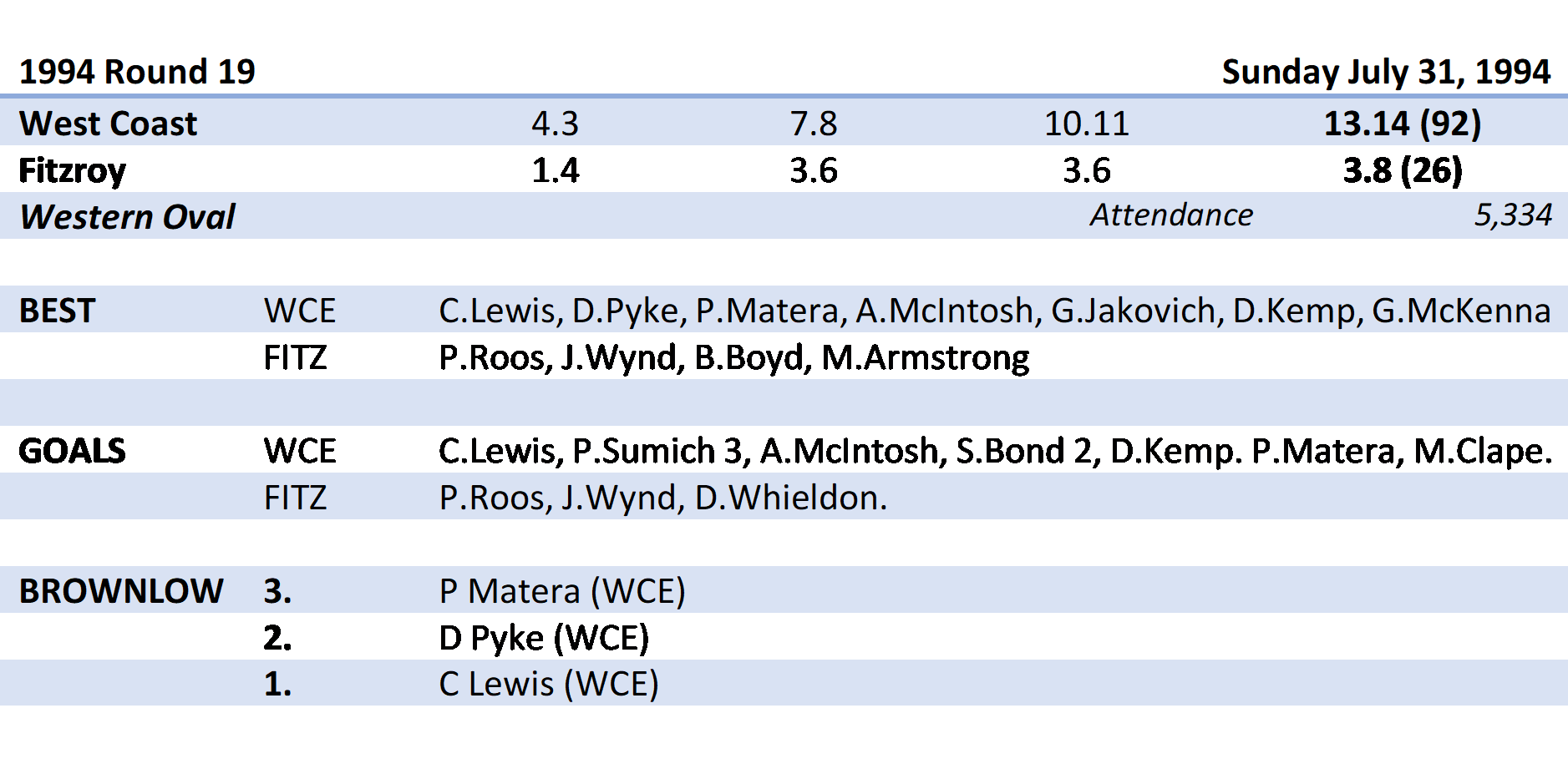
West Coast swept aside the Fitzroy Lions with an easy 66 point win at the Western Oval. Fitzroy were held to just two behinds after half-time, unable to break through the Eagles hardened defence in wet and heavy conditions.

On a cold, wintry afternoon where a crowd of just 5,334 braved the conditions, Chris Lewis provided the shine with 16 disposals and three first half goals, as well as having a hand in several others. Peter Sumich also finished with three goals as he continued to build his match fitness from consecutive hamstring injuries.

The Eagles strong performance came despite missing several key players. Brett Heady was never a chance of lining up after dislocating his shoulder the week before against Richmond, while Chris Mainwaring (hamstring) and Chris Waterman (foot) were ruled out during the week.

John Worsfold was given an extra week to recover from his groin problem, as was Tony Evans who had a back complaint. The Eagles consequently made four changes at the selection table, with Michael Brennan returning from injury, and fringe players Matt Clape, Brendan Krummel and Paul Symmons all earning call-ups.

Damien Hampson was initially dropped, alongside injured trio Heady, Mainwaring and Waterman, but earned a reprieve ahead of the opening bounce when David Hynes pulled out.

Krummel’s selection marked his first Eagles appearance in over a year, but it didn’t come without controversy. After being named in the Eagles squad on Thursday night, Krummel became the centre of an investigation over an incident from the previous weeks WAFL derby between East Fremantle and South Fremantle.

Young Bulldog Owen Woods was collected behind the play, suffering a broken jaw in several places, and South Fremantle officials pointed the finger at Krummel. The Bulldogs lodged an official complaint with the WAFL and demanded that Krummel be charged, with Woods expected to miss the remainder of the season after undergoing surgery.

However, the WAFL tribunal were unable to determine whether there would be a case to answer, leaving Krummel free to play with West Coast. Krummel, for his part, said that he knew nothing of the incident.

The Lions dropped four players in response to their narrow loss to Brisbane the week before, with Tom Kavanagh, Danny Morton, James Manson and Nick Mitchell all losing their place. Rick Lyon, Brett Cook, Trent Cummings and Mark Zanotti were the four inclusions, but Zanotti and Cummings then became late withdrawals ahead of the match. Their spots were in turn taken by David Bain and Marcus Seecamp.

Brendan Krummel returned to the Eagles line-up for the first time in over a year

Despite the wet conditions, Malthouse started three talls in the Eagles forward line, as he looked to expose the depleted Fitzroy defence. Ashley McIntosh and Jason Ball took their spots across half forward, with Peter Sumich taking his regular spot in the goal square.

Fitzroy had first use of the wind, but the Eagles got first blood when Lewis soccered home from the goal square. The Lions held on for much of the quarter, but a three goal burst in time-on put West Coast out to a 17 point lead at the first change and there was never any coming back for the Lions from there.

The Eagles would extend their lead to 26 by the major break, then leading by 47 at three quarter time and finally running out 66 point winners as Fitzroy failed to register a second-half major. In fact, the Lions remained scoreless after half-time until the dying minutes of the last term when they kicked consecutive behinds.

When the game was there to be won, Lewis was a cut above most others on the field, proving a constant danger and giving Fitzroy defender Steven Stretch the run-around. Peter Matera added the flashes of brilliance, getting the better of Michael Dunstan on the wing, while down back the Eagles defence proved impenetrable.

Michael Brennan held Darren Wheildon to just one goal, while Guy McKenna, Glen Jakovich and Mitchell White all shut out their opponents in a complete display.

The win further enhanced this Eagles group with the club not always renowned for their performances in the wet. However, the win over Fitzroy was the fourth win in wet weather after victories over St Kilda, Essendon and Richmond in recent weeks, all of which were played in the rain.

The performance impressed Fitzroy coach Robert Shaw, declaring West Coast as ‘the best team I have seen in those conditions’.

Eagles coach Mick Malthouse acknowledged that the conditions suited the more developed Eagles against a young Fitzroy outfit. “Jarrod Molloy is a good marking player so the conditions didn’t suit him. Chris Johnson has great pace but is still finding his way.”

“We had a lot of experienced players in the midfield.”

Shaw though was far more circumspect over the difference between the two sides. “They played the percentages and followed the basic principles a lot better than us.”

“And they did it for longer and more often.”

While Lewis and Matera were the polish up forward and around the wings, Dean Kemp and Don Pyke provided the grunt through the midfield. Kemp finished with 28 disposals and a goal while Pyke had 30 through the centre. Ashley McIntosh had 18 disposals, four marks and booted 2.2 across half forward, while Glen Jakovich collected 20 touches across half back.

Paul Roos was clearly the best player for Fitzroy, gathering 31 disposals and booting a goal in an intriguing battle with Craig Turley through the middle. Jim Wynd also found plenty of the ball, finishing with 29 disposals and joined Roos as one of the Lions’ three goal kickers.

The win saw West Coast hold their one game advantage over the Blues, who defeated an inaccurate Hawthorn by 32 points at Princes Park. The Blues, in turn, held their position in second ahead of North Melbourne, with the Kangaroos coming from behind to defeat Footscray by 20 points in a Friday night classic.

Richmond became the benefactors of the losses suffered by the Hawks and the Bulldogs, climbing into the top four after their straight forward win over Sydney. Melbourne were the other big movers, storming into the top eight  for the first time since Round 13. The Demons thumped a faltering Essendon by 77 points, lifting them from ninth to fifth on the ladder as they passed a number of clubs – including the Bombers – with a superior percentage.

Melbourne led a group of five teams who all had nine wins as the race for the bottom half of the top eight continued to tighten. The Cats rose to sixth after they thrashed Adelaide, with Hawthorn and Footscray filling out the rest of the finals positions. The Magpies slipped to ninth due to having the bye.

While West Coast were all but guaranteed finals and strengthened their position on a top two finish and two home finals, the fallout for Fitzroy was substantial.

Robert Shaw resigned as coach in the days following the Eagles defeat, although he agreed to coach out the remainder of the season as the Lions continued to be the centrepiece of merger discussions. Speculation suggested that a deal with either Brisbane or Melbourne was imminent, leading Fremantle to claim they should be given first right to Fitzroy players as part of their inaugural 1995 squad.

The comments angered president Dyson Hore-Lacy, who had already been vocal about the Dockers’ attempts to lure Paul Roos west with a ‘substantial’ offer, which included the captaincy. Hore-Lacy remained resolute about Fitzroy’s future, declaring the club wouldn’t hold back from launching legal action against any AFL club who tried to poach their players while under contract.

Hore-Lacy also scoffed at the idea the club would head interstate, saying a merger with the Bears would be ‘like taking the last chair on the Titanic.’