2011 Rewind: West Coast Return to Winning Ways

Veterans and Youngsters Provide Glimpse to Brighter Future

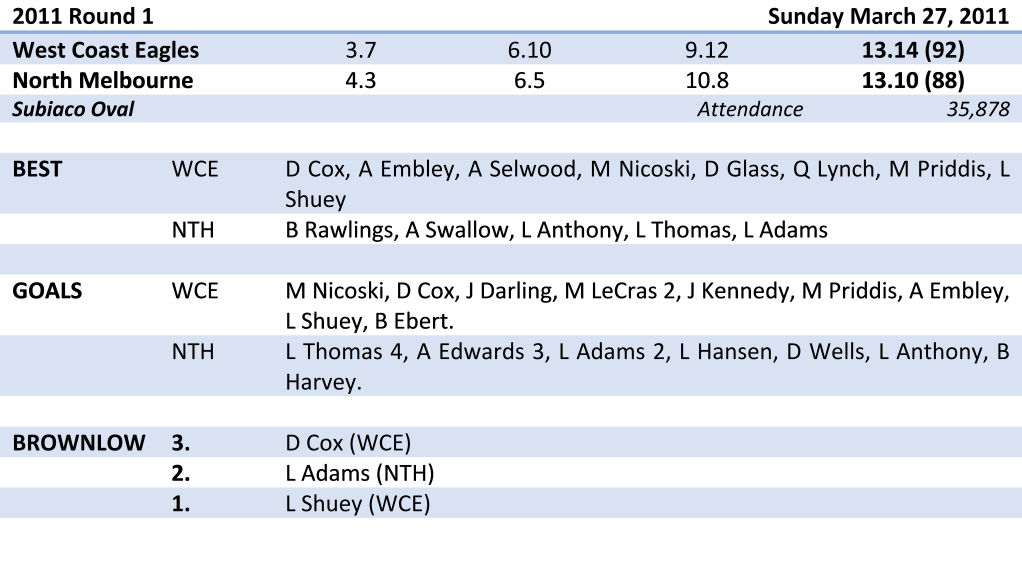
West Coast started the 2011 season in winning fashion with a narrow four point win over North Melbourne at Subiaco Oval.

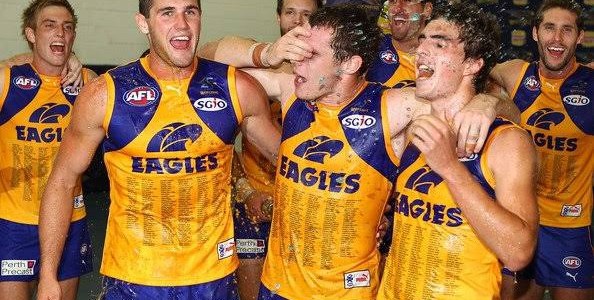
Wearing a commemorative guernsey to mark 25 years in the AFL competition, the Eagles outlasted the Kangaroos in a match where the margin at the end of each quarter was never more than five points.

Fresh off the club’s first ever wooden spoon, the Eagles approached the new season with a sense of renewal as a host of veterans returned from injury and a several high draftees joined the club.

After a season of speculation, coach John Worsfold was assured that he would see out the season, despite many predicting a bottom four finish for West Coast. However, the Eagles showed they would be an improving team after recording wins against 2010 finalists Fremantle and Hawthorn in the shortened pre-season format.

West Coast followed the round-robin win with a comfortable victory over newcomers Gold Coast, before falling to premiers Collingwood in the pre-season semi-finals.

Encouragingly, the Eagles had enjoyed a drama-free off-season which hadn’t been the case in recent years. And as West Coast approached the start of the 2011 season, they had virtually a full squad to choose from – another rarity of recent times.

Darren Glass and Dean Cox had appeared to shake off ongoing groin problems, while the likes of Beau Waters, Mark Nicoski and Sam Butler were available to start the season. Daniel Kerr was another who was set to return to the senior side after ripping his hamstring from the bone in round 4 of the previous season.

Remarkably, Kerr would make his league debut for junior club East Fremantle the week before the Eagles’ opening match against North Melbourne, 10 years after he was drafted by West Coast. Kerr would ultimately be left out of the Eagles side for the Kangaroos as West Coast opted for a cautious approach with their senior midfielder.

Two players who did make it into the final two were West Coast’s top two draft picks from the 2010 National Draft. By virtue of finishing last, the Eagles would normally secure the first selection, however the inclusion of the Gold Coast Suns had seen the expansion team monopolising many of the early draft choices.

West Coast took running wingman Andrew Gaff with the fourth overall selection and then West Perth forward Jack Darling with a priority selection at the end of the first round which the club had received for winning less than five games in 2010. The pair were named for their AFL debuts – the first time Worsfold had named multiple debutants in a match during his time as coach.

Gaff would earn the honour of being the clubs first interchange substitute, after the controversial rule was introduced by the AFL ahead of the season. Originally not named in the 22, Gaff came in as a late replacement for Patrick McGinnity who was pulled from the side after a hot spot was detected in his foot. Mark Nicoski also earnt a late selection when he replaced Naitanui who had concerns over a shoulder injury from the pre-season.

The Kangaroos were one of the big unknowns heading into 2011 after finishing ninth the year before. Brad Scott – entering his second season as coach – talked up his sides chances heading into the match, believing the Eagles off-season training in the Perth heat would serve as a disadvantage.

With the substitute rule effectively reducing interchange rotations from four players to three, Scott suggested the young Eagles would tire quicker, with the match to be played in mid-30’s heat.

The Kangaroos named four players for their first game, with Cameron Richardson, Cameron Pedersen and Shaun Atley all named for their AFL debut, with former Eagle Ben McKinley included for his first game after switching clubs at the end of the 2010 season.

McKinley and Pedersen were set to take up the key forward roles, with Drew Petrie out suspended and Hamish McIntosh unavailable, while small forward Matthew Campbell was sidelined with injury.

The Kangaroos were then dealt a further blow before the match with ruckman Todd Goldstein withdrawing from the side. Goldstein’s departure effectively balanced out the Eagles’ loss of Naitanui and left makeshift duo Lachie Hansen and Cameron Pedersen to battle it out against Cox.

Cox would be one of the influential players of the day as West Coast won out in a match that ebbed and flowed throughout.

Early on though, it seemed as the Eagles’ 2010 form would continue as the Kangaroos bounced to an early three goal lead. Brent Harvey had the first major inside a minute, with Hansen and Lindsay Thomas adding majors to see the visitors out to a 19 point lead.

Slowly, the Eagles worked their way into the game, with Matthew Priddis opening the Eagles account midway through the term. Brad Ebert and Andrew Embley kicked goals and West Coast hit the front having had all of the momentum as the quarter time loomed.

The Eagles arguably should have hit the lead sooner, but wasted several chances in front of goal, most notably Mark Nicoski who kicked three behinds for the term. Re-cast as a half forward after spending his career in defence, Nicoski was creative without getting reward on the scoreboard.

A late Liam Anthony goal put the Kangaroos back in front at quarter time, before the two teams traded goals through the second term. Jack Darling kicked his first career goal after running down Jack Ziebell as West Coast took a narrow five point lead into the major break.
Jack Darling brings down Jack Ziebell to register his first career goal

The Eagles’ other debutant, Gaff, was into the action early after Chris Masten limped off early in the match with a knee injury and West Coast were soon down two on the bench when reigning best and fairest Mark LeCras was stretchered off with a torn adductor as he snapped through his second major.

Jack Darling added a second soon after as the Eagles skipped out to a 19 point advantage. Lindsay Thomas then dragged the Kangaroos back into the match with two goals in a minute.

North Melbourne closed with all of the momentum as Daniel Wells and Leigh Adams hit the scoreboard, to put North Melbourne in front by two points with a term to play.

In oppressive heat and with players down on the bench, West Coast could have been excused for wilting in the final term, but they came out the stronger at the start of the final quarter, with Nicoski finally getting some reward. With four behinds to his name, Nicoski found the major opening after two minutes of play

Dean Cox pushed forward for his second goal, before Nicoski added a second to see the Eagles back out to a 16 point advantage. The Kangaroos kept coming, reducing the margin to four points as the final term ticked into time-on, but a dubious Luke Shuey free kick and resultant goal sealed the match for West Coast.

Another ex-Eagle in Aaron Edwards goaled after the final siren to reduce the margin to four points, as West Coast started their season with a win for the first time since 2008. The victory saw the Eagles sit inside the top eight for just the second time since the opening round of 2008 and restored a winning feeling after West Coast managed just one win in the final 14 games of the 2010 season.

A delighted John Worsfold expressed pride that his side was able to hold and win despite losing numbers on the bench and being clearly fatigued in the final term. “Very proud of the way the players held up in a lot of individual efforts in terms of taking up a lot of the slack so we could keep the rotations going.”

One of those players was Quinten Lynch who rucked for large portions of the final term as Cox battled cramp. Lynch, who had fallen out of favour towards the end of the previous season, appeared to enjoy the freedom of the forward/ruck hybrid, with Kennedy and Darling holding down the key forward posts. The hulking forward collected 20 disposals and nine marks, as well as having 18 hit-outs.

Cox for his part finished as the leading ball winner at West Coast with 29 disposals, eight marks, 29 hit-outs and two goals, as well collecting the three Brownlow votes. Andrew Embley and Matt Priddis finished with 28 each, while Nicoski had 21 to go with eight inside 50s and 2.5.
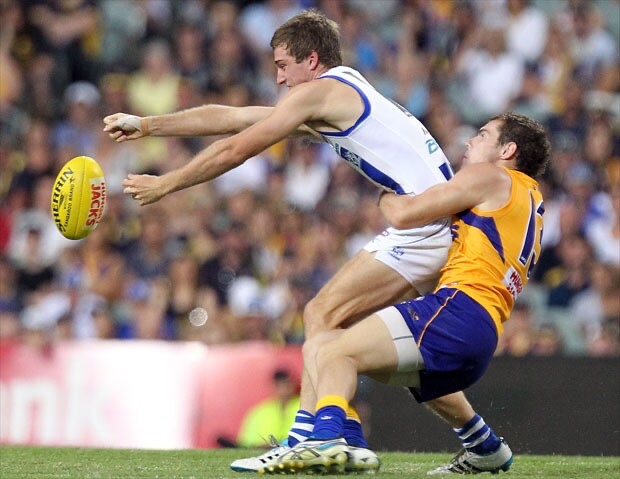
Luke Shuey stepped up in the midfield in just his 7th game

Brady Rawlings picked up 32 touches to lead the Kangaroos with Andrew Swallow next best with 26. Lindsay Thomas kicked four goals and Edwards three, but too many were down on the day. For McKinley, it was an unhappy homecoming, subbed off during the third term with just five disposals to his name.

Brent Harvey couldn’t shake the tag of Adam Selwood, finishing with just 11 disposals. Harvey had amassed 44 touches the last time the two sides met, but was given no space by the close-checking Selwood.

Darling and Gaff both showed they belonged at AFL level, with Darling’s two goals coming from 11 disposals and three marks, showing an intensity around the forward line as West Coast looked to implement a high press.

Gaff tallied 14 disposals in nearly three quarters of football while Luke Shuey was just as impressive in his seventh game of football, picking up 20 disposals and six clearances, as well as booting the important sealing goal. Brad Sheppard (15th game) and Ashton Hams (12th game) also both had their moments.

“It is fantastic for the young kids that have earned a spot in round one”, a beaming Worsfold declared.
1990 Rewind: Eagles Caught On The Hop

MCG Woes Return

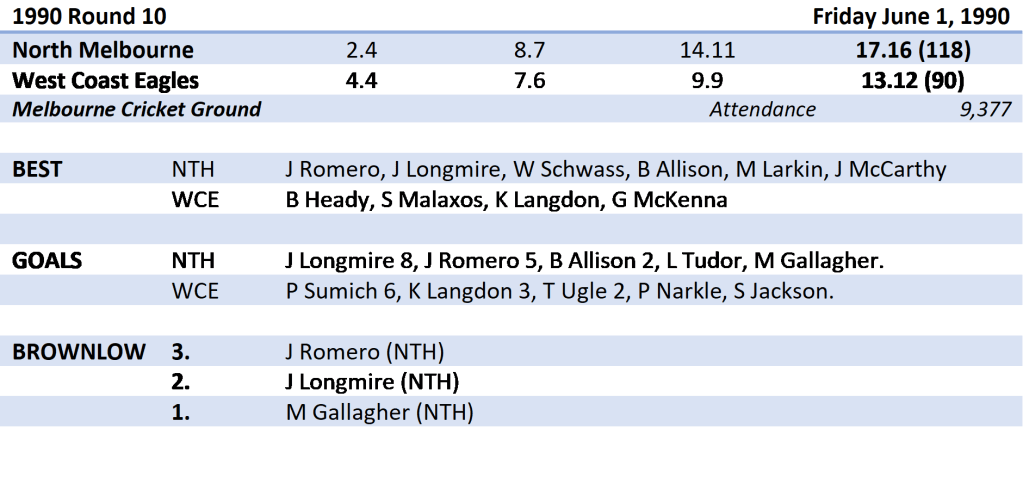
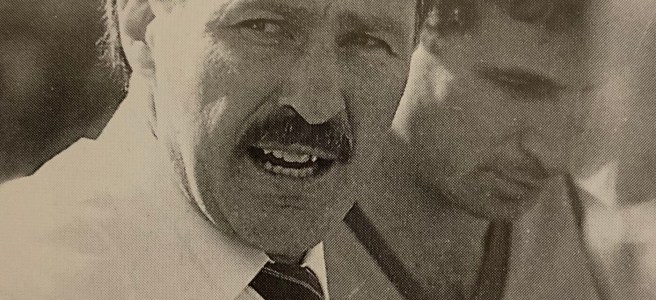
West Coast Eagles coach Mick Malthouse blasted his players ‘very soft’ performance, when they succumbed to a 28 point loss to North Melbourne at the MCG.

Sitting equal top, the Eagles had entered the match as hot favourites against a Kangaroos side who were on a six game losing streak, without a win since round 3.  

Malthouse had warned his players not to take the stumbling Kangaroos lightly, and it seemed the Eagles players had heeded their coach’s instructions when they booted the opening four goals of the game. But from there North Melbourne owned the contest and the ball, edging their way to the lead by half-time and then pulling away through the second half.

“We were second to the ball, did not run and allowed North Melbourne to dictate terms totally”, a furious Malthouse said after the game. “We are very soft.”

“Unfortunately, this seems to be the norm when we are beaten.”

North Melbourne full forward John Longmire booted eight goals in the win, matching his effort from nine days earlier when he led New South Wales to one of the great upsets in Australian football, over the powerhouse Victorian side in the state-of-origin.

Longmire had four goals by midway through the second term, forcing Malthouse to shift Murray Rance to full back, in place of Michael Brennan, but Longmire remained a strong focal point for the Kangaroos up forward. Jose Romero provided the supporting act, kicking five goals from 26 disposals in a clear best on ground display.

Tagger Dwayne Lamb would have been assigned with the job of minding Romero, but was one of three players unavailable for the Eagles, following their win in the heavy slog conditions over Geelong just five days earlier.

Lamb was ruled out with a calf complaint, while Peter Wilson was unavailable after straining a hamstring the week before. John Worsfold would then be a late withdrawal ahead of the bounce, with Don Pyke, Dean Turner and Troy Ugle the three inclusions.

North Melbourne made a staggering seven changes to the side that was comprehensively thrashed by Collingwood to the tune of 80 points. Alastair Clarkson was ruled out with concussion, while Ross Smith, Peter German, Ian Fairley, Donald McDonald, Anthony Stevens and Warwick Angus were all dropped.

Kangaroos coach Wayne Schimmelbusch turned to youth, bringing in Liam Pickering, Leigh Tudor, Craig Sholl, Shaun Smith and Mark Brayshaw. Ruckman Michael Gallagher was selected for his first game with the club after switching from Carlton in the off-season, while ‘veteran’ Matthew Larkin was also brought into the side.

Such was the youth of the Kangaroos, Larkin was the only player in the side with more than 60 games experience, while nine players had played less than 20.

John Longmire proved too good for both Michael Brennan and Murray Rance, on his way to a match haul of eight goals.

The Eagles started strongly with John Annear and Scott Watters providing plenty of drive through the middle. Karl Langdon provided the target up forward, booting two goals for the term as West Coast raced to a 22 point lead.

However North Melbourne kicked the final two goals of the quarter to reduce the Eagles advantage to 12 points, before taking control after quarter time.

Wayne Schwass and Matthew Larkin imprinted themselves into the game, John McCarthy closed down the dangerous Langdon and the ruck pairing of Mark Hepburn and Gallagher got on top of Phil Scott.

With the game delicately poised at half-time, Jose Romero stepped up. Romero gathered the ball at will around the ground and also hit the scoreboard, with the Eagles unable to find a match-up to quell his influence.

Conversely, the Eagles lacked any substantial contributors through the middle.

Peter Matera struggled to find the ball, Annear faded out of the game and Dean Turner could neither find the ball, nor limit Larkin in a defensive role.

In fact, only a handful of Eagles gave a solid showing.

In just his seventh AFL game, Brett Heady showed he had all the makings of an impressive career, picking up 28 disposals and taking 13 marks playing predominantly through the middle. Malaxos finished with 23 touches through the centre and Chris Mainwaring tried to bring run to the Eagles game on the wing.

Peter Sumich finished with six goals, but many came towards the end of the match when the result was already safely in the Kangaroos keeping.

The defeat, along with several other key results over the weekend meant that four teams shared equal spot at the close of Round 10. With Collingwood easily defeating league-leaders Melbourne by 52 points and Essendon thrashing Sydney by 15 goals, the Demons, Eagles, Magpies and Bombers were all equal on points.

Essendon moved to top spot, and premiership favouritism, with their thumping win over the Swans putting them 10 percent clear. Melbourne sat second, ahead of West Coast and Collingwood, with just 3.3% separating the three sides.

St Kilda completed the top five after they beat a terrible Brisbane outfit by 77 points, with Stewart Loewe kicking six goals. The Saints had opened up a 73 point lead by half-time, before coasting through the second half to record their largest win since an 89 point triumph over Richmond in 1972.  

The Saints took their position at the expense of Hawthorn, after they suffered a shock 14 point loss to Fitzroy at Princes Park. Carlton also missed a chance to climb the ladder when they lost to lowly Richmond by 23 points at the MCG, in David Cloke’s 300th AFL game.

Geelong arrested their slide when they came out on top by two points over Footscray. With Gary Ablett back in the side, the Cats bounced to a five goal lead at the first change, courtesy of four first-quarter goals to Ablett. Slowly, the Bulldogs worked their way back into the game and by midway through the third term, had opened up a 17 point lead. However, the Cats found something extra to will themselves back into the lead and end a three-game losing streak.  

As the battle for the finals, and specifically the double chance, tightened up, Malthouse forecast that the result could prove costly.

“At the end of round 22, they (the players), may rue the night they gave up the opportunity against North Melbourne.”

1994 Rewind: Eagles Secure Top Two

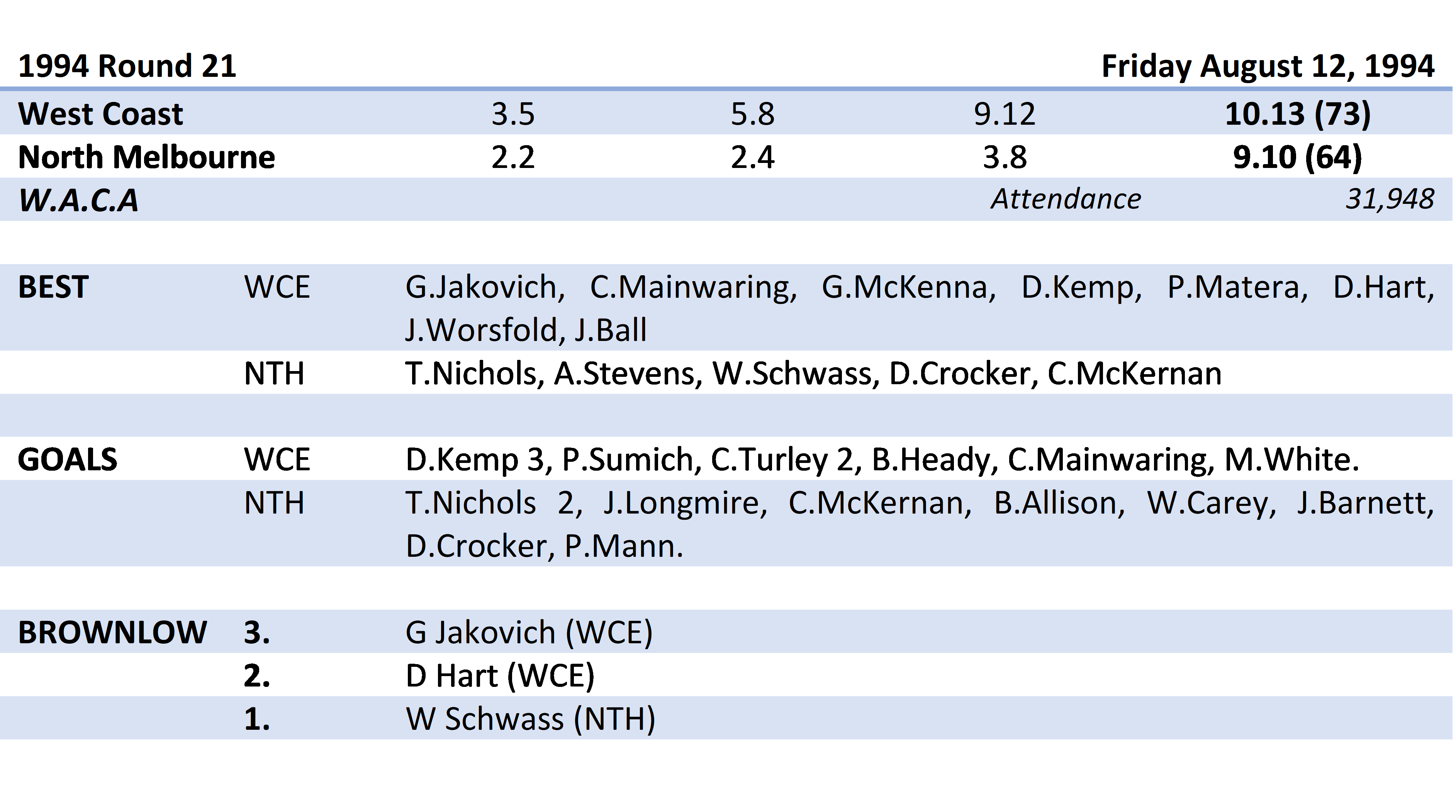
West Coast ensured they would finish in the top two at the close of the home and away season when they held off a rampaging North Melbourne at the WACA, in the opening game of Round 21.

The Eagles put in one of their best defensive efforts of the year when they held the free-flowing Kangaroos to just three goals to three quarter time to lead by 40 points.

But the Kangaroos rallied, kicking the last five goals of the game to have the home side and the home fans nervous, with only some desperate defence in the final minutes putting a halt to a famous comeback.

The win meant that the Eagles sat four games clear of North Melbourne with three matches remaining to confirm a top two finish. However, West Coast were yet to receive confirmation from the AFL that a top two finish would equate to two home finals under the new top eight finals format.

Subiaco Oval was due to start comprehensive construction of the new Southern Stand immediately following the Eagles final round game against Footscray and the WACA had yet to be accepted as an alternative venue due to its smaller capacity.

The AFL were also locked into an agreement with the MCC that stipulated a final at the MCG every week, and while the remaining seven positions on the ladder were filled with Victorian sides, the AFL refused to confirm West Coast would receive a second home final beyond the opening week.

The situation mirrored the scenario that West Coast faced in 1991 when they were forced to travel for a semi-final against Melbourne and a preliminary final against Geelong, despite finishing top.

While that was still to play out between West Coast and the AFL, on the field two of the premiership fancies showed their best and their worst in front of an electric crowd of just under 32,000 people. 

Both teams named strong line-ups with the Eagles bringing back three premiership players in captain John Worsfold and half-forwards Tony Evans and Brett Heady. Guy McKenna was able to take his place despite still nursing a broken nose from a Darren Jarman hit the week before, as did Ryan Turnbull who was limited during the week at training with a left wrist complaint.

The Kangaroos made just the one change to the team that narrowly lost to Geelong the week before, with midfielder Alastair Clarkson making way for utility Peter Mann. North Melbourne coach Denis Pagan admitted that the selection of Mann was in response to the 37 point defeat to West Coast earlier in the season, when the Eagles exposed the Kangaroos for lack of height.

Another inclusion to the Kangaroos side from the one that lost in round 6 was Corey McKernan who had been a revelation in his first season. The rookie ruckman/forward had added another dimension to the Kangaroos in 1994 and lined up in the forward half along with Wayne Carey and John Longmire in a three-pronged attack.

Jason Ball was given the task in defence of minding McKernan, with Michael Brennan taking Longmire and Glen Jakovich matching up with Carey in the next instalment of their individual rivalry.

Jakovich would emerge the winner out of their battle with a best on ground display. The Eagles centre half back finished with 29 disposals and seven marks as he often stood in the way of many North Melbourne forward entries.

He was well supported by Guy McKenna (19 disposals) and John Worsfold (20 disposals) as North Melbourne allowed the Eagles half-back line to dictate play.

The Kangaroos used Alex Ishchenko as a spare man in defence, replicating a tactic that had worked successfully against Gary Ablett the week before. With Ishchenko heading into the back 50 after contesting the centre bounce, the Kangaroo half-forwards pushed up the ground to neutralise the Eagle midfield.

That meant McKenna and Worsfold were often allowed to set up without an opponent, feeding off the loose balls created from spilled balls in the North Melbourne forward 50.

The Eagles also had plenty of winners through the middle of the ground as Dean Kemp, Peter Matera and Chris Mainwaring dominated the North Melbourne centreline. Kemp dismissed the tagging effort of Anthony Stevens to pick up 12 first-half possessions and also booted the only two goals of the second quarter as West Coast worked their way to a 22 point half-time lead.

While Kemp was less influential after half-time, Mainwaring got the better of Wayne Schwass with 18 second-half disposals to finish with a match haul of 25 (along with eight marks). Peter Matera tallied 23 disposals on the other wing and Don Pyke was just as effective with 22 touches.

After controlling the first half, the Eagles were dominant in the third term, but it took until late in the quarter when consecutive goals to Craig Turley – who started the game on the bench – gave the Eagles what appeared to be an unassailable lead.

At three-quarter time, Pagan reverted back to a more typical structure holding his half-forwards deeper and the Kangaroos got the rewards on the scoreboard. They opened the scoring in the first minute before Peter Sumich responded shortly after with his second major of the evening to restore the Eagles’ 40 point lead.

That would be the last significant score for West Coast in the game as North Melbourne flew home in a rush. The Kangaroos kicked the final five goals of the game and had their chances in the dying minutes. With the margin just nine points and still three minutes remaining, the Kangaroos butchered several forward 50 entries.

Jakovich twice was able to intercept North Melbourne, including one John Blakey kick when he had Carey 15m free in space. Jakovich had 12 disposals and took four marks in the final term alone as the Eagles defence stood tall in the face of repeat Kangaroo entries.

After the match, the mood of the two coaches could not have been further apart.

Denis Pagan was seething of his side’s performance, with many of his prime movers leaving their imprint on the game until it was too late. Corey McKernan, Wayne Schwass and Darren Crocker all lifted in the final term as North Melbourne rallied, but it mattered little to Pagan.

“We were pretty disappointing for three quarters, and to come back hard in the last quarter proved that there is nothing conclusive about West Coast and North Melbourne.”

On the flipside, Mick Malthouse wasn’t bothered by his team’s last quarter, instead choosing to focus on the earlier effort that won the game.

“I thought the workload of the boys was outstanding for three quarters and there probably wasn’t any reward on the scoreboard.”

“North got their momentum up and they were very hard to stop… we got a couple of running injuries and that put a bit of pressure on us,” Malthouse explained. “We had to leave a couple of players out there when we wouldn’t have normally.”

In the post-script, both sides had setbacks to counter.

The Eagles finished the game without a fit player on the bench after John Worsfold and Tony Evans re-aggravated injuries in their first games back, while Chris Lewis had fresh worries over a thigh.

North Melbourne lost Anthony Rock during the game with a serious ankle injury, that was likely to see the midfielder miss the remainder of the regular season, but their concerns lay more critically with the tribunal.

The Kangaroos had three players reported on the night, with Brett Allison and Corey McKernan both reported for tripping Jason Ball on separate occasions, while Glenn Archer went into the book for disputing an umpires decision. Archer and Allison would escape suspension, but McKernan would not be so lucky, copping a one week ban. Cruelly, the guilty finding would leave McKernan ineligible for the Rising Star award, which he had been favourite to win.

If the nine-point win on a Friday night was a positive way to start the weekend, it only got better for the Eagles when Carlton – who were vying with West Coast for top spot – were humbled by last-placed Sydney at the SCG.

In a result that David Parkin declared would ‘have severe ramifications for the club’, the Swans recorded a famous eight-point win in a low-scoring clash, despite four goals to Carlton captain Stephen Kernahan. The Blues entered the game as $1.05 favourites, but the upset defeat left Carlton two games behind West Coast in second place ahead of their meeting the following week.

An inaccurate Richmond dropped their match against Hawthorn, while a goalless last quarter saw Melbourne fall to the Magpies. The losses to the Tigers and the Demons, on top of defeats to the Blues and Kangaroos meant that the teams placed second through to fifth coming into round 21 all lost, as the race for the top four got tighter.

The six teams behind West Coast and Carlton all had 11 wins for the season, with percentage determining the order.

North Melbourne remained third courtesy of their superior percentage with the Bulldogs moving into the top four after they easily accounted for St Kilda. The Saints got the early jump, but Footscray took control after quarter time, booting 15 goals to 6 on their way to a 45 point victory.

Geelong moved up to fifth when they got over the Lions, although it took until the last quarter to be completely assured of the win. Hawthorn, Collingwood and Richmond rounded out the eight, with the Magpies returning to the top eight after knocking on the door for several weeks.

Richmond suddenly looked vulnerable as they dropped from fourth to eighth, with their poor percentage threatening to undo their run to the finals. Melbourne made way for the Magpies dropping to ninth, as they sat one game behind the teams above them; the loss to Collingwood proving a real eight-point result.

1994 Rewind: Eagles Bounce Back Against Roos

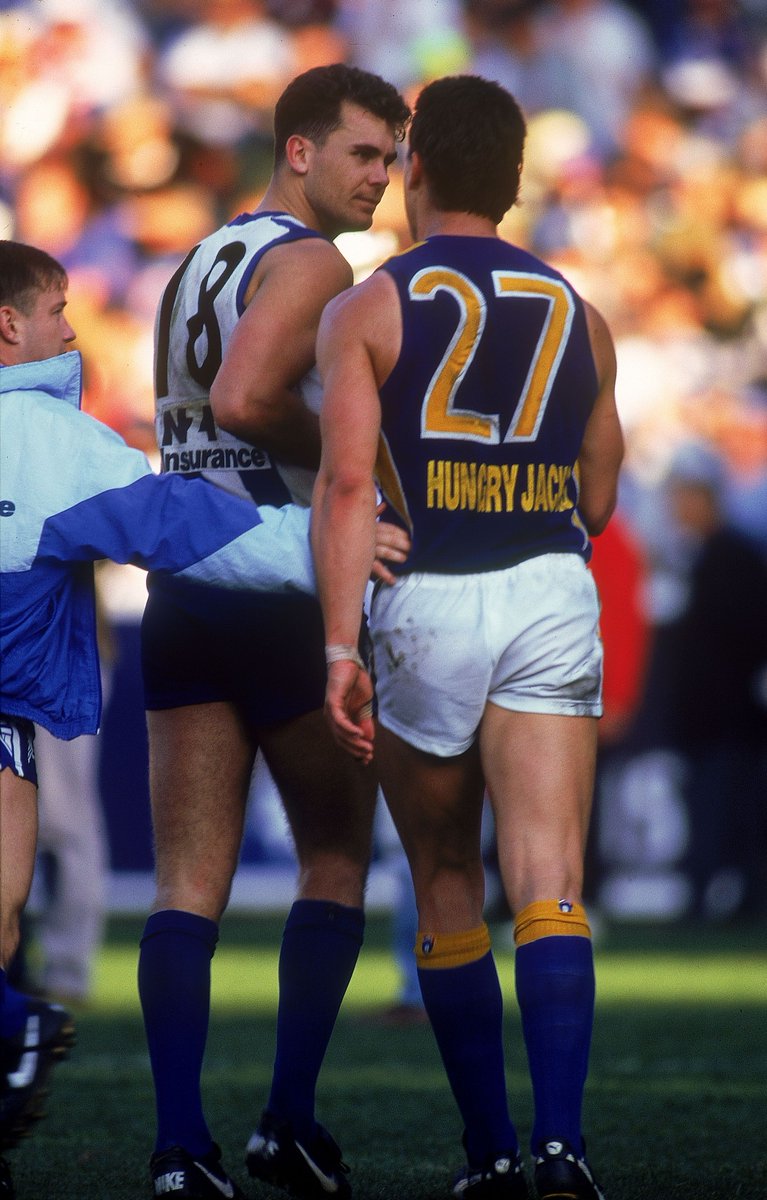
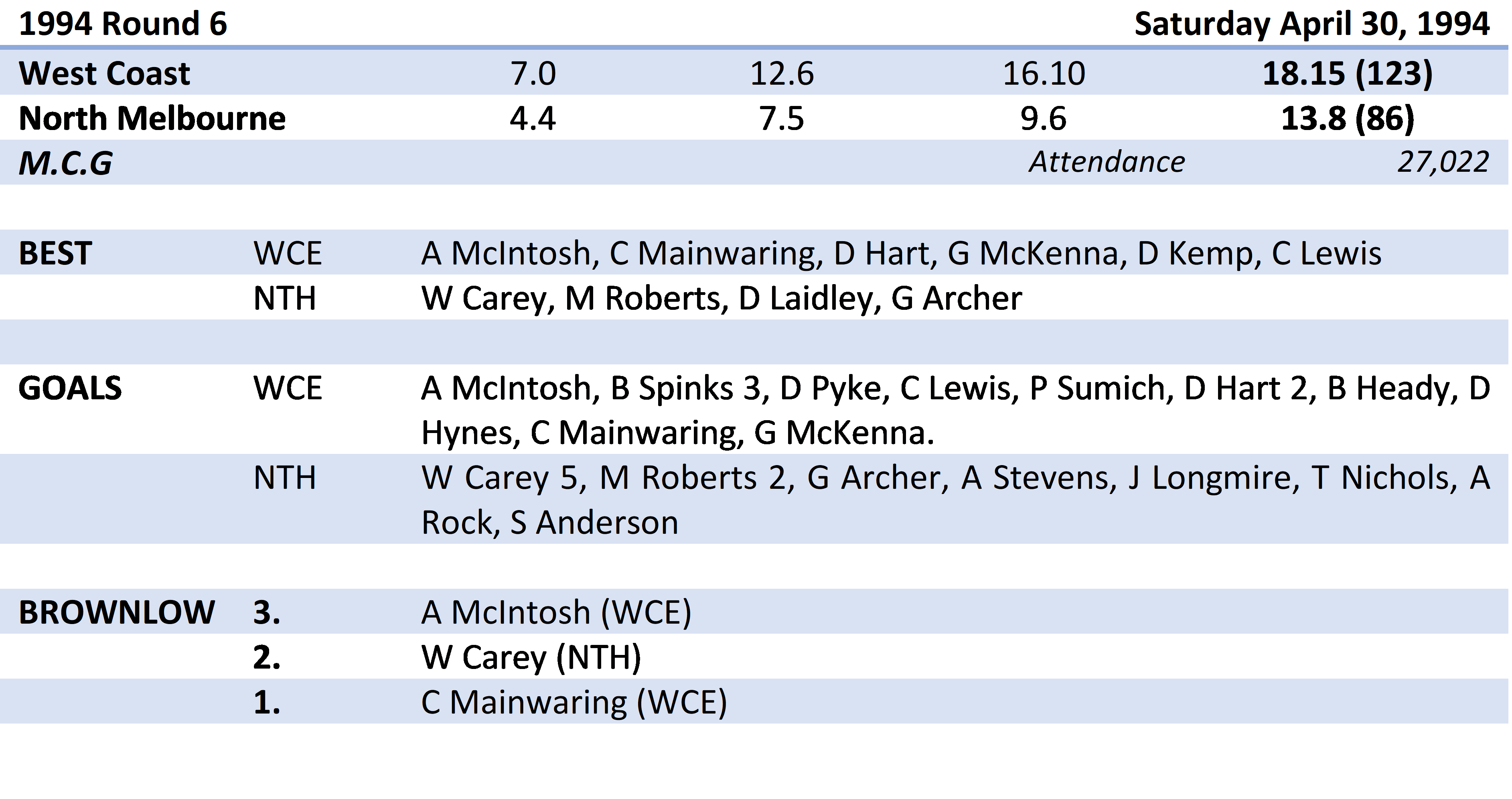
Wayne Carey may have won the battle, but the Eagles won the war as they righted the shock defeat to Hawthorn the week before with an impressive 37-point win over premiership rivals North Melbourne.

Carey was a lone force for the Kangaroos, eclipsing opponent Glen Jakovich in the hotly-anticipated duel. The North Melbourne skipper racked up 21 disposals, 15 marks (out of the 45 marks North Melbourne managed as an entire team) and booted 5.3. However, it mattered little as West Coast put in their most accomplished performance of the season.

Both teams entered the clash keen to atone for poor defeats the week before. The Kangaroos suffered their first loss of the season when they fell to Geelong by 15 points, while the Eagles had been humiliated by 71 points at home to lowly Hawthorn.

The Eagles responded to the loss by making four changes, although two of them were forced through injury. Paul Harding had escaped serious concerns over a knee injury suffered against the Hawks but was still not considered fit enough to take on the Kangaroos, while Peter Matera was also left at home, still dealing with the after effects of a broken nose and concussion from the Hawks game.

Jarrad Schofield and Craig Turley were both dropped, with the latter failing to recapture his best form in his first five games back from retirement. Dwayne Lamb, David Hynes and Tony Godden were all selected for their first games of 1994, while Chris Waterman came back into the team after three weeks exiled at East Fremantle.

North Melbourne weren’t without their injury concerns either heading into the game, with both Corey McKernan and Peter Mann unavailable for selection. Glenn Archer did make the cut, despite injuring a hamstring at state-of-origin training the week before, while Anthony Rock also played in spite of a back complaint.

Along with Archer, Stuart Anderson was selected for his AFL debut, while journeyman Gareth John was picked for his first game with the Kangaroos after swapping over from the Swans. It is the Kangaroo ruckman’s first senior game of football since 1991 with injuries curtailing the end of his time with Sydney. Ian Fairley, Jason Daniltchenko and Brett Allison were all omitted.

The Kangaroos started strongly with Carey having immediate impact. The North Melbourne captain took an early mark and kicked truly before hitting the post with a second shot on goal moments later. Peter Sumich kicked a brace in quick time, after two strong marks opposed to Mick Martyn, before Carey had a third shot on goal, his second miss of the term.

The early missed chances from Carey would prove costly as West Coast’s running game troubled the Kangaroos. Chris Mainwaring and Guy McKenna – who was moved up the field as Matera’s replacement on the wing – were providing plenty of drive, as was Dean Kemp who was being used across half-back. Mainwaring racked up nine first quarter possessions opposed to Stuart Anderson, while McKenna was giving former teammate Trent Nichols a bath.

McKenna was involved in setting up the Eagles third goal through Ashley McIntosh – who had started forward alongside Sumich and Brett Spinks – before kicking the Eagles’ fourth with a long range shot on the run.

Adam McAdam came off the bench for the Kangaroos to provide some run and immediately found Mark Roberts for the Kangaroo’s second goal but the Eagles responded almost immediately through Don Pyke. McKenna then had this third goal involvement of the term when he found Brett Spinks on the run to put West Coast 20 points clear.

Carey did his best to keep the Kangaroos in the contest, booting consecutive goals. The first came from a free kick given away by Michael Brennan off the ball, before he then out-marked Jakovich to kick his third for the term. Don Pyke kicked his second goal late in the quarter to take the Eagles lead back out to 14 points.

The Eagles kicked seven straight for the first term and their impeccable goal kicking continued into the second quarter. The Eagles had ten goals on the board before their first blemish when Ashley McIntosh hit the post. Before that, McIntosh had kicked two successive goals to open the term, as he proved too fast and too agile for John Blakey. Wayne Carey added a fourth goal (out of North’s five), before a cleverly crumbed goal to Chris Lewis saw West Coast’s lead stretch out to 26 points.

The Eagles running game was too much for the Kangaroos, recording three times as many handballs, as they continually swarmed forward in waves from half-back. With the game starting to get out of hand, Denis Pagan swung a number of changes.

Mark Roberts was switched to defence to curtail McIntosh, John Blakey was moved forward, Glenn Archer went to half-back and Dean Laidley pushed onto the wing against Mainwaring. Gareth John was introduced into the ruck off the bench, while Adam McAdam returned to the field and was stationed at full forward.

But the changes did little to stop the Eagles momentum. Brett Spinks goaled from the boundary line, and David Hart roamed forward to goal from 50m, after some good forward pressure from Shane Bond. After being so accurate through the first quarter and a half, the Eagles’ radar went missing as they butchered a host of other chances late in the term, with a John Longmire goal after the half-time siren reducing their lead to 31.

It was more of the same for West Coast after the main break, with the Eagles booting the opening four goals of the term as their lead pushed towards ten goals.

Brett Spinks marked in a heavy pack in the goal square to open the scoring, with Mainwaring kicking truly when he received a 50m penalty against Laidley. David Hart had his second running goal, when a scrappy kick out of the Eagles defensive fifty evaded a number of players, releasing Hart from the centre circle to the top of the West Coast 50. Brett Heady had his first of the afternoon when he scouted the back of a marking contest to snap truly on his opposite foot.

The Eagles had winners all over the ground, with even Carey’s influence waning as the ball stayed locked in the Eagles forward half. While Pagan was busily moving the magnets to stop the tide, the Eagles were perfectly quelling the Kangaroo’s prime movers.

Wayne Schwass managed just one kick in the first half opposed to Drew Banfield, while Anthony Rock had Dwayne Lamb for company and had been barely sighted. Don Pyke was given the role on Anthony Stevens, but Stevens was soon moved to the wing to be Mainwaring’s third opponent for the day.

Two late goals to Glenn Archer and Trent Nichols before the three quarter time siren stopped the Eagles run, but the visitors still headed for home with a 46 point lead.

That lead stretched beyond ten goals with David Hynes and Chris Lewis both kicking majors, before the Kangaroos kicked the last four goals in the game, as the heat dissipated out of the contest.

Apart from Carey, there were few notable performances from the Kangaroos. Glenn Archer tallied 20 disposals to go with his third quarter goal, while Mark Roberts had 19 possessions and two goals rotating between the forward line and defence and Ross Smith was the best in the midfield with 16 disposals.

For Malthouse, the performance was a good response to the previous week’s thrashing. “Hawthorn were very good last week and we needed to be this week. Everyone that is in top sports knows that you’ve got to have the right attitude.”

After a blistering start, Chris Mainwaring finished with 25 touches, with Anthony Stevens restricting his output through the second half. Guy McKenna picked up 21 disposals, 7 marks and a goal, David Hart finished with 22, while Dean Kemp was the highest ball winner with 27 playing out of defence.

Brett Spinks and Ashley McIntosh each kicked three goals, with ten players hitting the scoreboard. “He (Spinks) has given us a new dimension. He’s a very capable player who will only get better… he’s a good grab and he kicks the ball out of sight.”

The result lifted the Eagles to 2nd on the ladder, behind only the undefeated Demons, but the win came at a cost. Peter Sumich limped off during the third term with a hamstring injury that was expected to sideline the spearhead until at least after the Eagles bye in Round 8.